
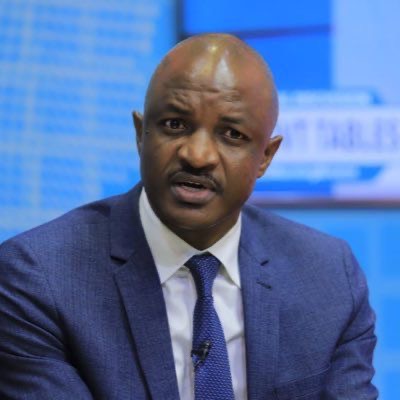
Uganda will begin commercial oil production in the second half of the 2026/27 financial year, with government pledging that all revenues from the sector will be strictly invested in infrastructure and saved for future generations, the Ministry of Finance has said.
The Permanent Secretary and Secretary to the Treasury, Ramathan Ggoobi, said the country is on track to become an oil producer later this year but cautioned against expectations of an immediate fiscal windfall, noting that initial revenues will be relatively modest.
“Like any business, the initial oil money will not be too much,” Ggoobi said, explaining that oil proceeds will be channelled into the Petroleum Fund and are projected to amount to about 0.8 percent of non-oil GDP annually.
He said the funds will be used exclusively for infrastructure development, including roads, energy generation and transmission, and irrigation systems to support industrialisation and year-round agricultural production.
“This oil money will not be used for consumption,” Ggoobi said. “It will not be used to increase salaries, fund administrative expenses or finance district headquarters. It is strictly for infrastructure.”
Ggoobi dismissed claims that Uganda’s oil revenues are being lost or exported abroad, saying government has already been earning income from the sector for several years through taxes, royalties and fees paid by oil companies involved in upstream development and pipeline construction.
“That money is deposited in the Petroleum Fund. We take requests to Parliament, draw it legally, and invest it,” he said.
He disclosed that some of the oil-related revenues have already been used to finance Uganda’s contribution to the East African Crude Oil Pipeline (EACOP) and to support road construction projects in Kampala, challenging the perception that all infrastructure development is funded through borrowing.
“Some of the roads you see being worked on in Kampala — that is oil money at work,” Ggoobi said.
Uganda, he said, deliberately delayed oil production to put in place strong governance, legal and fiscal frameworks, and to avoid mistakes made by other resource-rich countries that rushed extraction without adequate safeguards.
“Some countries sold oil fields without understanding their net present value and ended up deeply indebted,” Ggoobi said. “We kept our oil in the ground until systems were in place.”
He said Uganda is adopting the Norwegian model of oil revenue management, under which funds are ring-fenced for specific investments, while surplus revenues are saved in a long-term investment fund to benefit future generations after oil resources are depleted.
The framework, Ggoobi noted, is anchored in the Public Finance Management Act of 2015, as amended, and reinforced by fiscal responsibility rules. He added that government is preparing new fiscal legislation to replace frameworks that are nearing expiry.
