

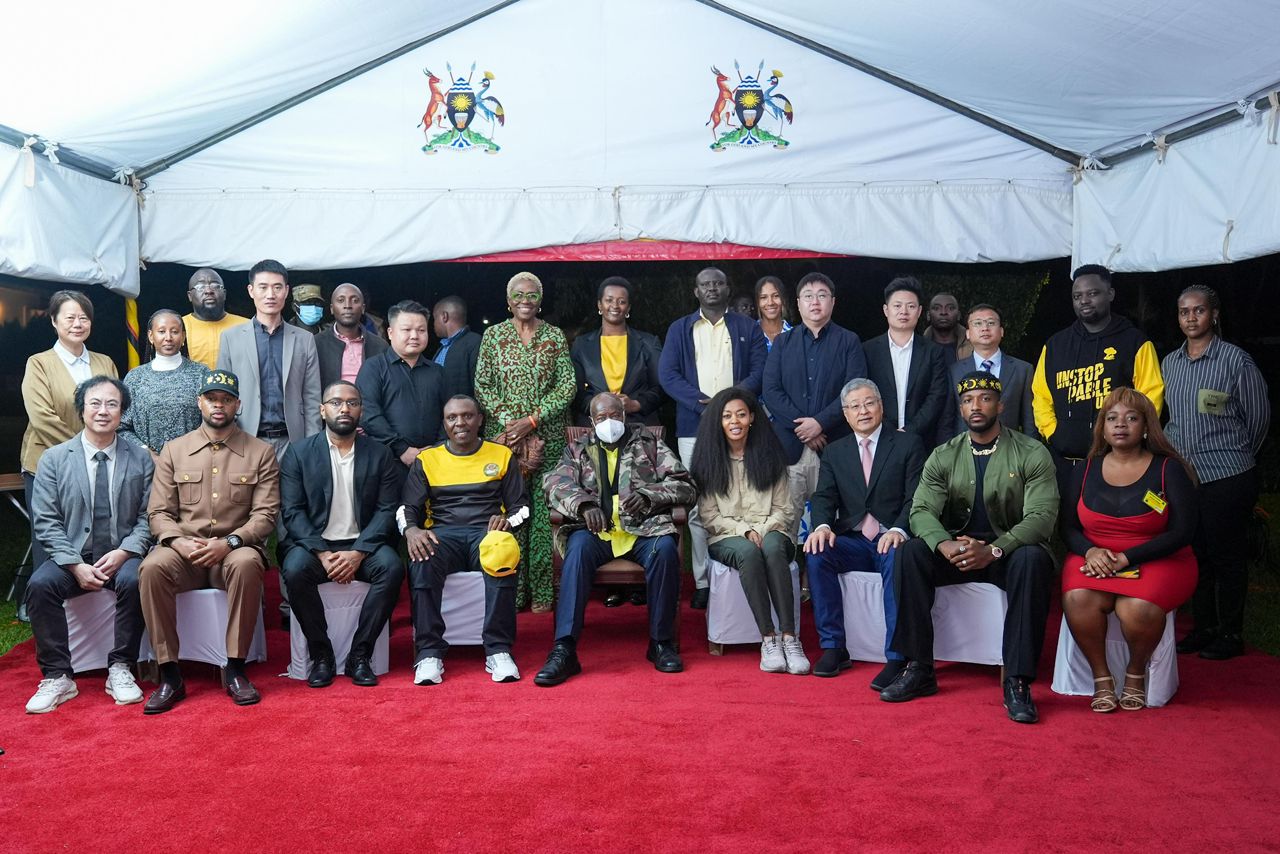
Uganda’s push to build a strong, globally connected diaspora economy took a significant step forward as media executive and business strategist Peter Brooks returned to the country for his second official visit—both made at the invitation of the Office of the President.
The President's Office requested not only Brooks’ presence but a delegation capable of forging real economic partnerships with Uganda.
Brooks travelled with a handpicked group of influential African American figures, including attorney and cultural strategist Amy Oraefo, the SuperMind Coffee team led by global thought leader 19 Keys, Mariah Dodson, and Amechi Okechukwu.
A key focus of the delegation was Uganda’s coffee sector, and the trip quickly evolved into a procurement mission coordinated with Dr. Nelson Tugume of Inspire Africa.
The SuperMind team inspected production lines for instant, freeze-dried and roasted coffee, evaluating quality, capacity and export readiness with the intention of sourcing Ugandan coffee at scale. The team moved from technical assessment to negotiations, ultimately issuing a purchase order to Dr. Tugume.
“This is what partnership looks like when it is real and rooted in respect,” Brooks said. “You move from conversation to commitments.”
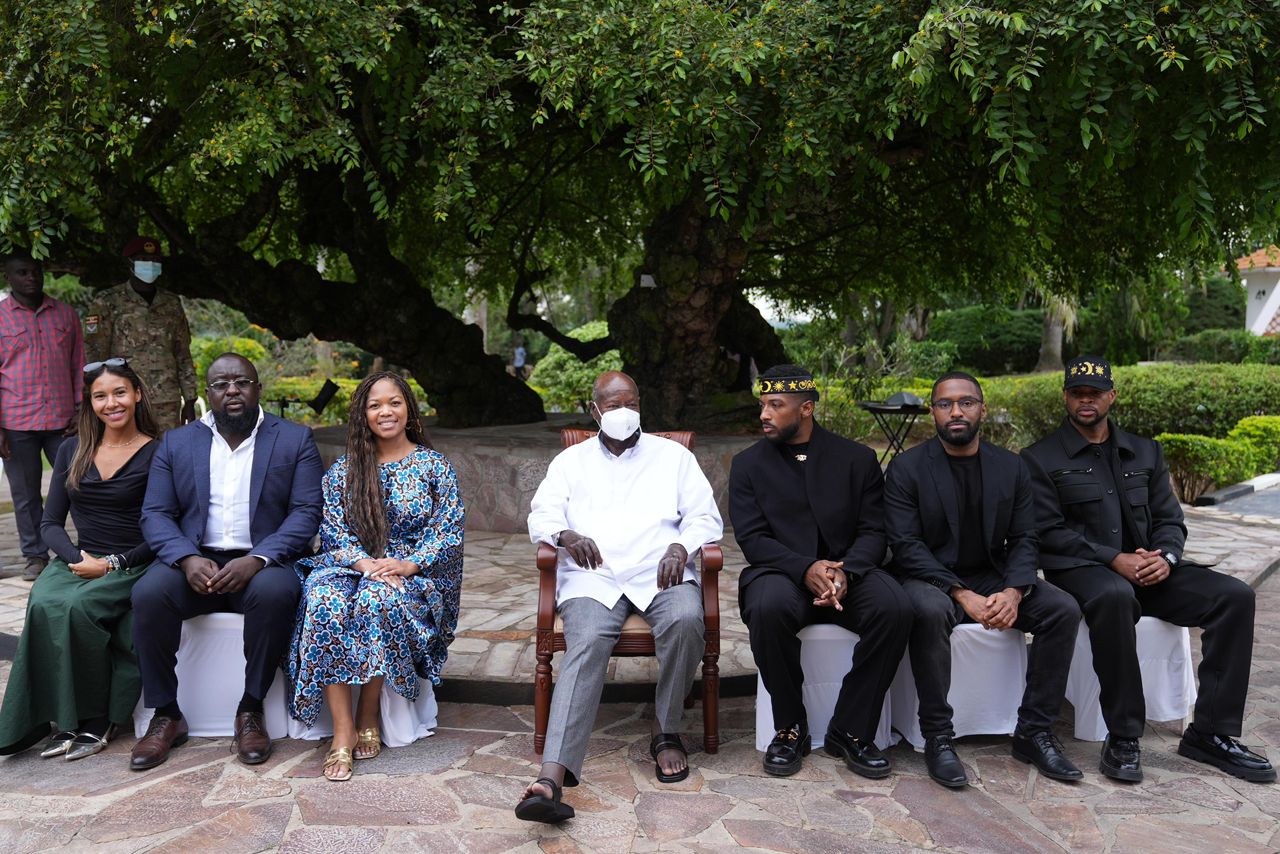
The delegation’s most impactful moment came when President Museveni hosted them for a recorded discussion at his residence. What began as a podcast session unfolded into an extended seminar as the president spoke off-the-cuff on African diaspora history, shifting global power dynamics, coffee economics, energy strategy and his four-pillar view of building a strong national economy.
“He has an intellectual presence that stays with you,” Oraefo said. “He thinks like a historian and engages like a family member, while running a country.”
She added, “He made it clear we are not just visitors. We are invited partners with work to do.”
The President also spent time with a group of Gen Z podcasters, engaging with them directly and treating their platform as a legitimate civic space.
“When leaders show up on youth platforms, they signal that young people belong inside the story, not outside it,” Oraefo said.
Uganda’s ambitions draw lessons from global examples.

Ghana has demonstrated the power of taking the African diaspora seriously, with tourism revenue rising sharply after initiatives like the Year of Return.
Tourism receipts there increased to an estimated $4.8 billion by 2024, more than doubling in five years. Brooks noted that “Ghana is where the diaspora goes to visit. Uganda has the potential to be the place where they thrive.”
According to officials, Saudi Arabia offers another template—this time for structural discipline.
When Saudi Arabia launched Vision 2030, it built a national delivery apparatus to track programs, enforce coordination and mobilize resources.
Uganda already has Vision 2040, but Brooks argues that the plan could benefit from improved inter-ministry coordination and a central delivery mechanism that drives national transformation with urgency and accountability.
Brooks and Ambassador Abbey Walusimbi believe Uganda’s next step should be the development of a Diaspora Master Plan aligned with Vision 2040.
Such a plan would prioritize trade and supply chains built around finished goods like processed coffee, tourism and cultural exchanges that draw the diaspora back regularly, global Black convenings hosted in Kampala, investment pathways for diaspora capital, and a strong national brand positioning Uganda as a destination for Black talent and Black capital.
None of these ambitions, they say, will materialize without structure and consistent execution.
At the end of the visit, President Museveni extended a third invitation to Brooks—this time urging him to return with another delegation and continue building momentum.
“He did not say thank you and goodbye,” Brooks reflected. “He said come back. That is guidance. That is intention.”
Brooks and Ambassador Walusimbi are preparing to collaborate with Ambassador Adonia Ayebare, Uganda’s Permanent Representative to the United Nations, to activate Uganda’s official facility in New York as a regular venue for high-level diaspora engagements.
The aim is to build a connected ecosystem linking Kampala with New York, Atlanta, Accra and other centers of Black global influence.
“This is not about one visit or one deal,” Brooks said. “It is about putting real architecture under the relationship between Uganda and the diaspora.”
As Uganda advances this strategy, the country is positioning itself not just as a homeland for the diaspora, but as a place where shared economic prosperity can be built—through contracts, investments and concrete partnerships rather than rhetoric.