

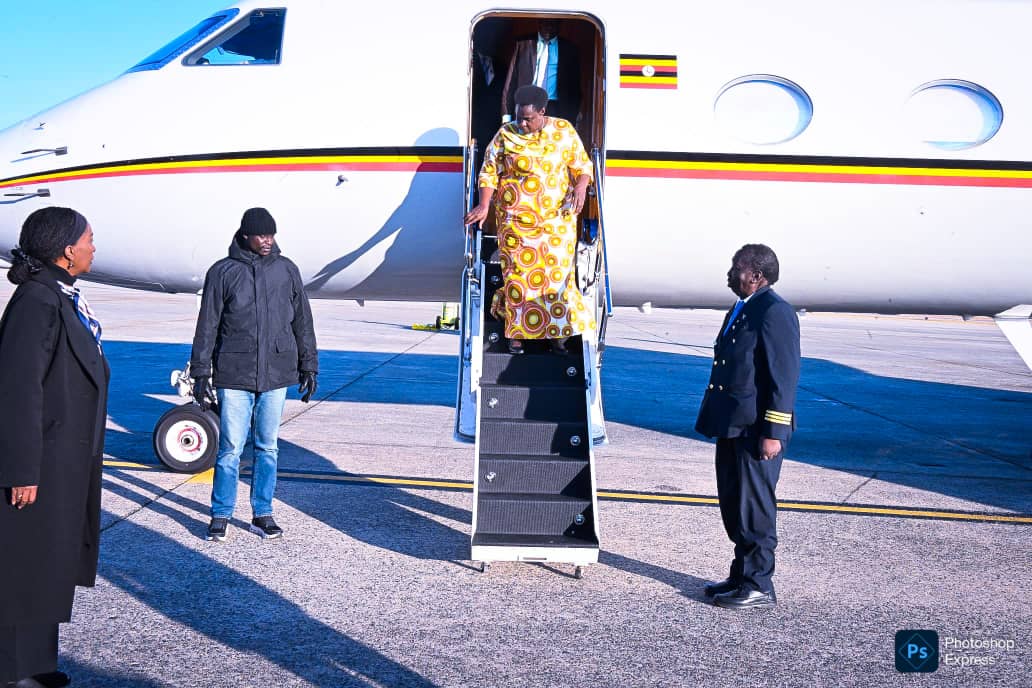
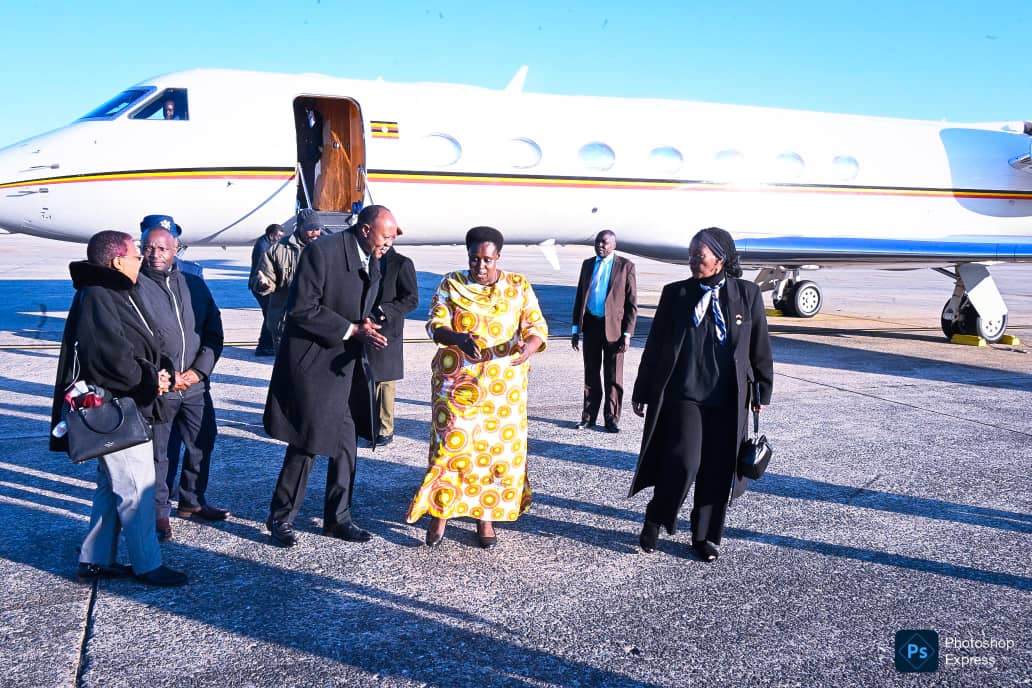
Vice President Jessica Alupo arrived in Washington, DC, on Wednesday night to join East African leaders for what is being billed as one of the most consequential peace efforts in the Great Lakes region in decades.
Alupo is representing President Museveni at the signing of the Washington Accords for Peace and Prosperity between the Democratic Republic of Congo (DR Congo) and Rwanda.
Kenya’s President William Ruto and Burundi’s President Évariste Ndayishimiye are also in the US capital for the ceremony, which observers have described as a pivotal turning point with the potential to reshape regional security and economic cooperation.
The accord is set to be signed today in a high-level event hosted by US President Donald Trump.
The agreement comes against the backdrop of renewed fighting in eastern DR Congo, where the Rwandan-backed M23 rebel group has made territorial gains in recent weeks.
The region, long marred by conflict involving more than 100 armed groups, holds some of the world’s most valuable mineral reserves essential for modern technologies, including electric vehicles. Washington has openly signalled that stabilising
DR Congo could also support US strategic access to critical minerals.
The summit is accompanied by a flurry of diplomatic engagements among regional and US leaders. On Wednesday night, Rwandan President Paul Kagame hosted a dinner with senior Republican lawmakers, including Senator Mike Rounds, Senator Kevin Cramer, Senator Pete Ricketts, Representative Brian Mast, Representative Ronny Jackson, Representative Trent Kelly, and Representative Joe Wilson.
Discussions centred on deepening bilateral cooperation, securing long-term stability in the Great Lakes region, and aligning U.S.–Rwanda interests ahead of the accord.
Kagame and DR Congo President Felix Tshisekedi are expected to meet jointly with President Trump at the newly renamed Donald J. Trump US Institute of Peace.
Trump controversially shuttered the original USIP early in his term as part of broad federal cost-cutting, but later revived it under his own name as a centre for presidential diplomacy.
White House spokesperson Karoline Leavitt confirmed that the two leaders will sign a “historic peace and economic agreement brokered personally by President Trump,” marking the culmination of months of negotiations involving Washington, Kinshasa, Kigali, and international partners.
The event follows a preliminary peace and economic pact signed by DR Congo and Rwanda’s foreign ministers at the White House in June, followed by further framework agreements in Qatar in November.
Those talks yielded initial protocols on ceasefire monitoring and prisoner exchange but left other issues pending — including humanitarian aid access, the return of displaced populations, restoration of state authority, and reforms to demobilise or integrate armed groups.
Eastern DR Congo has endured more than three decades of instability, with the M23 rebellion — composed largely of ethnic Tutsis — at the centre of the latest cycle of violence.
The group’s origins trace back to unresolved tensions after the 1994 Genocide against the Tutsi in Rwanda, and its repeated resurgence has strained relations between Kinshasa and Kigali.
Although Rwanda has denied directly backing the M23, the United Nations and multiple rights organisations have linked the rebels to the Rwanda Defence Force.
In July this year, the UN Office of the High Commissioner for Human Rights reported that at least 319 civilians were killed in North Kivu by M23 fighters “aided by members of the Rwanda Defence Force,” shortly after the initial White House pact.
Despite these concerns, Trump has repeatedly portrayed the DRC–Rwanda negotiations as evidence of his success in resolving international conflicts.
Today’s signing, if fully implemented, could mark the first sustained attempt in years to dismantle the rebel networks, restore government authority in contested territories, and open the door to economic reforms and humanitarian recovery.
Vice President Alupo’s presence underscores Uganda’s strategic importance in the Great Lakes region and its longstanding involvement in peace efforts.
Kampala has hosted previous talks and maintains strong bilateral ties with both Kigali and Kinshasa.
As a member of the East African Community and a key regional stabiliser, Uganda is expected to support enforcement, monitoring, and post-conflict reconstruction initiatives tied to the Accords.
The Washington signing offers a rare moment of optimism, though analysts caution that implementation — not the ceremony — will determine its long-term significance.
With fighting still reported in North Kivu and negotiations over key protocols unfinished, the region’s path to peace remains uncertain.
For now, however, Washington hosts a moment of high diplomatic stakes as leaders seek to turn decades of mistrust into a new chapter of cooperation.