

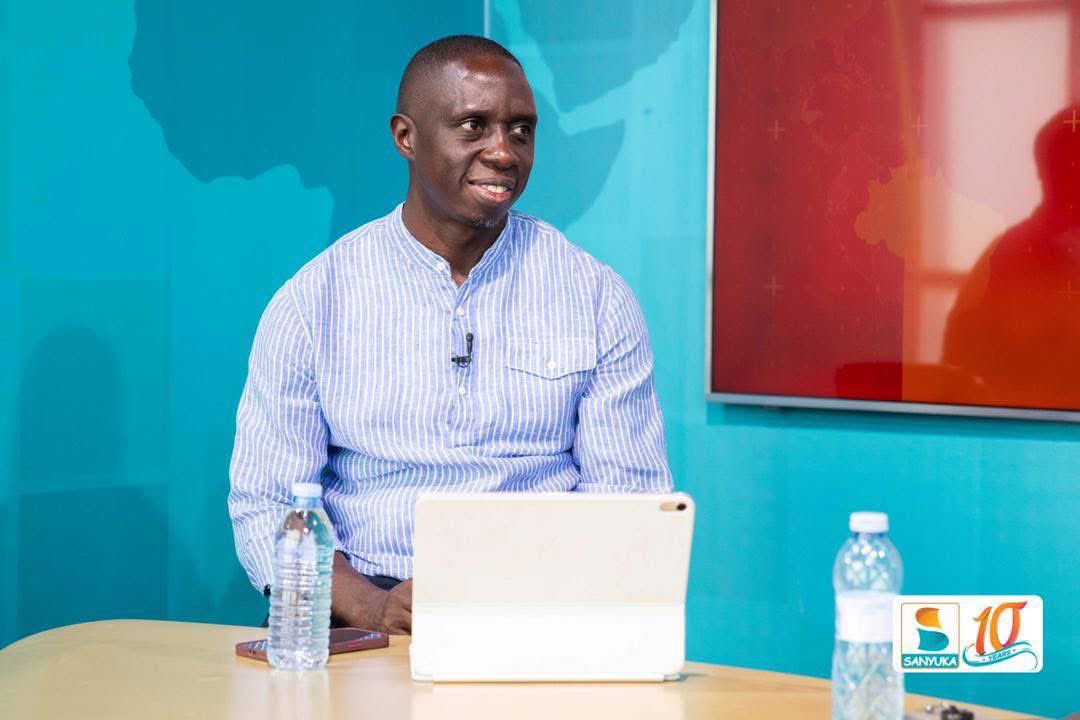
Kampala Central Member of Parliament, Muhammad Nsereko, shared his thoughts on various issues concerning Uganda's future, including the country's industrialisation progress, the recent presidential debate, and the importance of instilling hope and vision in the youth.
Speaking during Sanyuka One on One on Wednesday, Nsereko, who also serves as the President of the Ecological Party of Uganda (EPU), addressed key issues affecting Uganda’s development and political landscape.
Nsereko acknowledged the significant strides made under the leadership of President Museveni, particularly in the area of industrialisation. He highlighted the creation of 1.2 million jobs, a milestone he believes deserves recognition.
"Industrialisation has been pivotal in creating jobs and stimulating economic growth. Uganda has seen tangible improvements, and it's critical that we build on this momentum to ensure that these gains are sustained and expanded, he said.
Nsereko also underscored the importance of value addition in boosting the country’s economic prospects. He explained that while products like okra can be exported in dried form, proper processing can substantially increase their value.
"If we focus on processing and value addition, we can drastically improve the export value of our agricultural products," he said, stressing that such initiatives would drive both job creation and economic diversification.
Reflecting on the recent presidential debate hosted by Nation Media, Nsereko expressed his disappointment with the overall tone and quality of the discussions.
“The debate felt like many of the candidates were simply cramming what they had been given, rather than engaging in a true contest of ideas," Nsereko said.
He continued by highlighting that those who did not attend the debate, such as incumbent President Yoweri Museveni and Common Man’s Party’s Mubarak Munywagwa Sserunga, may have inadvertently gained an advantage in the eyes of the public.
“Those who chose not to participate ended up looking like they were above the fray, while those who showed up appeared to be struggling with the issues at hand,” he said.
Despite his criticisms, Nsereko acknowledged the efforts of certain candidates who presented themselves with conviction.
“Mugisha Muntu and Nandala Mafabi gave it their best shot. Their ideas and passion were clear to see," he said, adding that debates, when done right, can serve as an important platform for the exchange of ideas.
In his discussion, Nsereko also took time to reflect on the role of the youth in Uganda's future development. He warned against the dangers posed by a disillusioned and hopeless generation.
“A young man or woman who lacks hope and vision can be very dangerous. As a nation, we need to foster a sense of purpose and optimism in the youth. If they feel that they have no future, it’s easy for them to be misled and manipulated."
Nsereko emphasised the importance of creating pathways for young people to access education, employment, and opportunities for personal and professional growth.
“We must engage our youth in meaningful work and encourage them to believe in their potential," he said.
Nsereko also addressed the challenges that come with the increasing urbanisation of Uganda, particularly in relation to the development of cities. He pointed out that once an area is designated as a city, it automatically enjoys a larger budget. However, Nsereko expressed concern that the government often fails to properly explain this transition to the public, leading to confusion and frustration.
“When an area is declared a city, its budget becomes larger, and that’s a positive step for development. But instead of clearly communicating this to the public, there is often misinformation or a tendency to shift the blame,” he said.
“For example, people are told that in cities, there are no burials, but they are not told that the increased budget will go into infrastructure and services that will benefit them in the long run."
Nsereko emphasised the need for transparency and better communication between the government and the people.
“The people need to understand the changes taking place in their localities. We must be open and honest about the objectives and challenges we face as a nation," he added
A lawyer by profession, Nsereko first entered Parliament in 2011 under the ruling NRM ticket but later broke ranks to become one of its strongest critics.
He has retained his Kampala Central seat as an independent and launched the Ecological Party of Uganda in 2020, focusing on environmental protection, social justice, and youth employment.
He did not appear on the nomination papers for the presidency after failing to obtain the required signatures, citing electoral irregularities as the reason for his inability to contest.