

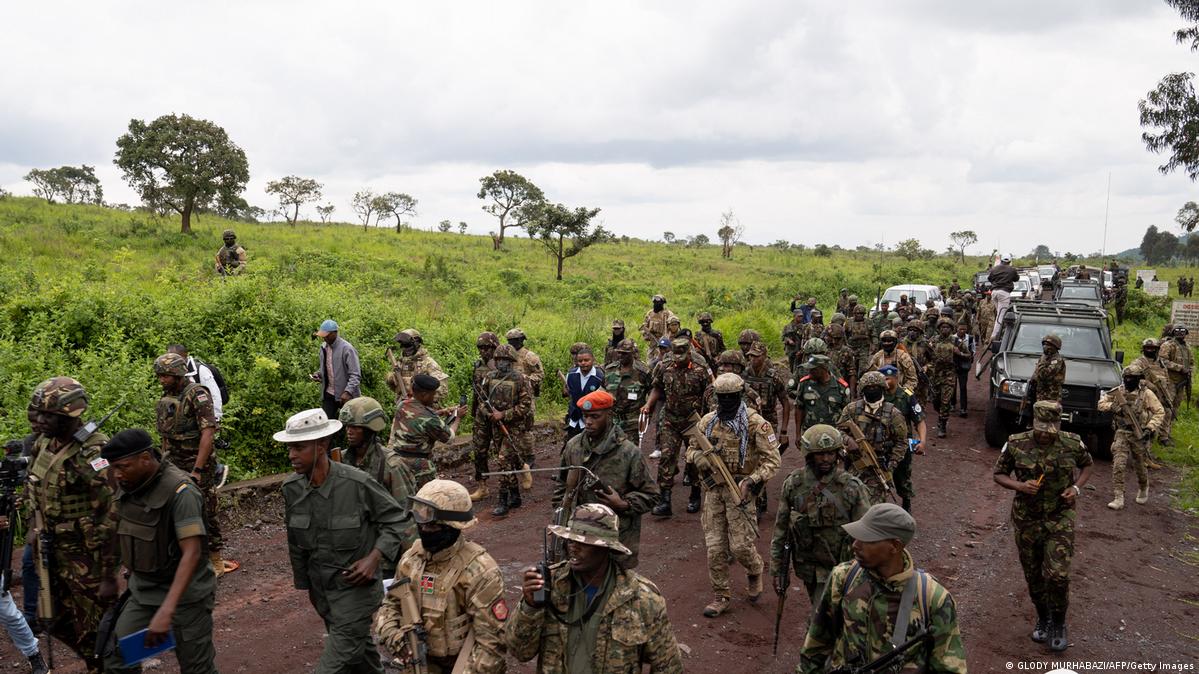
Congolese government forces and M23 rebels have traded accusations of ceasefire violations as heavy clashes erupted in South Kivu on Tuesday, December 2, 2025, raising fears of a renewed escalation in eastern Democratic Republic of the Congo.
Both sides claim the other initiated attacks along multiple frontlines, including Katogota–Luvungi, Kaziba–Hauts Plateaux, Kasika–Mwenga, and Tchivanga–Bunyakiri.
Corneille Nangaa, coordinator of AFC/M23 and the political head of the rebel movement, accused Kinshasa of launching “deadly attacks” in collusion with the Burundian army, FDLR militias, Imbonerakures, Wazalendo, and mercenaries.
“In the face of this violation of the ceasefire within the framework of the Doha peace process, no choice is left to the ARC (AFC/M23) but to defend itself and protect civilian populations,” Nangaa said.
Lawrence Kanyuka, the M23 spokesperson, described the situation as “catastrophic,” noting that the assaults were concentrated along heavily populated areas and multiple frontline towns.
He said at least three civilians, including children, had been killed when missiles hit a "dense population area".
However, Major-General Sylvain Ekengé Bomusa Efomi, the spokesperson of the Congolese national army, Fardc, said in a statement that the clashes were entirely the making of the rebels and their Rwandan military backers.
“Since the morning of December 2, 2025, Rwandan-backed AFC/M23 forces have carried out coordinated attacks on our positions in Kaziba, Katogota, and Lubarika," he said.
:These acts flagrantly violate the ceasefire agreements of Washington and Doha and are aimed at sabotaging ongoing efforts to restore peace. We urge the population to remain calm. All measures are being implemented to repel these attacks and protect civilians.”
The clashes come after a tense year in eastern DR Congo, fast on the heels of ceasefire pretences and right on the eve of a key summit at the White House called by President Donald Trump.
In January and February 2025, M23 captured Goma, the capital of North Kivu, and Bukavu in South Kivu, establishing a parallel government that challenged Kinshasa’s authority.
The rebel group generates over $1 billion in monthly revenue through taxes on mineral extraction in occupied territories. A
fter the ceasefire agreements, Kinshasa insisted it would never assimilate M23 fighters into the national army, citing the presence of Rwandan elements.
The rebels, in turn, declared they would not surrender their military or economic gains and warned they would fight “all the way to Kinshasa” if provoked.
International efforts to stabilise the region have been ongoing. On November 28, 2025, President Félix Tshisekedi of the DRC met with Rwandan President Paul Kagame at the White House in Washington, D.C., in a high-level summit attended by Burundian President Évariste Ndayishimye as a witness.
The three leaders discussed enforcing the ceasefire, establishing a demilitarized buffer zone along the Congolese-Rwandan border, and ensuring unhindered access for humanitarian agencies.
While the summit reaffirmed commitments to peace, no breakthrough was reached regarding the integration of M23 fighters into the FARDC or their control over revenue-generating territories.
Observers warn that Tuesday’s fighting could derail months of diplomatic efforts, including the Washington and Doha peace agreements designed to end hostilities and foster dialogue.
Local residents reported hearing sustained gunfire and artillery from the early hours, with fears of civilian casualties and displacement rising rapidly.
Humanitarian agencies have called for urgent measures to protect civilians and facilitate aid delivery.
The renewed clashes underscore the fragility of peace in eastern DR Congo, where multiple armed groups, regional actors, and the lucrative mineral economy create a volatile mix.
With both FARDC and M23 holding firm to their positions, the coming days will be a crucial test for the international community’s ability to enforce the ceasefire and prevent further escalation.