

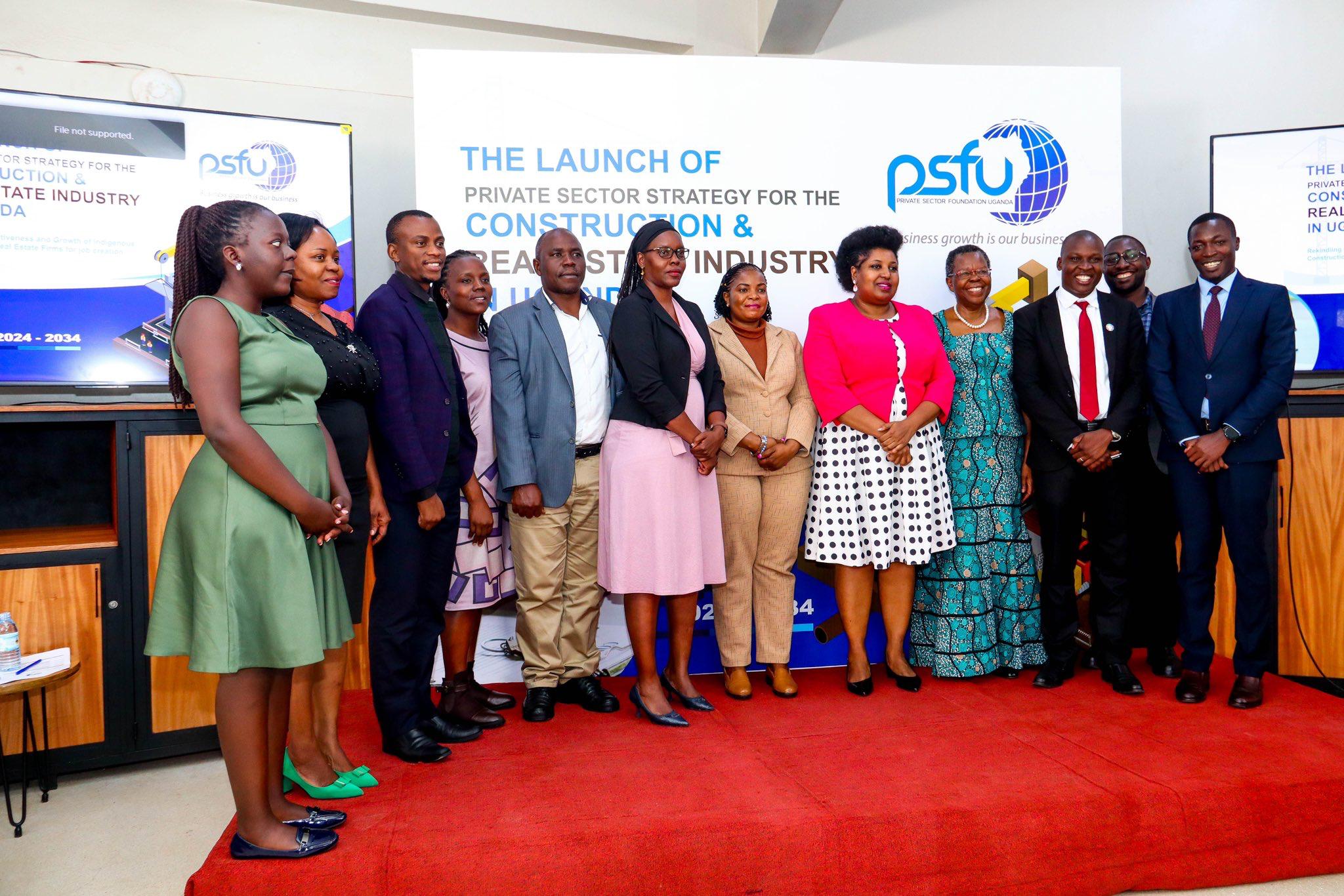
The Private Sector Foundation Uganda (PSFU) has called for a sweeping overhaul of Uganda’s micro, small and medium enterprise (MSME) and national standards policies, warning that outdated regulations and systemic constraints are stifling the growth of businesses that anchor the country’s economy.
Speaking at the National Catalytic Stakeholder Consultation on the review of the Uganda MSME Policy (2015) and the National Standards and Quality Policy, PSFU Vice Chairperson Sarah Kagingo said MSMEs are vital to Uganda’s economic transformation, yet continue to operate under structural barriers that require immediate government intervention.
According to the Ministry of Finance, MSMEs account for 90% of the private sector, produce more than 80% of manufactured goods, contribute roughly 75% of GDP, and employ at least 2.5 million Ugandans.
Kagingo cited persistent obstacles including limited access to affordable financing, high operational costs, unstable electricity supply, high data charges and delays in product certification by the Uganda National Bureau of Standards (UNBS). She said these constraints undermine productivity and weaken local and export competitiveness.
She revealed that a study commissioned by PSFU and the MasterCard Foundation in 2023 found Uganda’s manufacturing plants operate at only 43% capacity, largely due to weak demand and recurrent power fluctuations challenges that disproportionately affect MSMEs.
Although government has increasingly integrated private sector proposals into the national budget with 82% of PSFU’s submissions adopted this financial year Kagingo said the most pressing demand remains reforming the certification process.
She urged government to increase funding to UNBS to shorten inspection and accreditation timelines.
Kagingo pointed to several ongoing interventions including the Small Business Recovery Fund established in 2021 to cushion businesses affected by the COVID-19 pandemic.
However, she noted that more assessment is needed to determine whether these initiatives have delivered tangible results.
She also highlighted joint programmes with development partners such as the World Bank, MasterCard Foundation and the European Union.
Through one MasterCard Foundation partnership, PSFU has supported the certification of 200 products and trained 500 SMEs.
Kagingo said the National Startup Policy, developed jointly with the Ministry of Trade, is expected to redefine MSME classifications and provide clearer guidelines for both government and development partners on targeted support.
She further cited the recently launched Women MSME Finance Code, developed with the World Bank, Bank of Uganda and government, which harmonizes the definition of a woman-owned enterprise across financial institutions an effort she said will improve access to capital for women entrepreneurs.
Marking PSFU’s 30th anniversary, Kagingo noted that the organization now brings together more than 300 business associations representing 3.5 million enterprises across manufacturing, agriculture, ICT, tourism and professional services.
She attributed PSFU’s achievements including the creation of 417,000 decent jobs for youth and women to collaborative engagement with stakeholders.
“Our biggest learning is that when we listen, co-create and co-design, we deliver better,” she said, urging stakeholders to embrace the same approach as Uganda reviews policies that will shape MSME growth and industrialization.
GAIN Country Director Damaging Saali warned that Uganda will not achieve its Vision 2040 target of a US$500 billion economy without urgently reforming policies governing MSMEs and national standards.
He noted that 98% of Uganda’s enterprises are SMEs, contributing 75% of GDP and employing 77% of the labour force, yet the policies guiding them—developed between 2012 and 2015 big no longer reflect current market realities.
He said gaps in standards and regulatory frameworks have weakened product quality, hindered competitiveness and limited enterprise expansion, slowing progress toward national economic goals.
Saali added that the ongoing consultation aims to align government, private sector, development partners and MSMEs around a shared plan that produces evidence-based, implementable policy changes.
Stakeholders are expected to agree on a reform roadmap to accelerate MSME growth and strengthen standards across sectors.
He emphasized that accountability and partnership remain essential to effective policy reform, particularly for MSMEs operating in food systems, which are often excluded from decision-making processes.
Saali noted that GAIN has supported more than 300 SMEs over the past three years in areas including business development, product innovation, regulatory compliance, digital commerce and investment readiness.
He thanked the Embassy of the Netherlands for supporting the organization’s work.
“The right partnerships can turn good intentions into tangible results,” he said.