
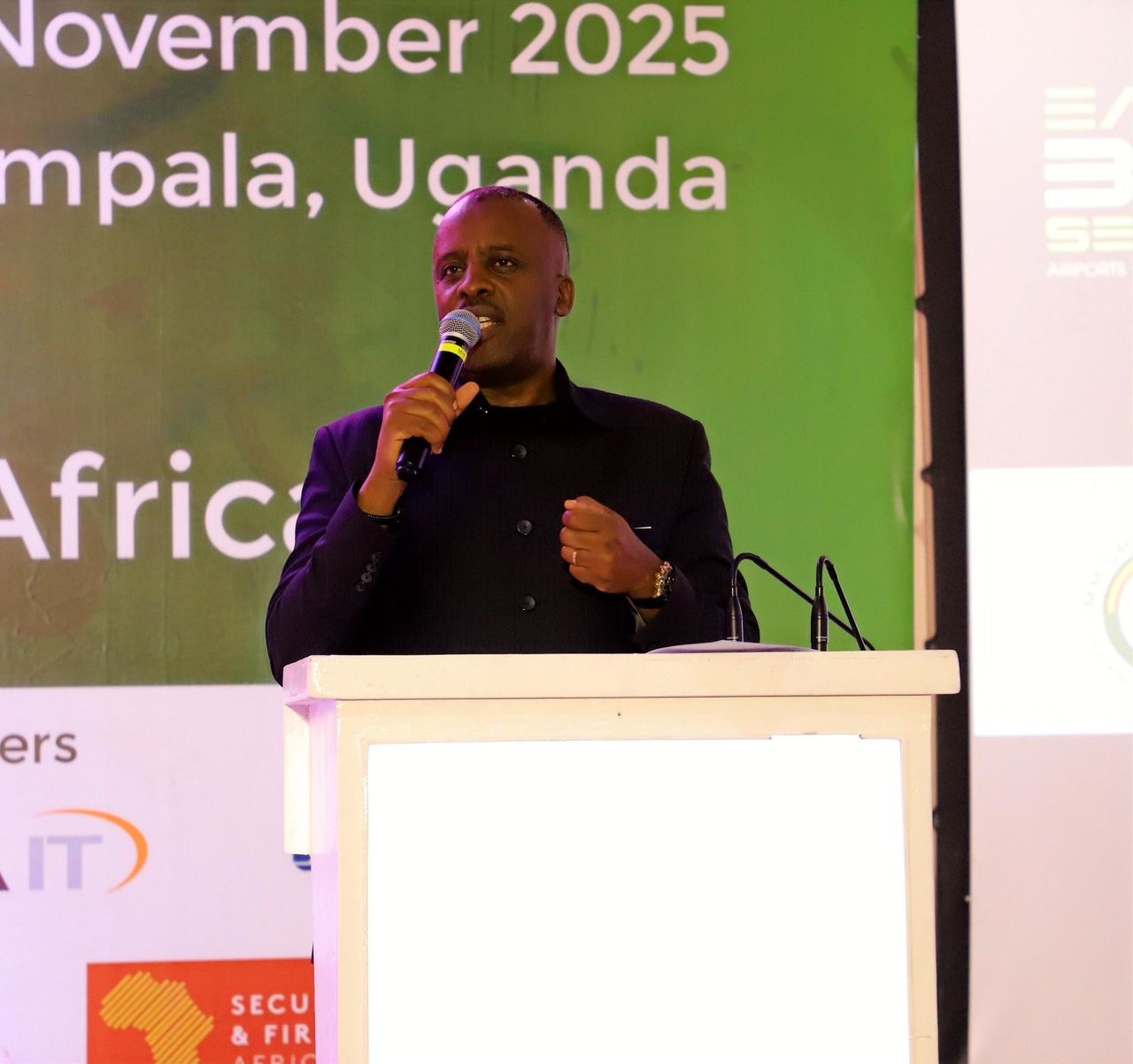
Minister of State for Internal Affairs Gen David Muhoozi has called on East African Community (EAC) member states to fast-track adoption of smart border technologies to counter rising organised crime, terrorism and irregular migration across the region.
Opening the East Africa Border Security Week 2025 in Kampala on Tuesday, Gen Muhoozi said regional security agencies must innovate to protect national stability while supporting trade and free movement under the EAC Common Market.
“Our borders remain the first line of defence against emerging threats from transnational organised crime, trafficking, and terrorism to biosecurity risks such as pandemics,” he said. “Securing our borders while facilitating legitimate movement in an increasingly digital and interconnected world is critical.”
He noted growing humanitarian pressures on border systems, pointing out that Uganda now hosts about 1.8 million refugees, largely from South Sudan and the Democratic Republic of Congo. Mixed migration flows and migrant smuggling networks continue to exploit ungazetted routes and remote crossings, he warned.
Muhoozi cited ongoing extremist activity, including the Allied Democratic Forces (ADF) in eastern DRC, alongside illegal arms movement, illicit financial flows and environmental crimes such as wildlife trafficking and illegal charcoal trade. He said resource-based disputes along border communities also continue to fuel insecurity.
According to the minister, modern technology must drive the region’s response. “The future of border security in the EAC is increasingly pointing us to adopt technology, innovation and cooperation,” he said. “By embracing these systems, we can strengthen border integrity while promoting trade, tourism and human mobility.”
He urged swift implementation of the proposed EAC e-Immigration Policy to harmonize procedures across partner states. “This should not remain on paper,” he said. “Authorities should take steps to put in place protocols to implement the policy.”
Muhoozi said Uganda is already pursuing full automation of border management — including biometric travel documents, e-passports, e-surveillance and advanced passenger information — to improve decision-making, reduce delays and enhance screening.
He stressed that digital transformation must be accompanied by transparency and respect for rights. “We must ensure that these technologies are applied ethically, transparently, and in full respect of privacy and human rights,” he said.
The minister also called for stronger partnerships with technology providers and international security organisations, saying border modernization requires significant investment. Joint operations, coordinated enforcement and real-time intelligence sharing within the EAC, IGAD and African Union were critical, he added.
“Security is a shared responsibility,” Muhoozi said. “Borders should not be barriers of fear and conflict, but corridors of peace, cooperation and prosperity.”
The conference has drawn immigration leaders, customs officials, security chiefs and private-sector technology experts from Kenya, Tanzania, Rwanda and South Sudan.
Maj Gen Apollo Kasiita-Gowa, the Director of Citizenship and Immigration Control, said Uganda faces rising smuggling, trafficking and illicit trade partly due to the porous nature of its borders.
“The biggest challenge we face is the porousness of our borders,” he said. “When areas cannot be effectively monitored, they become open to illegal crossings and other criminal activities.”
He said while border personnel remain essential, human monitoring alone is not adequate. New surveillance tools — including scanners, sensors, and automated cargo inspection systems — are being considered to detect concealed threats that manual checks miss.
“You cannot put a security officer everywhere across the border, but you can use systems to enhance visibility and control,” he said. “Machines can detect what the human eye may not see.”
The two-day conference is expected to recommend integrated border surveillance, improved intelligence sharing and expanded digital systems to strengthen security cooperation across East Africa.
