

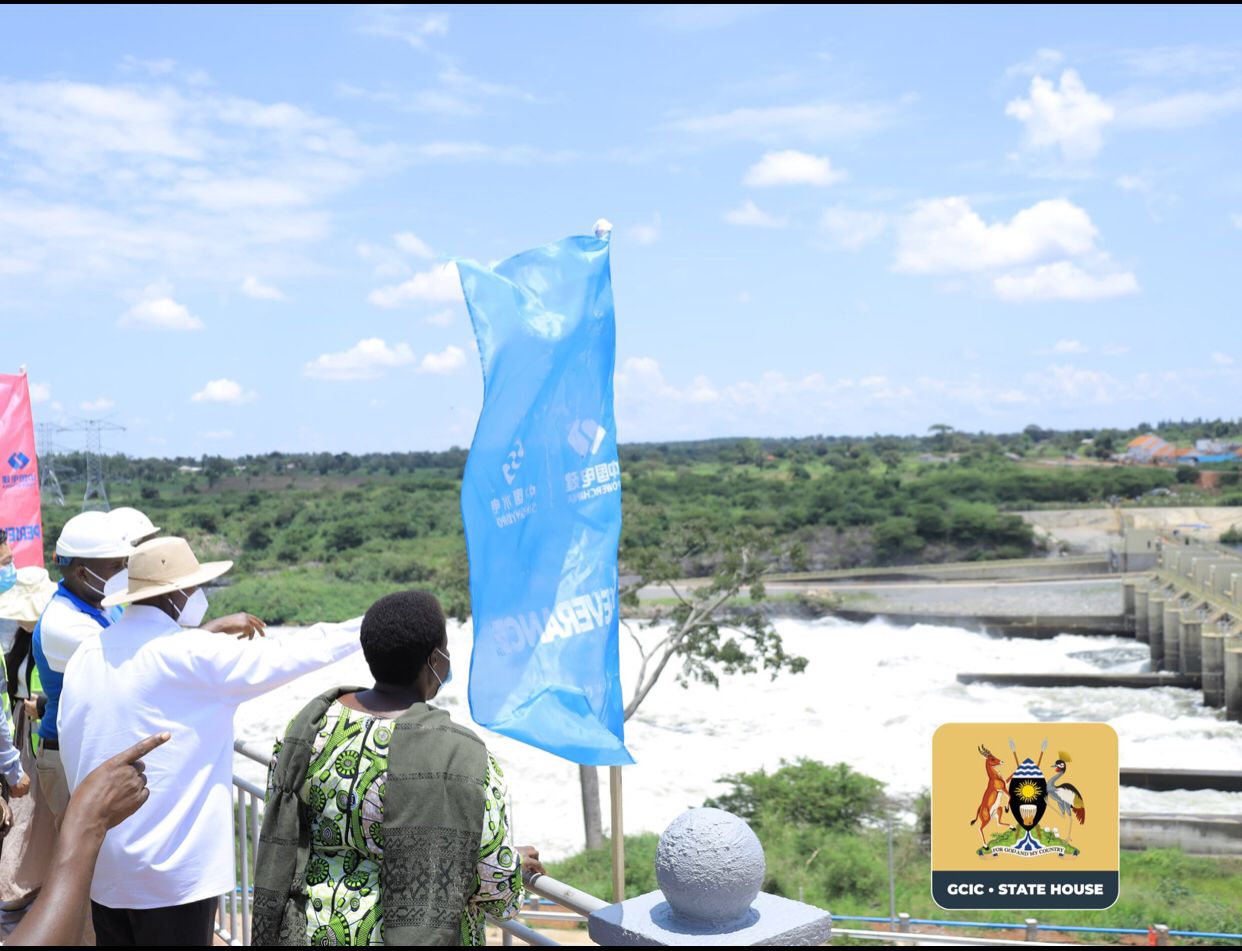
NATIONAL | Eleven odd years and $1.6 billion (Shs6.2 trillion) later, the long-awaited 600 megawatts are set to flow from Karuma Hydropower Dam.
The prized hydropower plant was commissioned by President Museveni yesterday, to much relief from the country that whose swathes of north continues to struggle with power shortage.
Karuma, positioned on the Kyoga Nile, the upstream section of the Nile River, is a beacon of hope for the country and offers a transformative milestone in the country's energy sector.
It will produce up to 600MW to juice the national grid, while running itself on a separate 60MW of hydropower.
Located in Karuma Town Council, Kiryandongo District, the $1.6 billion project is supported by a robust transmission network.
This includes a 284-kilometretransmission line to Kawanda in Kampala, a 55-kilometer line to Olwiyo in Nwoya, and a 75-kilometer line to Lira City, ensuring power is delivered to major load centers nationwide.
"Karuma is a critical part of our national energy strategy. It will substantially boost our power generation capacity, improve energy security, and promote sustainable development," said Ruth Nankabirwa Ssentamu, the minister of energy and mineral development.
Hydropower is Uganda’s primary energy source, with a potential capacity of over 4,100 MW. Karuma’s 600MW addition raises the country’s total capacity to 2,045.5MW, far surpassing the current peak demand of 900 to 1,000MW.
"Since 2004, peak demand has surged from 257MW to 988MW, driven by economic growth and expanded electrification. Access to electricity has risen from 5% in 2004 to 57% in 2023, a remarkable achievement in rural electrification," said Eng Irene Pauline Bateebe, permanent secretary of the Ministry of Energy.
Eng Bateebe also emphasized Uganda’s long-term goal of generating 52,000 MW by 2040 and achieving Sustainable Development Goal (SDG) 7—universal access to affordable and reliable energy.
She affirmed that projects like Karuma are crucial in realizing these objectives.
Local leaders celebrated the project’s positive impact. Joseph Oryem Lilly, chairperson of Karuma Central Ward, praised the plant for transforming the region, boosting local development, and creating jobs.
However, Oryem expressed concern over the lack of compensation for 125 landowners who provided land for the project 13 years ago.
He called on the government to address the issue and improve local infrastructure by connecting households to the power grid.
Kiryandongo District Chairperson Edith Aliguma Adyeri echoed these concerns, noting that land for resettling affected families had been acquired but the process stalled due to inadequate government funds.
The Karuma project displaced 3,735 people, including 280 landowners and 134 tenants, while the town's population has surged from 5,000 in 2013 to over 20,000 today.
President Museveni traced Uganda’s hydropower journey back to the 1954 inauguration of the Owen Falls Dam, which laid the foundation for the energy sector.
He cited other key projects, such as the 200 MW Kiira Hydropower Station (2003) and the 183.2MW Isimba Hydropower Project (2019), before describing Karuma as the country’s most ambitious energy undertaking to date.
He also promised to address compensation issues for those affected by the project.
The $1.688 billion Karuma project, funded by a $1.4 billion loan from China’s Exim Bank and $353 million in Ugandan government counterpart funding, was executed by Sinohydro Corporation Ltd. over 12 years.
As of July 2024, Uganda boasts a grid network spanning 4,496.4 kilometers, 42 substations, and a transformation capacity of 6,945.5MVA.
Karuma now stands as Uganda’s largest power installation and Africa’s biggest underground hydropower plant.
It serves as a cornerstone of the National Development Plan III, which positions energy as a key driver in Uganda’s transformation from a peasant economy to a middle-income nation by 2050.