

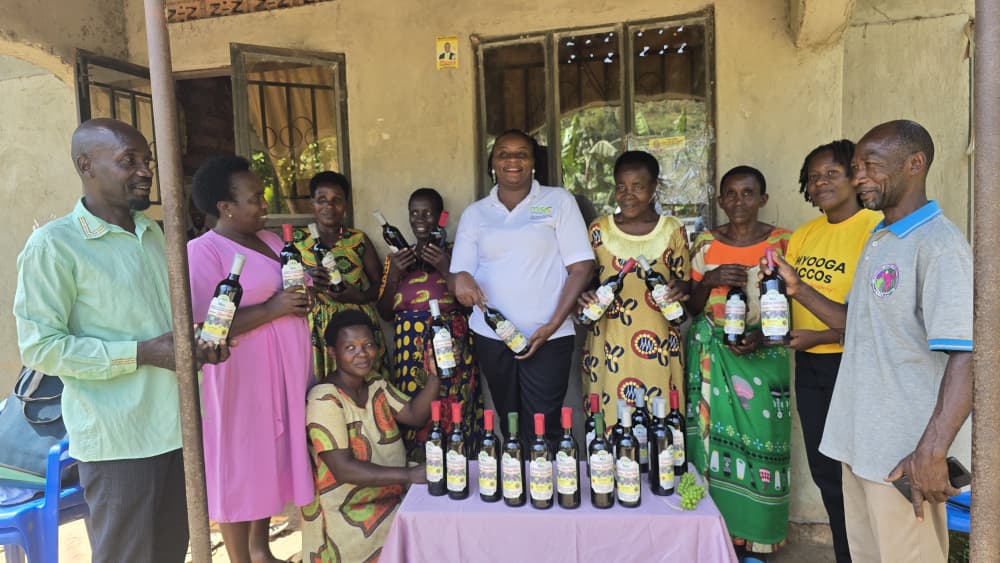
Women entrepreneurs in Mbarara City South have transformed their livelihoods, expanding trades in winery, briquette making, tailoring, and arts and crafts, thanks to seed capital from the government’s Emyooga program.
The Mbarara City South Women Entrepreneurs SACCO, which received initial funding in 2019, now has a total capital of over Shs327 million and supports more than 5,000 women across 202 groups.
Kauda Annet Wasswa, chairperson of the Nyarubungo B Women Entrepreneurs Association in Nyakayojo Division, recalled how her 30-member group struggled for years before Emyooga support.
“Our initial loan of Shs 1 million boosted production and livelihoods. We now make wine from grapes grown by our members, and our loans have increased to Shs5 million,” she said.
Janet Kabatungi, a member who grows grapes, said the SACCO has enabled her to construct a new house and start a poultry farm, highlighting the program’s impact on individual households.
Tailoring groups have also benefited. Mellon Kyomuhangi, of an 18-member women’s tailoring association, explained that their initial Shs1 million loan allowed them to buy sewing machines and produce sweaters, uniforms, and lab coats.
Subsequent loans totaling Shs5 million have expanded their equipment to 12 machines, enabling them to teach students as well as produce garments for local clients.
Speaking to NBS, SACCO chairperson Immaculate Tumuhimbise Mayanja said, “Our seed capital has grown from Shs70 million in 2021 to Shs327 million currently, supporting 202 women groups.
"We lend in groups and as individuals, with repayment periods of three, six, or twelve months depending on capacity. Successful repayment allows members to access larger loans.”
Emily Murungi, SACCO manager, added that the association works with members facing repayment challenges, offering grace periods as needed.
Despite these achievements, the groups face challenges with product standardization, which limits expansion into national and international markets.
“We have lost potential clients who want items in bulk because our products are uncertified, and production is still largely manual. We currently supply big hotels in Mbarara,” Kauda noted.
She added that wine sales remain mostly at weddings, NGO events, and individual customers, with a jerrycan costing Shs200,000 and bottles priced between Shs10,000 and Shs15,000.
The women call on the government to support certification and standardization of their products to increase market reach and fully capitalize on the Emyooga program.
