

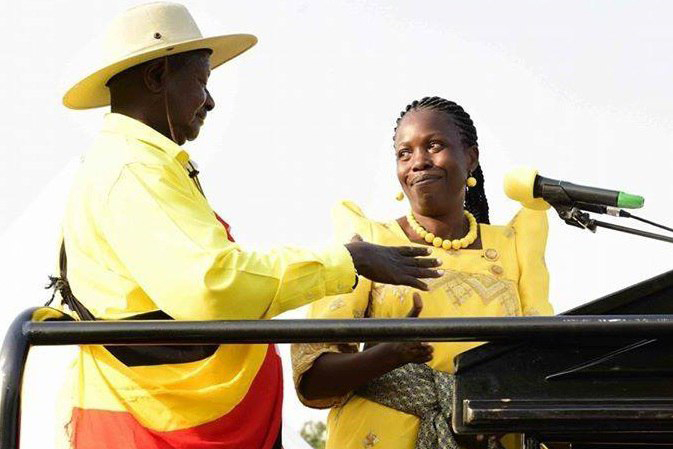
In a remarkable political turnaround, the National Resistance Movement (NRM) has reclaimed its dominant position in Buganda, a region that in previous elections was largely considered a stronghold of the opposition.
President Museveni secured a commanding victory in the 2026 presidential election, capturing 71.6% of the votes in Buganda, a dramatic swing from previous years when opposition candidates, particularly under the National Unity Platform (NUP), had maintained significant leads.
Analysts say this resurgence reflects a combination of intensified government programs, infrastructure development, grassroots mobilization, and targeted social interventions that have tangibly improved livelihoods across the central region.
The electoral statistics across the region underscore the scale of the NRM’s revival. In Kyotera District, for example, President Museveni garnered 25,598 votes in the 2021 election, representing just 33.8% of ballots cast.
By 2026, the district’s registered voters had increased to 146,785, with Museveni recording a significant increase in support.
Similar patterns were evident in Kalungu District, Butambala, Mpigi, and Nakaseke districts, where his performance improved markedly compared to 2021.
Analysts attribute much of this shift to the government’s consistent rollout of social and economic programs over the past five years, which have delivered visible improvements in education, health, water access, and local economic empowerment.
One of the flagship interventions, the Parish Development Model (PDM), has had a far-reaching impact. In Kyotera, the program has cumulatively disbursed over Shs19.4 billion to 20,519 households, representing nearly 29% of the district’s total households.
Similarly, Kalungu has seen 11,983 households benefit from PDM funds totaling more than Shs. 11.3 billion, while Mpigi’s PDM initiative has supported 16,829 households with over Shs16.6 billion.
Butambala and Nakaseke have recorded comparable achievements, with thousands of households receiving funding that has enabled them to invest in small businesses, agriculture, and local enterprises.
The program’s focus on inclusive economic participation, particularly for women and youth through Emyooga SACCOs, has helped cement NRM’s support base in communities that had previously felt marginalized.
Education has also been a central pillar of the NRM’s strategy in Buganda. Across the region, government primary and secondary schools have seen significant expansion and upgrading.
Kyotera District alone hosts 112 government primary schools and 14 secondary schools, with 13 offering Universal Secondary Education (USE) and Universal Post-Ordinary Level Education and Training (UPOLET).
Kalungu, Mpigi, and Butambala districts have similarly invested in the expansion of secondary education, constructing new Seed Secondary Schools to ensure that every sub-county can access a government secondary institution.
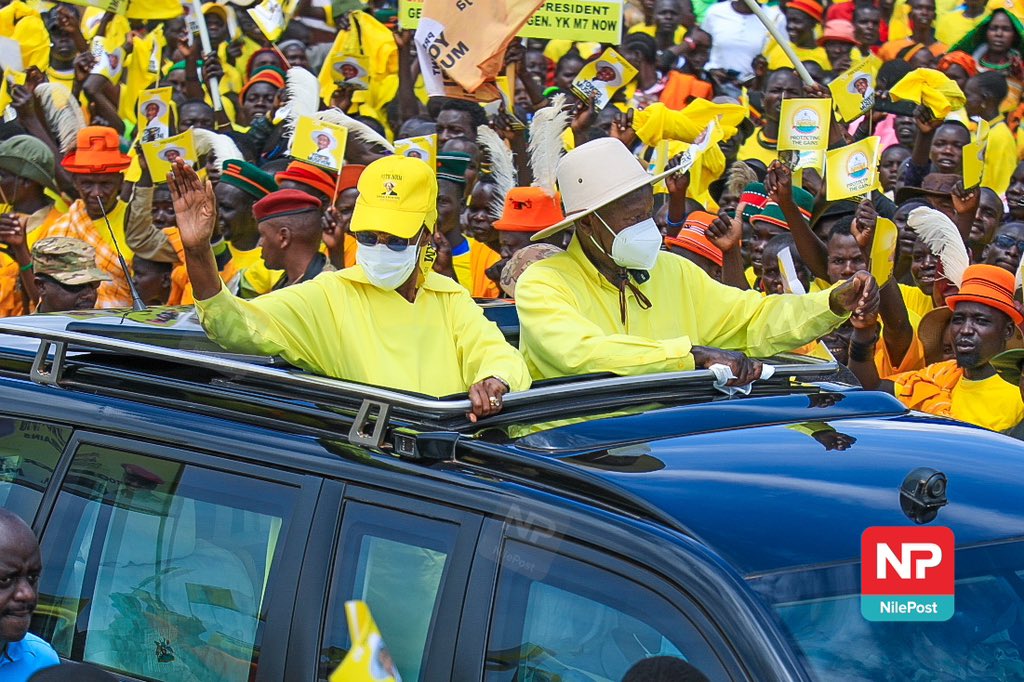
Education analysts note that improved access to schools has not only increased enrollment but also raised NRM’s profile among parents and community leaders who associate these developments with government stewardship.
Health sector improvements have further reinforced NRM’s appeal. In Kyotera, 12 sub-counties have health center IIIs, while the district hospital and health center IV facilities provide advanced care.
Ongoing construction projects, including maternity wards and staff housing, signal sustained investment in healthcare infrastructure.
Kalungu and Mpigi districts have similarly expanded access to health services, with the introduction of HCIVs, rehabilitated hospitals, and functional X-ray units in key locations.
Construction projects entice voters
In Nakaseke, the government has undertaken phased construction projects, including maternity wards, general wards, and hospital renovations, while planning additional health centers to ensure that no sub-county lacks essential medical facilities.
The emphasis on healthcare has resonated strongly with voters, particularly in rural communities where access to quality medical services had historically been limited.
Water and sanitation have also featured prominently in the government’s portfolio of interventions. In Kyotera, approximately half of the 334 villages now have access to safe water sources, supported by piped water systems, borehole drilling, and rainwater harvesting initiatives.
Kalungu has achieved an impressive 93% coverage of rural villages, while Butambala and Nakaseke have seen 87.2% and 90% of villages, respectively, connected to clean water supplies.
The government’s focus on sanitation facilities in schools, health centers, and growth centers has complemented these efforts, reinforcing the perception that NRM governance delivers tangible improvements in daily life.
In addition, the Water for Production program has enhanced agricultural productivity through solar-powered irrigation schemes in Mpigi, Butambala, and Nakaseke districts, boosting yields of crops such as coffee, maize, cassava, and vegetables, and generating significant household income.
For communities reliant on subsistence farming, these interventions have had an immediate impact on livelihoods and food security.
Electrification has also played a role in NRM’s appeal. Most districts in Buganda are now connected to the national grid, with ongoing plans to extend electricity to the remaining sub-counties.
In Kyotera, 13 out of 14 sub-counties are electrified, while Kalungu and Mpigi have achieved full coverage of their sub-counties.
Nakaseke and Kalangala are working to bring electricity to the remaining areas. Access to electricity has facilitated small-scale industry, improved service delivery in schools and health centers, and enhanced security, all of which have been cited by local leaders as contributing to the region’s growing confidence in government programs.
Agricultural development under the Water for Production initiative has further strengthened the NRM’s foothold. Mpigi District, for instance, has implemented multiple solar-powered irrigation schemes covering over 100 acres, enabling farmers to grow coffee, maize, beans, and vegetables, with combined annual earnings exceeding Shs60 million.
Butambala and Nakaseke have introduced similar schemes, improving both subsistence farming and commercial agriculture.
By providing farmers with reliable water sources, training, and access to microfinance through Emyooga SACCOs, the government has created a tangible link between policy and economic benefit, translating into increased political support.
The 2026 election results also highlight the effectiveness of targeted interventions in addressing historical voter disenfranchisement.
In Kalungu, registered voters increased by over 14,000 compared to 2021, and polling stations rose from 188 to 248.
Kyotera added more than 21,000 registered voters, and Nakaseke saw a rise of 23,432. These increases reflect both demographic growth and deliberate outreach by the government to ensure that rural populations are included in the electoral process.
In many instances, the expansion of polling stations coincided with the implementation of development projects, signaling a coordinated approach to governance and electoral engagement.
Infrastructure development has further reinforced the narrative of progress under NRM rule. Road improvements, construction of schools and health facilities, and urban piped water systems have visibly transformed many towns and growth centers.
Kalangala’s comprehensive urban water systems now serve thousands of residents, while Butambala’s ongoing construction of mini solar-powered piped water sources exemplifies the government’s commitment to extending essential services to previously underserved areas.
The construction of Seed Secondary Schools across districts has ensured that every sub-county will eventually have access to government-provided secondary education, a milestone that local leaders say will have generational impact.
While programs and infrastructure investment were central to NRM’s comeback, political analysts point to the role of grassroots mobilization as a decisive factor.
Buganda ku Museveni campaign
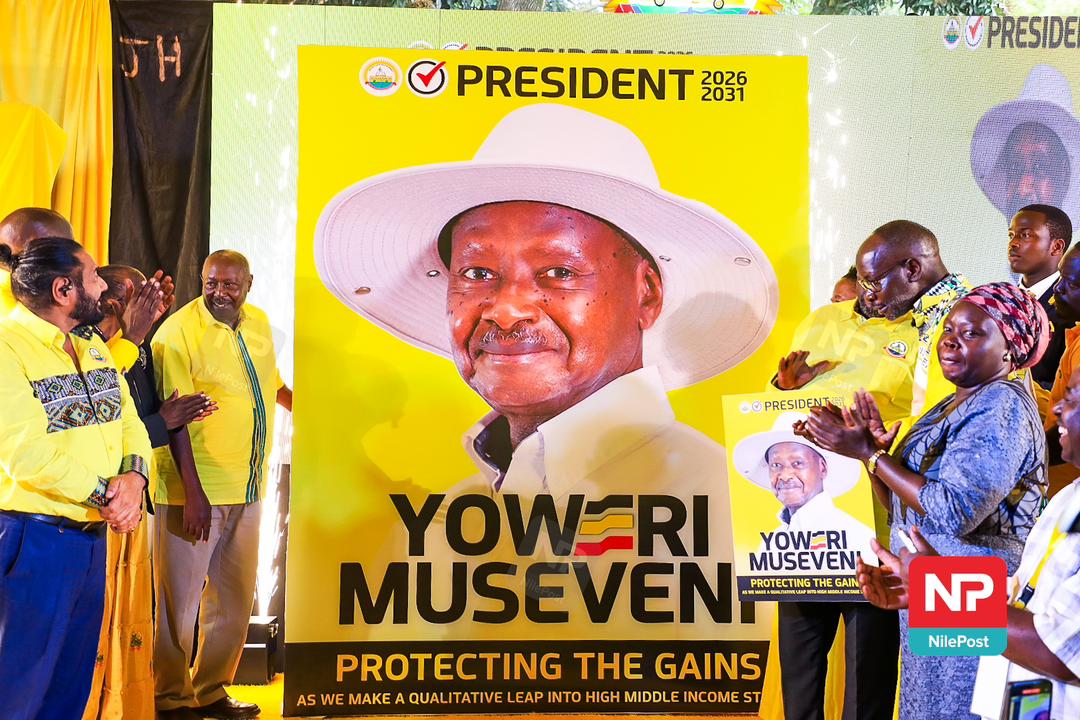
The Buganda ku Museveni initiative, spearheaded by local leaders and mobilizers, actively engaged communities across all districts in Buganda.
The Buvuma District Member of Parliament and chairperson of the Buganda Parliamentary Caucus, Robert Migadde, described the program as instrumental in reconnecting voters with the ruling party.
“The Buganda ku Museveni group has been instrumental in reconnecting the people of Buganda with the NRM. Their dedication and outreach are clearly reflected in the election results,” Migadde said.
He added that mobilisers toured all districts, engaging with residents, listening to their concerns, and relaying them to party leadership.
“Through the Buganda ku Museveni programme, we toured all districts, listened to the people and addressed their concerns. This effort has helped both the NRM and President Museveni regain popularity in the region,” he said.
According to Migadde, while the party had anticipated winning more than 75 parliamentary seats in Buganda, it ultimately secured at least 60 MPs, in addition to four independents aligned with the NRM.
Migadde also highlighted the growth in presidential support facilitated by the initiative.
“In 2021, the President garnered about 28 per cent support in Buganda. In the recent elections, this rose to approximately 49 per cent, which is a notable achievement,” he said, adding that the party was encouraged by the trend.
Despite facing resistance from some within the NRM, who accused the group of blocking access to the President, the initiative’s focus remained on community engagement.
“Some individuals tried to tarnish our image, portraying us as conmen seeking personal gain from the President,” Migadde explained.
Looking ahead, Migadde said the priority is to ensure that commitments made to communities during campaigns are fulfilled.
In Buvuma District, for instance, residents are expecting the extension of electricity, the upgrading of Buvuma Hospital from a Health Centre IV to a fully fledged independent hospital, compensation for donors of coconut land, and the resolution of other long-standing issues.
“The people of Buvuma have high expectations, and we are committed to meeting them,” he said.
The cumulative effect of government programs, infrastructure delivery, and grassroots mobilization has been to reshape the political landscape of Buganda.
While opposition parties once enjoyed a clear advantage in urban and peri-urban centers, the consistent delivery of services and visible improvements in living conditions have realigned public perception.
Community members across districts consistently point to programs such as PDM, Emyooga SACCOs, expanded education facilities, health infrastructure, water and electricity supply, and initiatives like Buganda ku Museveni as reasons for renewed trust in government.
Local leaders and elders frequently note that the tangible benefits of these initiatives outweigh partisan considerations, leading many previously undecided voters to support the NRM in the 2026 elections.
Political analysts observing the region describe the 2026 results as a watershed moment. Buganda, historically a politically competitive region, has now registered one of the most decisive swings toward the incumbent government in recent decades.
The combination of socio-economic programs, infrastructure development, and proactive engagement with communities has redefined the NRM’s relationship with the electorate.
In districts like Kyotera, Kalungu, and Mpigi, where the opposition previously dominated, the government’s interventions have created tangible evidence of progress, shifting public sentiment in favor of Museveni and his party.
Critics acknowledge that while the election results are clear, maintaining public support will require ongoing delivery.
Many of the projects, especially in water and energy, are still in progress, and the expansion of health and education services will need careful management to ensure sustainability.
Nevertheless, the scale and visibility of completed programs, coupled with active outreach initiatives such as Buganda ku Museveni, provide a strong foundation for continued political influence.
The administration’s ability to connect policy outcomes to voter needs has proven decisive in reversing earlier political trends and securing a robust mandate.
In summation, the NRM’s sweeping victory in Buganda in the 2026 presidential election is a product of multifaceted government interventions that have transformed the region’s socio-economic landscape.
Across the central region, key programs such as the Parish Development Model, Emyooga SACCOs, education expansion, health infrastructure upgrades, water and sanitation improvements, agricultural support, electrification, and grassroots mobilization initiatives like Buganda ku Museveni have delivered measurable benefits to communities.
The electorate’s response, culminating in Museveni’s 71.6% victory, reflects both appreciation for tangible development outcomes and a renewed confidence in the NRM’s capacity to govern effectively.
Buganda’s political landscape has shifted, signaling a new era in which sustained delivery of services and community engagement will determine future electoral outcomes.
