

Adjumani District faces a looming health crisis after Medical Teams International (MTI) laid off 243 health workers deployed across 13 integrated health facilities serving both refugees and host communities.
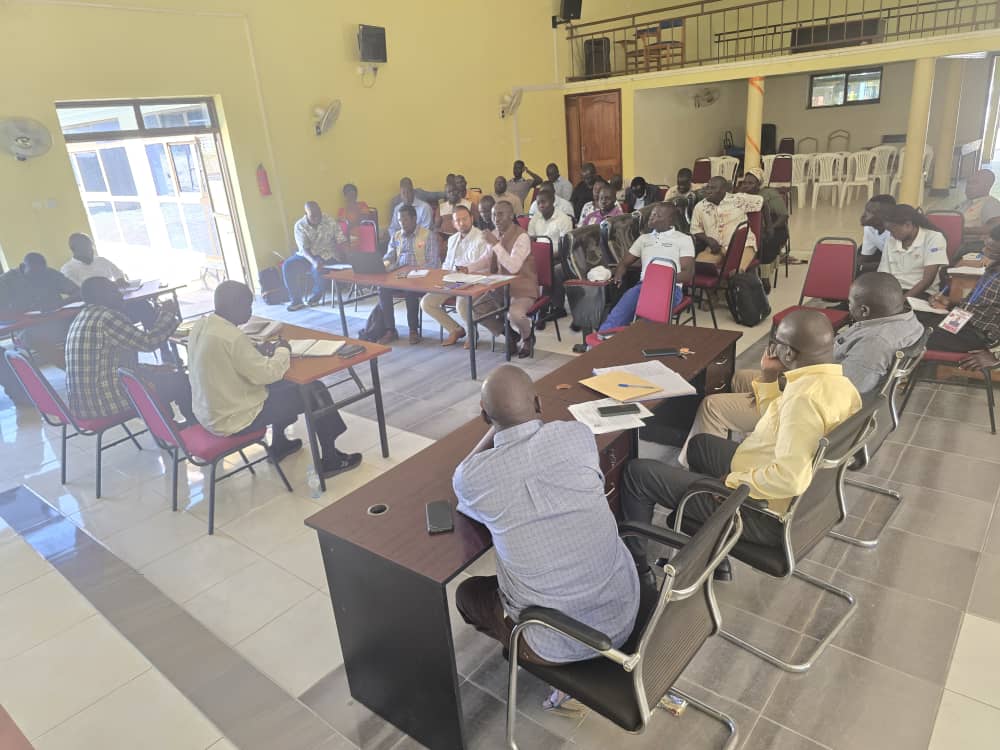
The layoffs, announced this week, prompted Adjumani District Local Council Five Chairperson Ben Anyama to convene an urgent stakeholders’ meeting, warning that service delivery would be severely affected in a district hosting over 230,000 refugees across 19 settlements.
“We unanimously agreed that Medical Teams International must retain its staff. Laying off 243 workers will drastically affect health service delivery in Adjumani, especially in refugee-hosting areas,” Anyama said.
“These facilities are already overstretched, and any reduction in staff will directly affect lives.”
District leaders resolved to summon MTI and its funder, the United Nations High Commissioner for Refugees (UNHCR), to provide feedback through their Kampala offices, with a follow-up meeting scheduled for next Wednesday.
According to district records, MTI had deployed 243 health workers to the 13 facilities, while the Government of Uganda contributed an additional 84 personnel.
Adjumani District Health Officer Dr. Dominic Drametu warned that the remaining staff would be overwhelmed, risking burnout and a decline in patient care quality.
MTI’s Regional Program Manager, Dr. Christopher Nyolonga, attributed the decision to funding constraints.
“For 2026, only shillings 325 million has been budgeted for human resources, and currently we have just 45 staff ready for deployment,” Nyolonga said, contrasting this with shillings 5.6 billion allocated in 2025.
UNHCR’s Head of Sub-Office in Adjumani, Bernard A. Inkoom, acknowledged the funding shortfall, noting that allocated resources come with strict conditions, which could negatively impact both technical and support staff.
Adjumani Resident District Commissioner Swaib Toko condemned the layoffs, emphasizing that access to healthcare is a basic human right.
District officials have appealed to UNHCR, development partners, and the central government to intervene immediately to ensure continuity of health services, warning that delays could have severe consequences for both refugees and host communities.
