

Uganda’s digital economy is growing at an unprecedented pace, driven by mobile technology, e-commerce, and digital financial services. Yet, even as government and private sector players push more services online, millions of Ugandans remain reliant on basic feature phones.
This raises a critical question: Is Uganda ready to transition into a fully smartphone-first economy?
In downtown Kampala, smartphones are quickly becoming as essential as wallets. From mobile banking and online shopping to ride-hailing services and social media marketing, these devices are transforming how people live and work.
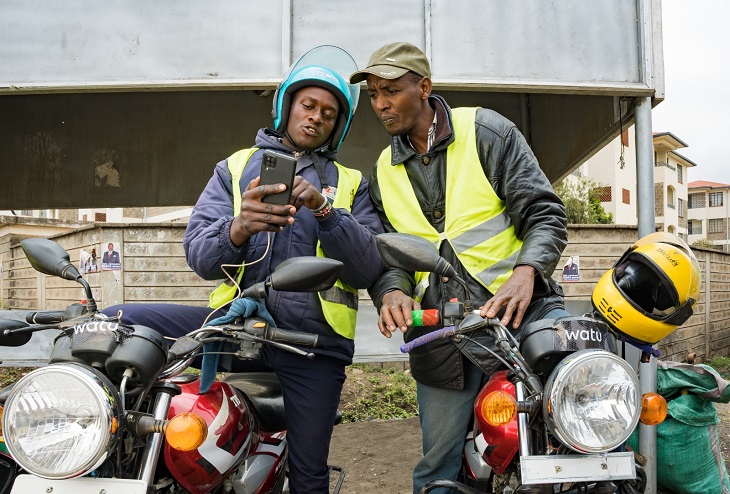
For Charles Mudiope, a boda boda rider, investing in a smartphone has been life-changing.
“I no longer sit at the stage like some of my colleagues,” he says. “I get most of my customers through apps on my phone. I’m not limited by time—people can request rides at any hour. This has really improved my income.”
Joseph represents a growing segment of Ugandans leveraging smartphones to access new economic opportunities, particularly within the gig economy.
However, not everyone has made that transition. For many, the cost of smartphones remains a major barrier.
Kayiira Joel, another boda boda rider, still relies on a basic feature phone—limiting his ability to compete in an increasingly digital marketplace.
“I just sit at the stage waiting for customers,” he explains. “Meanwhile, my colleagues using ride-hailing apps are constantly getting work. My phone cannot support those applications. A smartphone would help me earn more, but I simply cannot afford it.”
Joel’s experience highlights a widening digital divide, where access to technology directly influences earning potential.
Recent estimates indicate that smartphone penetration in Uganda has reached about 33%, meaning only one in three Ugandans owns a smartphone. While this marks progress, it also underscores how far the country still has to go before achieving a truly inclusive digital economy.
According to budget policy analyst Julius Mukunda, affordability remains the biggest obstacle—and taxation is a key factor driving up costs.
“Our current tax structure on digital devices is counterproductive,” Mukunda notes. “If we want more Ugandans to come online, then smartphones must be made more affordable, especially entry-level devices.”
He adds that studies from Rwanda, South Africa, and Kenya have shown that eliminating taxes on entry-level smartphones increases access and digital adoption.
The Ministry of ICT and National Guidance acknowledges the challenge and says steps are being considered to address affordability barriers.
Dr Chris Baryomunsi, the Minister of ICT, has indicated that government is aware of the gaps and is working on interventions to support wider access to smart devices.
While details remain limited, stakeholders are hopeful that policy reforms will align with the country’s broader digital transformation agenda.
There is little doubt that smartphones are powering Uganda’s digital future—enabling small businesses, facilitating mobile payments, and expanding access to information and markets.
However, the transition to a smartphone-first economy will not happen overnight. Without deliberate efforts to make devices more affordable, a significant portion of the population risks being left behind.
Back at the boda boda stage, Kayiira Joel continues to wait for his next customer, saving slowly for a smartphone he believes could change his fortunes.
Until that becomes a reality for many like him, Uganda’s journey from feature phones to smart devices will remain uneven—marked by both progress and persistent gaps.
