

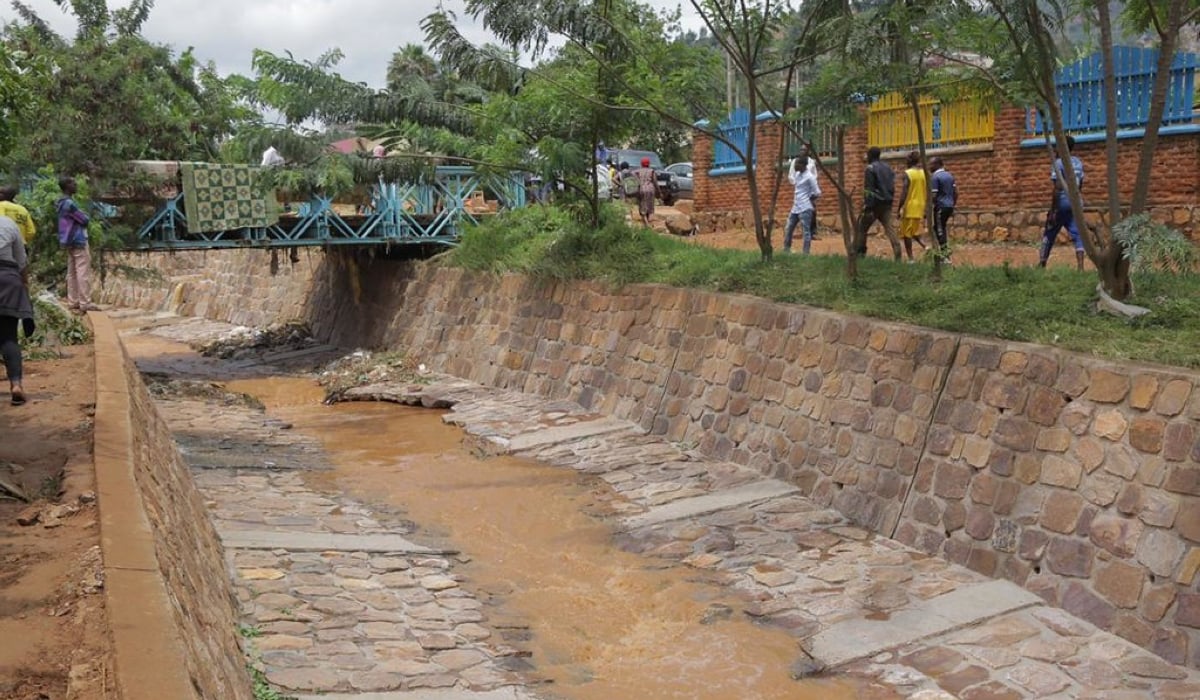
The City of Kigali has identified at least 112 kilometres of drainage infrastructure in urgent need of construction or upgrade, as it steps up efforts to combat increasing cases of flooding and erosion triggered by poor water management.
The city’s mayor, Samuel Dusengiyumva, revealed the plan on July 8 while appearing before Rwanda’s Public Accounts Committee (PAC), according to the New Times.
Dusingiumva was responding to concerns raised in the Auditor General’s latest report for the fiscal year ending June 30, 2024.
The most pressing concern was tabled by MP Marie Claire Uwumuremyi, who flagged the widespread issue of community-funded roads being built without accompanying drainage systems.
“We may build some roads, only to see others destroyed by poor water management,” Uwumuremyi warned, highlighting how unregulated surface water continues to undo infrastructure gains.
Mayor Dusengiyumva admitted the city faces a serious drainage shortfall and said authorities are working with both the Ministry of Infrastructure and the Ministry of Finance and Economic Planning to mobilise funding.
He also confirmed that the issue had been brought to the attention of the World Bank under an ongoing urban development project.
“Our top priority is to construct these drainage systems to ensure proper water flow into rehabilitated wetlands,” Dusengiyumva said.
“This is essential for reducing flooding, protecting our infrastructure, and preserving soil integrity in the city.”
Parts of Kigali most vulnerable to recurrent flooding include Rugunga, Gisozi-Umukindo, Rwandex, Kinyinya, and Nyabisindu—areas that have suffered repeated damage during the rainy season.
The city’s approach is expected to blend climate resilience with urban renewal, amid growing calls from lawmakers and citizens for sustainable water management systems in rapidly growing neighbourhoods.
The PAC session comes amid wider scrutiny over infrastructure planning and execution in Rwanda, with lawmakers pushing for long-term safeguards against climate-related losses that affect both public assets and communities.
