

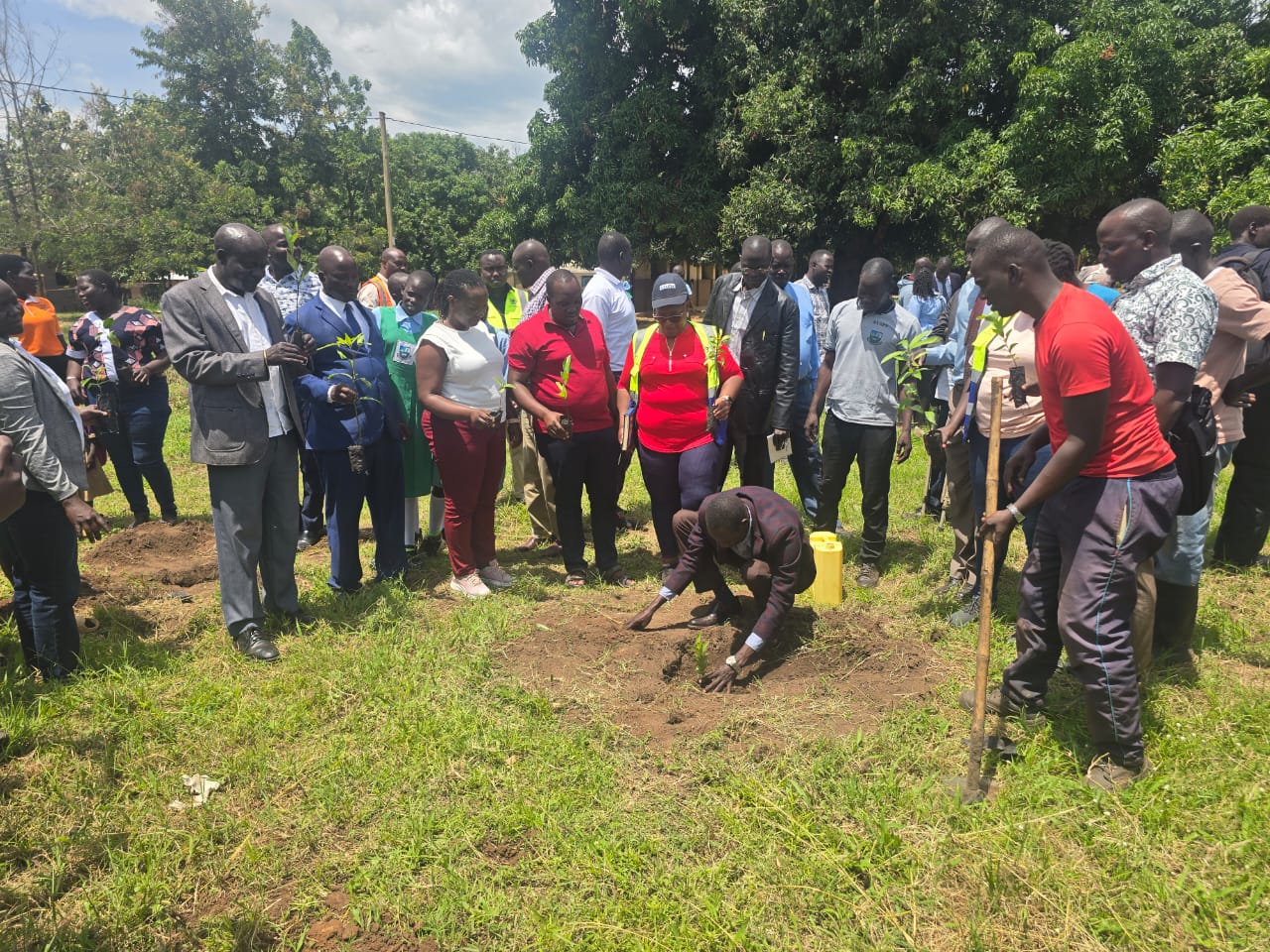
The Ministry of Water and Environment has officially launched a tree planting exercise in the refugee-hosting districts of Adjumani and Lamwo as part of a broader multi-billion shilling water and sanitation project aimed at improving access to clean and safe water while restoring degraded ecosystems.
The intervention is embedded within the ongoing construction of solar-powered piped water supply systems and sanitation facilities under the Directorate of Water Development.
The project, co-financed by the World Bank and the Government of Uganda, integrates environmental restoration as a central component of water sustainability.
Under this framework, the ministry has introduced a tree planting campaign intended to restore depleted forest cover and protect critical water catchment areas.
Officials say the initiative is essential for sustaining water sources, noting that trees play a vital role in groundwater recharge and climate resilience.
In Adjumani District, the launch took place at Gwere Primary School, while in Lamwo District the exercise was held at Pangira Primary School.
The events brought together local leaders, technical officers, stakeholders, and school children, who actively participated in the planting exercise and were encouraged to adopt environmental conservation practices through tree growing and care.
Speaking at the launch, Doreen Namara, the official in charge of environment and social safeguards at the ministry, who represented the Permanent Secretary Dr Alfred Okot Okidi, urged district leaders to take ownership of the initiative to ensure its sustainability.
“The success of this intervention depends on the commitment of local authorities and communities to care for the trees and ensure they grow,” she said. “This project will contribute to a greener, healthier and more resilient environment in these districts.”
In Lamwo District, the District Environment Officer, Richard Ociti, warned that environmental degradation has reached alarming levels due to unsustainable human activities.
“Poor waste management and deforestation have caused significant damage to the environment over the years. Planting trees is a necessary step toward reversing this trend,” Ociti said.
Lamwo Assistant Resident District Commissioner Robinson Oyoo pledged the district’s commitment to protecting the newly planted trees against threats such as drought, stray animals, and wildfires during dry seasons.
“We are committed to ensuring these trees survive despite challenges such as drought, stray animals and wildfires during the dry season,” Oyoo said.
Lamwo Assistant Chief Administrative Officer Samuel Lagu welcomed the initiative and said it would be extended to community level implementation.
“Trees are central to human life. They provide fuel, shade, fruits and help purify the air. We shall roll this campaign down to communities to restore lost tree cover,” he said.
In Adjumani, local leaders raised concern over the high rate of deforestation, noting that forest loss is occurring at nearly twice the rate of restoration.
The trend has been linked to population pressure and the presence of refugees across 19 settlements in the district, which has increased demand for wood fuel and settlement space.
Adjumani District Chief Administrative Officer Richard Edema Draciri commended the ministry for the intervention, noting its dual benefit to both host communities and refugees.
“This initiative will benefit both refugees and host communities who depend on the same limited natural resources,” he said.
Adjumani Resident District Commissioner Swaib Toko said government is intensifying sensitisation efforts to promote sustainable environmental use.
“We are strengthening sensitization efforts to guide communities on sustainable use of the environment. More interventions will follow to ensure lost tree cover is restored,” Toko said.
The integrated project reflects government’s broader strategy of linking water access infrastructure with environmental conservation, with officials expressing optimism that the initiative will enhance water security while restoring ecological balance in northern Uganda.
