

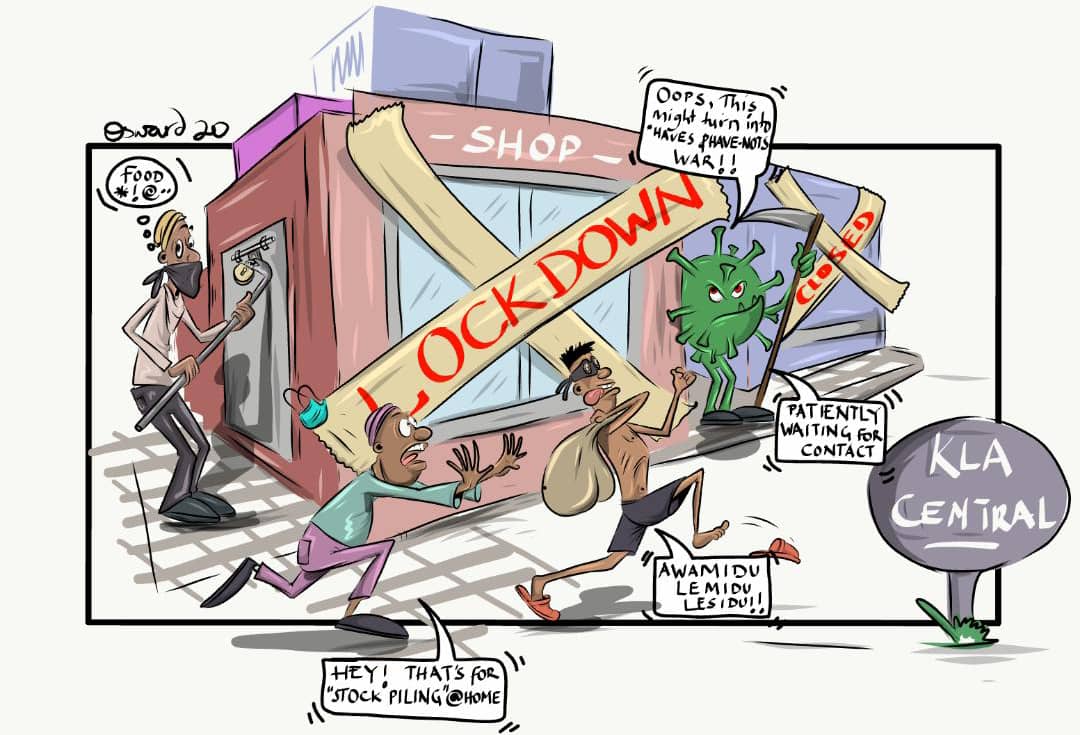
In the light of 23 confirmed cases of covid-19, Uganda is headed for tough times economically. So far, the mini lockdown following the ban on public transport is already biting. On Thursday day 1 after the ban, a video circulated on social media showing young men looting pineapples from a pickup that seemed to have been delivering to the market in Kampala.
The video gave me a picture of what is bound to happen in the next few days as the lockdown bites. Why were people looting from a trader, in broad day light, as people record videos, something that’s not common in the city centre?
In 2018, it was estimated that taxis account for 22% of the mode of transport in Kampala Metropolitan, walking accounts for 46%, boda bodas – 17% while 13% for private cars. If you put together taxis, boda bodas – that is already 39% of public transport, add people who own cars but have been asked to stay home by their employers especially government, add those that walk to work on a daily but now have no reason to go to work because there is no business. That might bring you to more than 50% of the entire public transport paralyzed.
Those that are lucky to have private cars and are able to go to work, will consume fuel, but these are multi-national companies benefitting from this. The major players; Shell, shell Oil Company is a United States-based wholly owned subsidiary of Royal Dutch Shell, Total; a French multinational integrated oil and gas company.
Those staying at home will need to support their families and relatives they can’t travel to go see, so they’ll transact through mobile money. Major players again; MTN and Airtel; both multinationals.
Banks will experience major transactions too, because savings will be withdrawn to take care of the survival needs in homes. Major players in banking, are multinationals. I don’t want to think that this is a case of positioning. But this communicates to the large picture that the economy is not owned by us. This is a path Uganda took from the late 1980s, recovering from what observers say are Iddi Amin’s non-progressive economic policies. Uganda over liberalized trade and that is also how the multinationals shaped our post conflict recovery process. We handed our economy to multinationals and suffocated local investors, created competition for them and drove them off the market.
Now that COVID-19 has left us naked, and we are on our own, the looming disaster of the economy is going to be perpetuated by those who have been driven out of daily business. Looting is likely to be the order of the day and this is not because of covid-19 but rather a condition created over a long period of time, it has been a ticking time bomb.
The author is a senior investigative journalist and political reporter at NBS television.
