

In my article, “Museveni can claim the moral high ground above other African leaders who murder their opponents”—published in the Nile Post the day after Dr Kizza Besigye returned from Kenya—I wrote:
“Instead of condemning his abduction, we might have been condemning his targeted murder by ‘unidentified’ men or women, through disappearance, strangulation, or shooting to kill.”
Why?
Granted, Dr Besigye is to President Museveni what the late Philippines opposition leader Benigno “Ninoy” Aquino was to Ferdinand Marcos—a sworn political opponent. But that is where the similarity ends. President Museveni has dealt with Dr Besigye in a strikingly different way from Marcos with Aquino.
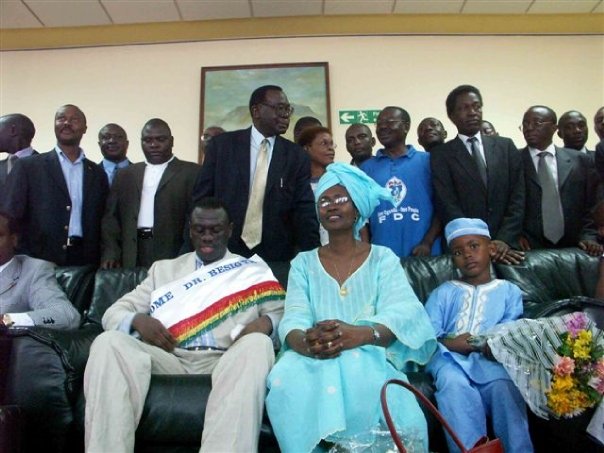
While Marcos deployed a firing squad that assassinated Aquino at Manila International Airport on August 21, 1983, Museveni received Besigye through the VIP lounge at Entebbe Airport when he returned from exile to contest the 2006 elections. Winnie Byanyima and I were present in the VIP lounge with other FDC top brass.
Yet, inexplicably, today Winnie Byanyima frequently tells the media that Museveni and his son, Gen. Muhoozi Kainerugaba, are intent on killing her husband in Luzira prison. I can, without fear of contradiction, enumerate occasions when Museveni could have killed Besigye at least ten times—and I was present for nearly all of them.
In May 2005, hundreds of delegates from Uganda and elsewhere gathered in Krugersdorp, South Africa, to plan Besigye’s return to contest the 2006 elections. A government agent posing as a delegate could have assassinated him, blaming post-Apartheid South African criminal elements.
On October 26, 2005, Besigye and Byanyima rode atop an open vehicle from Entebbe to Kololo Airstrip, where they addressed a massive rally. They could have been killed during the six-hour journey or the rally itself.
A few days later, while visiting friends in Kololo, a government ambush could have been staged against Besigye, the late James Musinguzi, and me. During campaigns in Lango and Acholi in late 2005 and early 2006—active war zones—agents disguised as rebels could have assassinated us, but NRA security ensured our safe return.
In January 2006, while leaving Bulange after a meeting with the Buganda Prime Minister, Captain Magara fired several bullets into the crowd escorting our vehicle. Deaths and injuries occurred, yet Besigye was not the target. During the 2011 ‘Walk to Work’ protests, a child was killed amidst crowd control—again, Besigye narrowly escaped.
In November 2024, six Kenyan police officers entered a Nairobi apartment where Besigye and Obeid Kamulegeya were meeting friends. These officers turned out to be Ugandan security agents who, instead of killing them, took the two to detention in Kampala—the only incident in which I was absent.
Between 2005 and 2018, Besigye was a frequent overnight guest at my London home, effectively the FDC “High Commission” for the UK, Europe, and North America. Museveni could have approached me with bribes or offers to poison him—but never did. On the contrary, I warned the British government to monitor Besigye’s safety.
Winnie Byanyima should not inadvertently jeopardise Besigye’s trial by framing it as a personal quarrel between herself, Museveni, Muhoozi, and Besigye. I urge her to join me in advising Besigye to apply for Amnesty. This would not imply guilt but could expedite his release, sparing him further stress at age 70 on April 22 this year.
Dr Sam Akaki – Former FDC International Envoy to the UK, EU, and North America
