

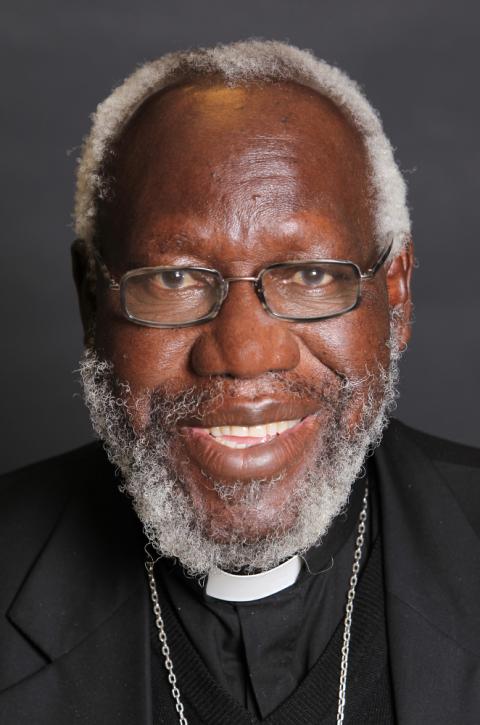
On November 1, 2023, the young nation of South Sudan, and the catholic fraternity bid farewell to a remarkable legend, Bishop Paride Taban, the first Catholic Bishop of Torit Diocese in South Sudan who died at the age of 87 while receiving medical treatment in Nairobi, this beloved spiritual leader embarked on his final journey, leaving behind a legacy of unwavering faith, compassion, and an unyielding commitment to peace and unity.
Bishop Taban's life was a testament to the power of faith and the enduring spirit of humanity. Born in Katire in 1936, he was ordained a Priest in May 1964. His journey of service to God and his fellow human beings began in earnest, and his impact on the world seemed to be just beginning.
In January 1980, he was appointed as the Auxiliary Bishop of Juba Archdiocese. He carried the torch of hope during some of South Sudan's most challenging times, and in July 1983, he was named the first Bishop of Torit. Throughout two tumultuous decades, he served as a guiding light, even in the darkest of days.
The trials of war forced Bishop Taban into exile in Uganda, Kenya, and the Central African Republic in 1984. It wasn't until the Comprehensive Peace Agreement in 2005 that he could return to his homeland, South Sudan. With an unwavering commitment to peace unshaken, he continued to be a source of inspiration and hope for the people of South Sudan.
In 2004, Bishop Taban retired from the administration of Torit Diocese, but his work was far from over. He founded the Holy Trinity Peace Village in Kuron, an initiative he had envisioned back in 2000. This village became a sanctuary of hope, a place where people from warring tribes came together to heal, reconcile and find common ground.
The Peace Village, a project that aimed to unite a fractured population, became a symbol of what South Sudan could be a place of respect, tolerance, and love for one another. It provided a platform for dialogue, a dispensary, a school, and an opportunity for agriculture, transforming the lives of thousands of people in the region.
Bishop Taban's commitment to education was unwavering. With the opening of a new secondary school in the area, young people, especially girls, had opportunities they could only dream of before. This was an embodiment of the bishop’s vision, a future where South Sudan's youth could prepare for higher education and build a better society.
South Sudan's journey to independence in 2011 was marked by hope, but sadly, it was not a straightforward path to peace. Bishop Taban remained a beacon of hope amidst the challenges. He advocated for change, for leadership that prioritized peace over power, and for an end to violence, human rights violations, and ethnic strife.
Bishop Paride Taban's legacy extends far beyond his religious duties. He was a co-founder and the first leader of the South Sudan Council of Churches, a driving force behind ecumenical initiatives, development work, humanitarian relief, and peace mediation during the heated war that disabled the Nation of South Sudan. He was a bridge-builder, an advocate for dialogue, and a beacon of integrity.
In a world where moral decadence and political ambition often overshadow the values of respect, tolerance, and love, Bishop Paride Taban shone brightly. His words and actions must not fall into oblivion, especially for the youth who have grown surrounded by attitudes of hatred and animosity.
As we mourn the passing of this extraordinary man, let us remember Bishop Paride Taban for the legacy of peace he leaves behind. His life was a testament to the enduring power of faith, the possibility of transformation, and the unwavering pursuit of a better world.
In the midst of turmoil and adversity, he showed us that even in the darkest hours, the light of hope can prevail. Bishop Taban will forever be remembered as a sanctuary of peace, a bridge-builder, and a beacon of hope for South Sudan and the world.
