

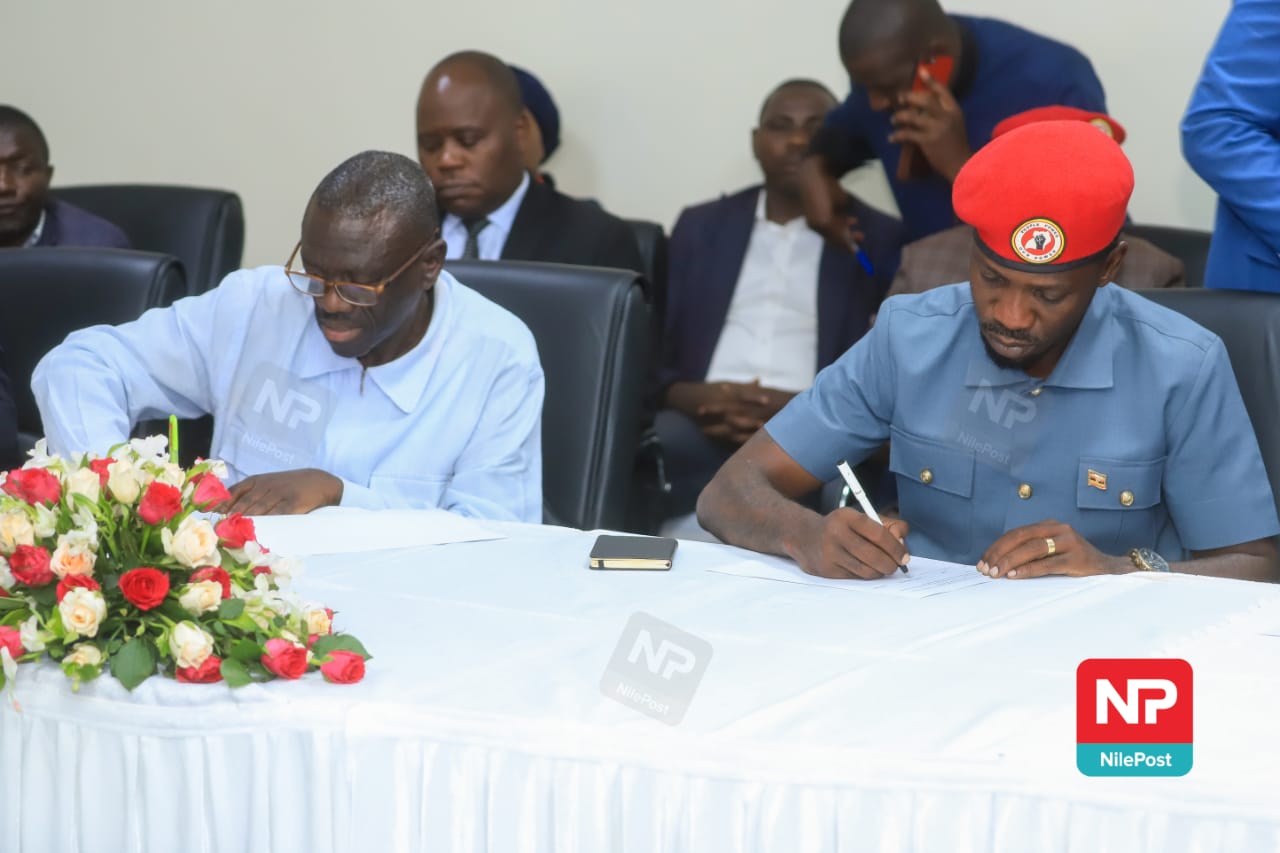
The saying that journalists are blessed with front seats to history unfolding, is more than accurate as events and voices that shape history appear to remain the same. Watching events from Kampala Africana Hotel earlier this week, one can credit the venue for invariably keeping memories of attempts for a united political force against Uganda’s longest ruling president- Yoweri Museveni.
Perusing through my editorial notes taken more-than 3 years ago at the same venue-for almost a similar event, it reads like a template, edited are dates and some speakers, calling for similar actions to be taken. 2019 was inevitably a turning point, showing all signs of a political cash cow-poor dog matrix in the opposition leadership that was diametrically opposed to their own communication strategies for change.
The perceived cash-cow was up in verbal arms, throwing all manner of artillery to a perceived poor-dog whose message to political players was against election optimism. The opposition 2021 election achievements notwithstanding, the Thursday 4th, 2019, event, its effects and importance cannot simply be shelved. During the event organised by the DP-Bloc in its then opposition unity caravan, Robert Kyagulanyi- the opposition cash cow may have registered his worse commentary in political communication. “…don’t talk about democracy and stand four times and on the 5th time you tell people democracy doesn’t work! We believe it works”.
To a largely DP cheerful audience, Kyagulanyi pronounced how disappointing it was for a leader [Kizza Besigye] to say that “a vote can never oust Museveni” without offering another option. Bobi Wine, as he is commonly known, was hopeful that the success registered from Rukungiri, Bugiri, Jinja East, and Arua by-elections could easily be replicated to the general polls two years later [2021] only if the opposition was united with the people’s choice [Him]. “We must work together as brothers, or perish together as fools”. This, may have presaged the opposite defeat, albeit outright thuggery and injustices observed.
Four years later, with reported political injustices from Kayunga, Omoro, and Soroti East by-elections, Besigye now reveals, that Kyagulanyi convoked the widely cheered joint-meeting to change the approach. Away from the gesture that is subject to time challenges, it is high time the opposition learnt to have its few troops protected as another way to soldier on. It appears that Besigye and Kyagulanyi are now at par, as far as elections are concerned. But what about those, they are supposed to work with?
It is all glaring that the political environment for the opposition in Uganda is fragile and ambiguous in nature and design. The flimsy political situation has since tabled questions, whose answers are either ignored or just lamented upon. Take a situation where persecution and compromise are almost inevitable, but opposition political leaders [out of parliament] seem not to understand the importance of protecting from their mainstream political troops. They seem to cheer up or often ignore the undue attacks from either the confused and frustrated masses that need direction, or from the strategic propagandists. By nature, or even default, politicians first feel safe in their respective camps to thrive. Even in different housings, they remain cousins - cut from the same cloth.
The business of discrediting a few individuals, who are also prone to the political danger of the day, is a total contradiction in political communication and strategy that needs to be added to the renewal package for the branded opposition attitude. This is if, it is not deliberately done to generally discredit them as corrupt, reluctant and comfortable with positions for whatever reasons. By nature, politicians are afraid of real and perceived competition from their own nests. This appears to be unattended to as mutual unity take shape. It can be a recipe for disaster like the comments earlier registered.
If someone can endure systematic frustrations, escape compromise and direct threats, they can easily be broken away by mistrust and unnecessary attacks. There has been a rather uncoordinated response to the opposition political activities, simply because of a mythical feeling that for one activity to thrive (Activism), another should be ignored (Mainstream). Radicalism verses moderateness. This approach almost finished FDC. But NUP seem to have learnt nothing from the FDC story.
This, even as they agree to engage in the mainstream politics that brings members into parliament where at most moderance is required. With a known tight-marking strategy to reduce political funding from foreign sources, representation in Parliament appears to be the defacto main funder of the opposition Politics, but often, you hear, and observe missiles directed at a small group of individuals, cornered by their own at a time when they are jostling against a swarm of ruling majoritarianists.
This nature of "othering" opposition troops to create a situation of "us and them" is a danger to their own realistic and unrealistic ambitions. The call for unity should not only be deliberate, but also categorical to its objectives and how to achieve them. What disappointed politicians (opposition) can offer is simply commitment and desire for change, whereas, the appointed ones (ruling) are sure of positions, promotions and other enticements. This balanced should be observed and protected to the core.
As they appear to take lessons from pre and post-election experiences and forge an alliance, isn't it time for them strategize on how they can protect, build confidence, trust and respect to their elected troops? The feeling that opposition political leaders undermine and dishonour the efforts of their elected troops can catalyse their defections, total compromise and delay their targets.
The writer is a Journalist
