

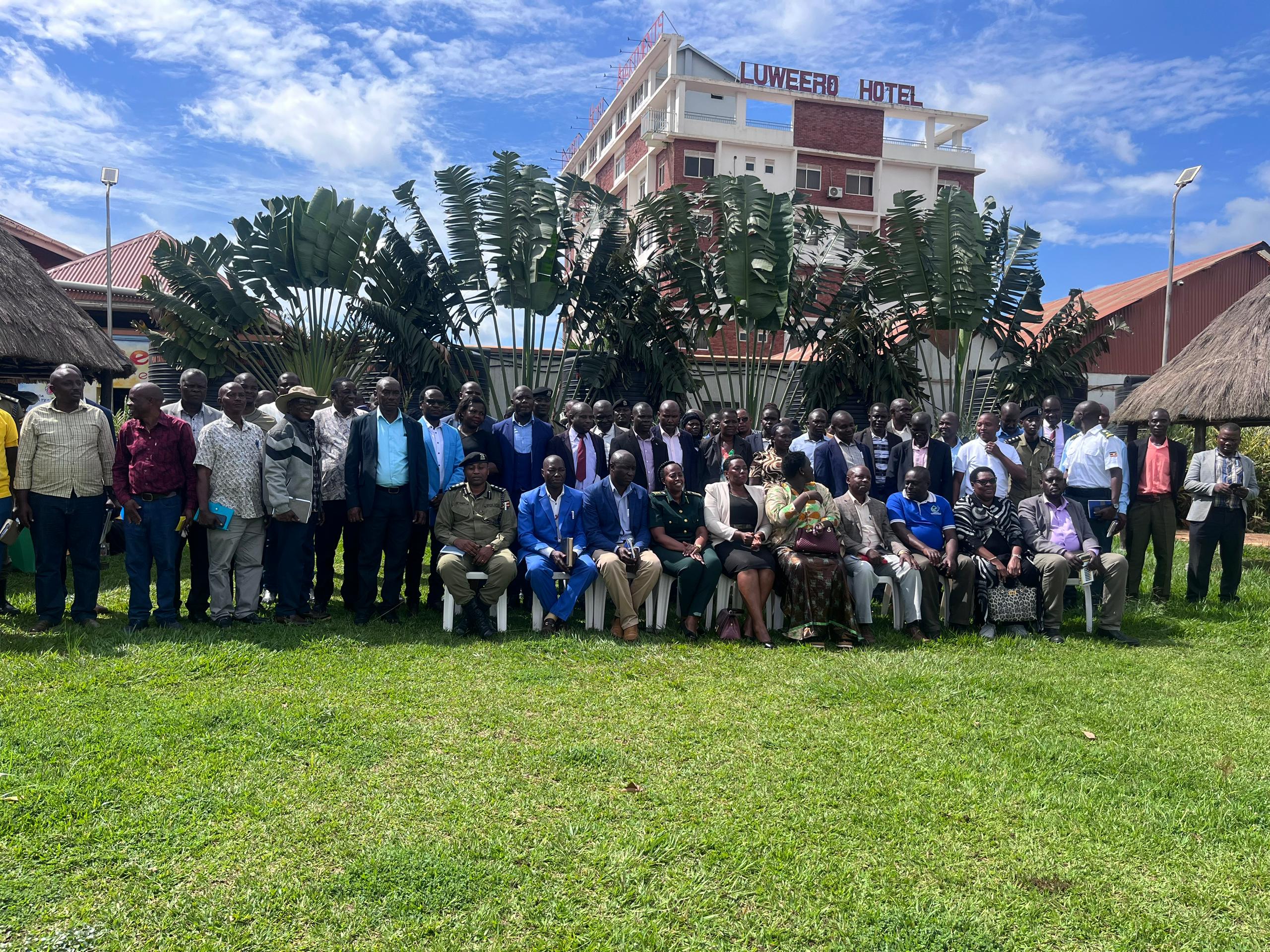
Officials from the Ministry of Internal Affairs, through the Directorate of Citizenship and Immigration Control, have raised concern over widespread corruption among local leaders in the verification of citizenship, saying it has allowed many foreigners to illegally acquire national identity cards and passports.
The concerns were raised during a stakeholders’ sensitization meeting on citizenship and immigration matters held at Luweero Hotel Apartments, bringing together leaders from districts including Luweero, Nakaseke, Nakasongola, Kyankwanzi, Kiboga and Mubende.
Deborah Amanya, the Principal Immigration Officer, said corruption at the local leadership level, especially among village leaders responsible for confirming citizenship, has greatly undermined the integrity of the process.
She noted that some foreigners have exploited loopholes to obtain National IDs, with reports indicating that some individuals hold multiple identity cards, a situation she said has contributed to crime and illegal activities.
“Someone in Kabaale district asked us at the Ministry of Internal Affairs how we can trust information from an LC1 chairperson earning only Shs10,000 per month, yet the people seeking to forge citizenship are offering much more money,” Amanya said.
She explained that the trend has made it easier for non-citizens to access opportunities meant for Ugandans, including land ownership, employment and government services.
Nakaseke Resident District Commissioner Rose Byabasaija urged stakeholders to avoid blame games and instead work together to address the challenge.
She noted that districts such as Nakaseke, Kiboga and Luweero are increasingly facing cases involving foreigners from countries including Burundi, Sudan and Japan who have bought land and settled in the area, while government response remains limited.
In Luweero District, District Registration Officer Peterson Nsubuga Sajjabi said efforts are being strengthened to ensure only genuine citizens are issued National IDs.
He said registration officers now closely verify documents, especially for refugees, to prevent illegal registration.
Sajjabi also highlighted concerns over double registration among both children and adults attempting to manipulate identity records.
“This is why we are encouraging birth registration because some parents keep changing their children’s dates of birth. With registration at birth, the information remains consistent even during future updates,” he said.
He warned that deliberate double registration is a criminal offence, particularly among individuals using multiple IDs for fraudulent activities such as securing loans.
“Some people use National IDs to borrow money and when they fail to pay, they report the IDs as lost, apply for new ones and even change names. This is one of the major reasons many people fail to get IDs later,” Sajjabi added.
However, some stakeholders also criticised the National Identification and Registration Authority (NIRA), accusing it of approving questionable applications despite concerns raised by local leaders.
Eliphaz Munyansanga, the GISO of Nakaseke District, said he has on several occasions flagged suspicious citizenship applications, particularly involving Burundian nationals, but the applicants still end up receiving National IDs.
“Many times I indicate that I doubt the information given, but I do not know how they pass through NIRA and get IDs. At one point I personally visited their offices because we have many Burundians in the area, but they were still approved,” he said.
Senior Immigration Officer Otim Denis Isaac said the sensitization meeting was aimed at equipping local leaders with accurate information on citizenship processes to strengthen community guidance.
“We need to work as one in disseminating the right information about citizenship, regardless of our political or religious differences, for a better Uganda,” Otim said.
Leaders agreed that tackling corruption and improving coordination between local leaders, immigration officers and NIRA is critical to safeguarding Uganda’s citizenship system.
