

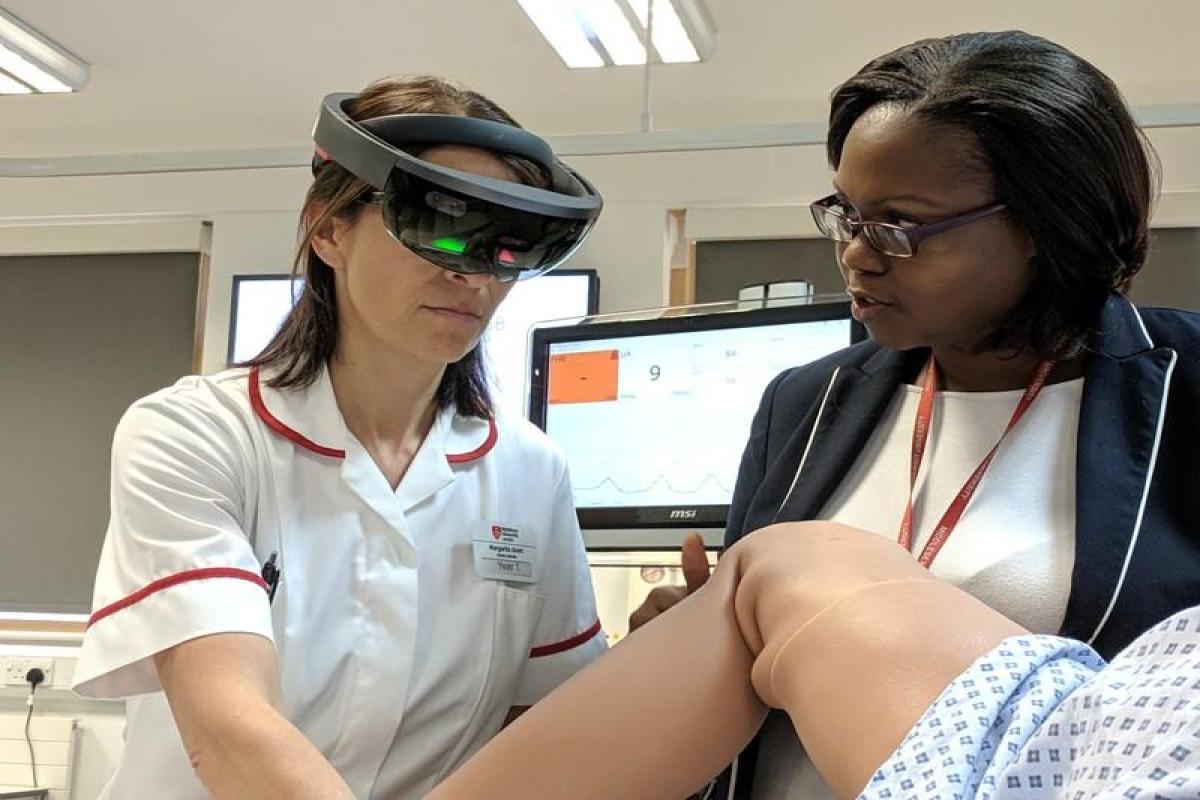
Midwifery students in London are learning to bring new life into the world in a radically new way with the help of augmented reality (AR) technology.
Using AR headsets and lifelike models of full-term mothers, trainee midwives at Middlesex University can take part in fully simulated births, which the university's clinical staff hope will both hone their clinical skills and leave them better prepared to face challenges rarely seen in day-to-day practice.
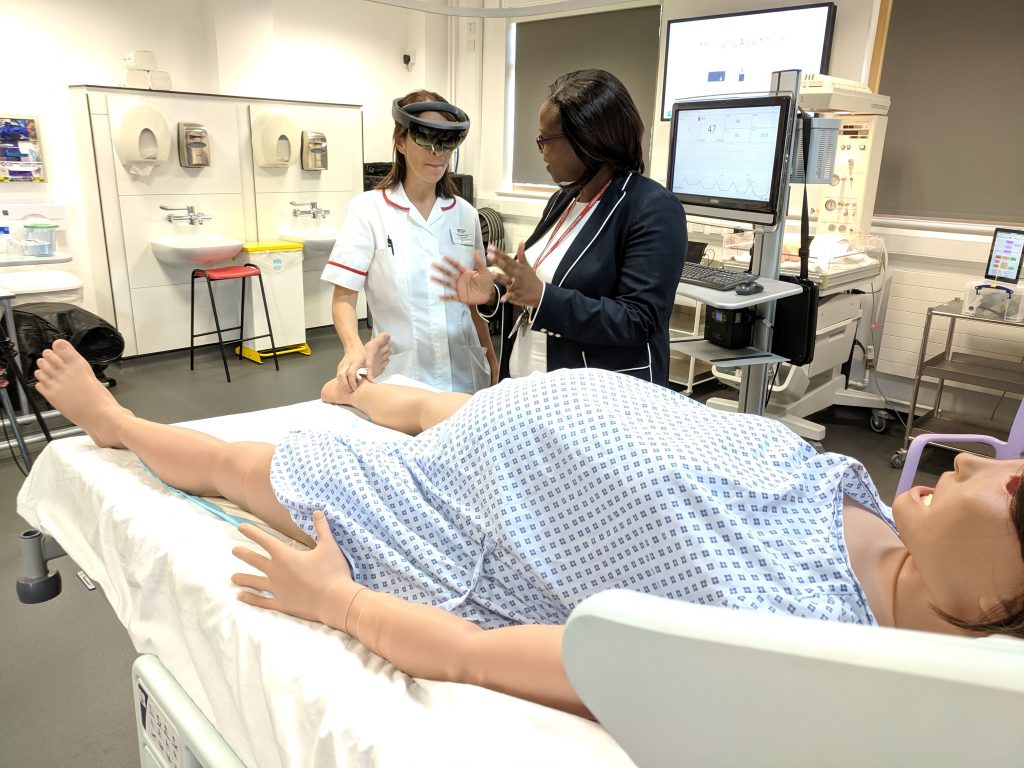
AR technology offers users an interactive experience in which objects in the real world are enhanced by computer-generated information.
Midwifery educator Sarah Chitongo said the AR system allowed students to understand better the birthing process by displaying an interactive representation of a patient's anatomy.
"It allows you to see a visual picture of the actual anatomy itself, which is raised out of the normal body, and you can step in, walk around and have an internal view," Chitongo told Reuters.
Chitongo cited high-risk problems such as shoulder dystocia - when a baby's shoulders get stuck in the mother's body - and breech births - when a baby is born bottom first - as particular rarities for midwives where AR could help prepare students to cope better and ultimately to save lives.
Chitongo believes that younger trainees will embrace the technology positively as they are of a generation that has largely grown up with computers and interactive environments.
However, her overarching aim is for midwives to become better prepared to reduce mortality rates, which are disproportionately high among ethnic minority pregnancies.
"Currently, here in the U.K., it sits at 60% combined, compared to 9.8% in white women," Chitongo said, adding that the issue had not been meaningfully addressed despite the trend having risen since 2011. "When you get it right, with a population where it's actually on the worst side (of the statistics), it means you've got a better and safer maternity service across the U.K."
