

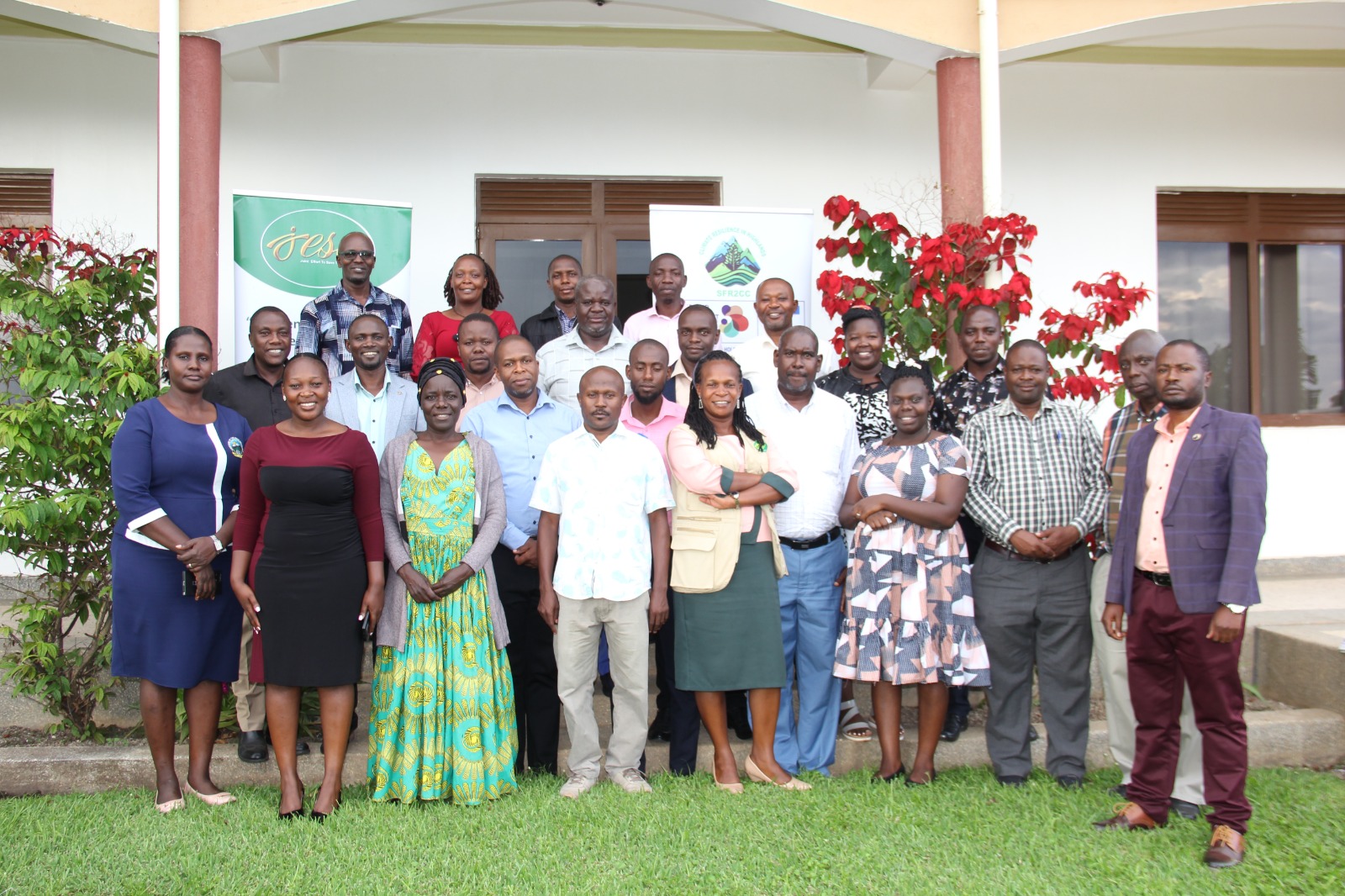
Stakeholders in the Rwenzori Region have formalized a regional alliance aimed at strengthening climate resilience and promoting sustainable water resources management under the Strengthening Smallholder Farmer Resilience to Climate Change (SFR2CC) project.
The alliance, dubbed the Albertine Water Resources Management and Climate Change Alliance (AWRMCC), was officially launched on Monday during a landmark meeting held at Fort Breeze Hotel in Fort Portal.
The meeting was organized by Mountains of the Moon University in partnership with Kabale University (KAB), Joint Efforts to Save the Environment (JESE), and Kigezi Women in Development (KWID), with support from the Government of the Netherlands.
The event focused on the joint signing of Memoranda of Understanding aimed at streamlining coordination and strengthening collective efforts to address water resources management challenges across 10 districts in the Rwenzori sub-region.
Speaking during the meeting, Senior Sociologist at the Ministry of Water and Environment, Samuel Tusiime Tinkasimire, who was elected chairperson of the alliance, said the platform will bring together experts and stakeholders from different sectors to work collectively toward conserving water resources.
“This alliance brings together people from different disciplines and sectors to work hand in hand in ensuring the conservation of water resources,” Tinkasimire said.
He noted that members of the alliance will jointly develop strategies and guidelines to help communities adapt to the effects of climate change.
“We want to come up with actions and guidelines that will help people not only survive the effects of climate change, but also become resilient and able to withstand whatever adverse conditions may arise,” he added.
The formalisation of the alliance comes at a time when JESE, MMU, KAB, and KWID are implementing a three-year project known as the Strengthening Smallholder Farmer Resilience to Climate Change through Joint Learning, Development, and Evaluation of Contextualised Solutions.
The project seeks to develop context-specific on-farm water management technologies and a stakeholder-driven master’s curriculum in water resources management.
John Ssekajugo, Assistant Project Coordinator from Mountains of the Moon University, expressed optimism about the newly formed alliance, saying it will strengthen collaboration between academia and key stakeholders involved in the project.
“This platform is meant to link the university to the different stakeholders identified in the project so that when ideas are developed and tested, stakeholders can come together to discuss research findings and jointly identify practical solutions that can be implemented,” Dr. Ssekajugo said.
Moses Muhumuza, an Environment and Natural Resources expert at Mountains of the Moon University, said the Rwenzori Region’s growing population heavily depends on water resources for livelihoods and production, yet many of these resources continue to face degradation and pollution.
“The Rwenzori region has over three million people who highly depend on water resources for production and livelihoods. However, over time, these resources have become highly polluted and degraded,” Prof. Muhumuza noted.
He said the alliance will play a key role in restoring degraded water resources and improving people’s livelihoods and well-being.
“This alliance will help mobilize different stakeholders, including government, the private sector, civil society, academia, and communities, to work in a coordinated manner towards conserving water resources,” he added.
