

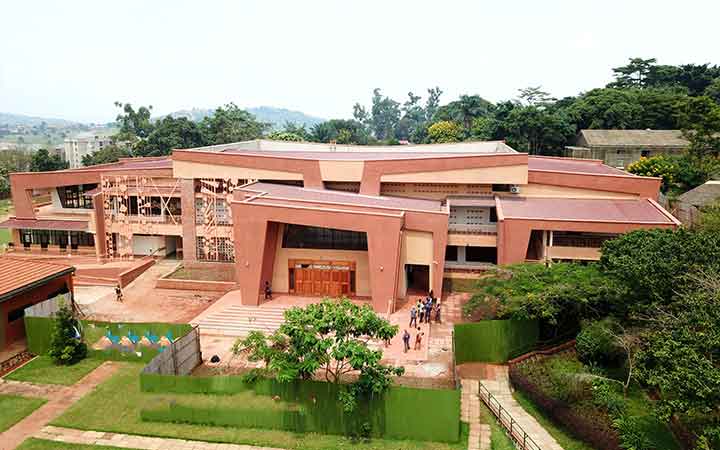
May 17, 1967 marked a turning point in Uganda’s education sector when the country’s first official international school opened in Kampala.
Originally known as the Lincoln School, the institution that would later become International School of Uganda was established to serve the children of diplomats, expatriates and international professionals living in Uganda during the post-independence era.
The school began modestly from a leased property on Buganda Road after being registered by the Ministry of Education in 1967.
At the time, Uganda had only recently gained independence, and Kampala was growing into a regional diplomatic and commercial centre attracting foreign missions, aid agencies and multinational organisations. The need for an education system that matched international standards quickly became clear.
In its early years, the institution mainly catered for foreign families seeking continuity with overseas curricula.
However, the school’s journey reflected Uganda’s broader political and economic narrative. During the turbulence of the 1970s and early 1980s, growth slowed considerably as political instability affected many sectors of national life. In 1972, the institution was incorporated as Lincoln School Limited, operating as a not-for-profit company limited by guarantee.
Following Uganda’s relative political stability after 1986, the school entered a period of rapid expansion.
It eventually rebranded as the International School of Uganda and moved fully to its purpose-built campus in Lubowa in 2001. Over time, ISU became the first school in Uganda to offer the complete International Baccalaureate continuum, including the Primary Years, Middle Years and Diploma programmes.
The opening of ISU also laid the foundation for the growth of international education in Uganda.
While schools such as Aga Khan High School had already built reputations for multicultural education, ISU became the country’s first purpose-built international school modelled specifically around foreign curricula and globally mobile families.
The 1990s saw the sector expand rapidly as Uganda’s liberalised economy attracted more investors and expatriates. Schools such as Rainbow International School Uganda and Kampala International School Uganda emerged, offering British curriculum pathways and modern facilities that appealed to both international and Ugandan families.
By the 2000s and 2010s, the sector had diversified further. Institutions including Heritage International School, Acacia International School and Galaxy International School Uganda introduced different combinations of British, American and International Baccalaureate systems. Many schools also began emphasising technology, project-based learning and global university preparation.
Perhaps the biggest transformation came from changing demographics. What was once an education space dominated by expatriates increasingly attracted Ugandan middle-class and elite families seeking alternatives to the UNEB curriculum. International schools gradually became associated with global opportunities, critical thinking skills and direct pathways to universities abroad.
More recently, newer institutions have attempted to make international education more accessible through lower-cost and practical learning models.
Nearly six decades after the Lincoln School first opened its gates, Kampala has grown into one of East Africa’s leading hubs for international education, with dozens of schools serving both local and foreign students.
What started on Buganda Road in 1967 has since evolved into a major education sector that continues to shape how many Ugandan families view learning, opportunity and the future.
