

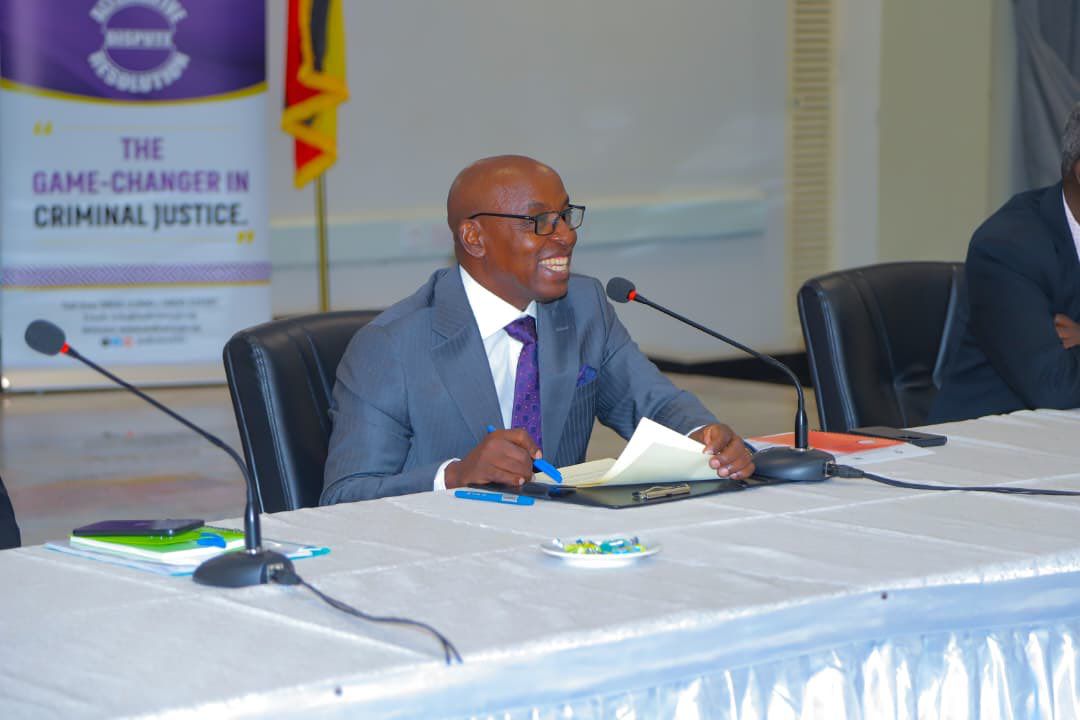
The Chief Justice, Flavian Zeija, has called for a fundamental shift in how legal disputes are handled in Uganda, urging lawyers to adopt Alternative Dispute Resolution (ADR) as a central tool for delivering timely and economically responsive justice.
Speaking at the official opening of an ADR training programme for lawyers from the Central Region at the Supreme Court Conference Hall in Kampala on Wednesday, Justice Zeija framed the initiative as part of the Judiciary’s broader efforts to modernize dispute resolution and reduce pressure on courts.
The training, organized by the Judicial Training Institute, supports the rollout of key frameworks, including the National Alternative Dispute Resolution Policy, 2025, the Judiciary Alternative Justice Systems Strategy, 2023, and the Judicature (Court Annexed Mediation) Rules, 2026.
Justice Zeija highlighted the increasing strain that delayed litigation places on Uganda’s economy, particularly as financial disputes become more common. He noted that prolonged court processes can tie up capital, raise borrowing costs, and weaken confidence in the financial system—making ADR a practical and necessary solution.
“Advocates must transition from being gatekeepers of litigation to engineers of economic liquidity by guiding clients towards faster and more sustainable dispute resolution mechanisms,” he said.
He emphasized that lawyers play a pivotal role in shaping dispute resolution outcomes, noting that ADR not only expands access to justice but also offers businesses and individuals more predictable and efficient solutions.
“Making ADR the first point of call-in financial disputes could mitigate the broader economic effects of delayed case resolution,” he added.
The training comes as the Judiciary introduces reforms under the Judicature (Court Annexed Mediation) Rules, 2026, aimed at strengthening mediation as a formal part of the justice system.
These reforms include time-bound mediation processes, enforceable settlement agreements, and structured oversight of mediators through accreditation systems and codes of conduct. The framework also provides cost-free access to court-annexed mediation services, widening access for litigants.
Beyond formal legal processes, Justice Zeija reiterated the Judiciary’s commitment to integrating Alternative Justice Systems (AJS), particularly through collaboration with cultural and religious leaders. He said this approach promotes reconciliation and restores social harmony while maintaining fairness and dignity in dispute resolution.
Pilot AJS engagements have already been launched in Gulu and Lira, with Buganda and Karamoja identified as the next regions for implementation. According to the Chief Justice, incorporating indigenous dispute resolution methods into the formal justice framework will make justice more accessible and relevant to ordinary citizens.
In a further push to accelerate case resolution, the Judiciary will hold a Mediation Settlement Fortnight from May 18 to May 28, 2026, targeting disputes currently tied up in litigation. The initiative is expected to unlock significant financial resources and reduce case backlogs.
Justice Zeija concluded by urging lawyers to rethink their traditional roles and move away from adversarial litigation toward more solution-oriented approaches that prioritize speed, efficiency, and economic impact.
Also addressing participants, Mike Chibita, Chairperson of the Governing Council of the Judicial Training Institute, described the rollout of the new mediation rules as a critical milestone in strengthening ADR across Uganda’s justice system. He welcomed the training as an important step in building capacity among legal practitioners.
