

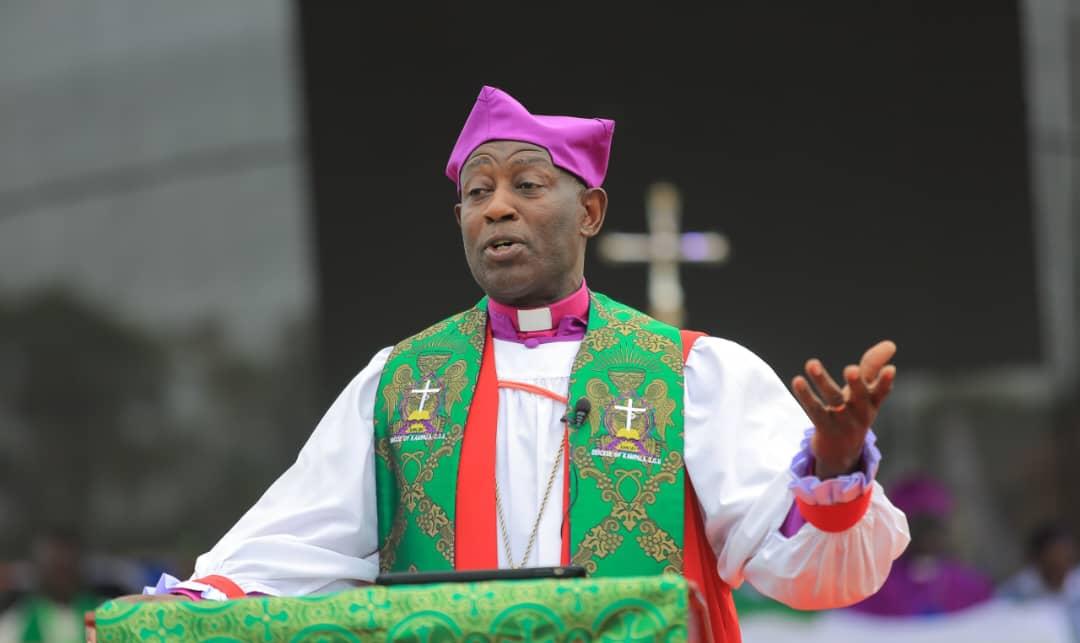
The Archbishop of the Church of Uganda, Stephen Kaziimba Mugalu, has pushed back against critics who accuse him of being too soft-spoken on sensitive national issues, particularly human rights, insisting his approach to leadership is deliberate and guided by faith.
For years, some Ugandans—especially within opposition circles—have faulted Kaziimba and other religious leaders for what they describe as muted responses to alleged human rights violations, particularly following election-related violence and arrests of opposition supporters.
Many have drawn comparisons with Janani Luwum, the former Archbishop of the Church of Uganda who openly challenged the regime of Idi Amin and was later killed.
Luwum is widely regarded as a martyr, with some urging Kaziimba to emulate his confrontational stance.
However, speaking during a Sunday sermon at the installation of Rev. Canon Michael Mukhwana as archdeacon at St John’s Church, Makerere University, Kaziimba rejected the notion that leadership must follow a single model.
“I am a person, I need life also… I have a life to live. I am not a savior. I am not to carry all your problems. You take them to the cross. I do my part and leave them to God,” he said.
The Archbishop argued that quiet engagement can sometimes achieve more meaningful results than public confrontation, suggesting that loud criticism does not always translate into impact.
“You can speak and speak and speak, no impact… John the Baptist did a good job, but he ended up losing his head. And the mission ended there,” he said.
Kaziimba pointed to what he described as the “Nathan approach,” which emphasizes engaging those in authority with humility and restraint, arguing that such a method can influence change without escalating tensions or putting lives at risk.
“You can do God’s work by approaching power with love, quietly, silently. You may find impact, but people are shouting and shouting, and they end up doing a lot of nothing,” he added.
Addressing comparisons with Luwum, Kaziimba questioned whether martyrdom should be the benchmark for effective leadership, stressing that he has personal responsibilities and a unique calling.
“The man was killed. So do you think I can make an impact by being killed? … Don’t I have a family? Why don’t you really be sensitive?” he said.
His remarks are likely to reignite debate about the role of religious leaders in speaking out on governance and human rights issues in Uganda.
