

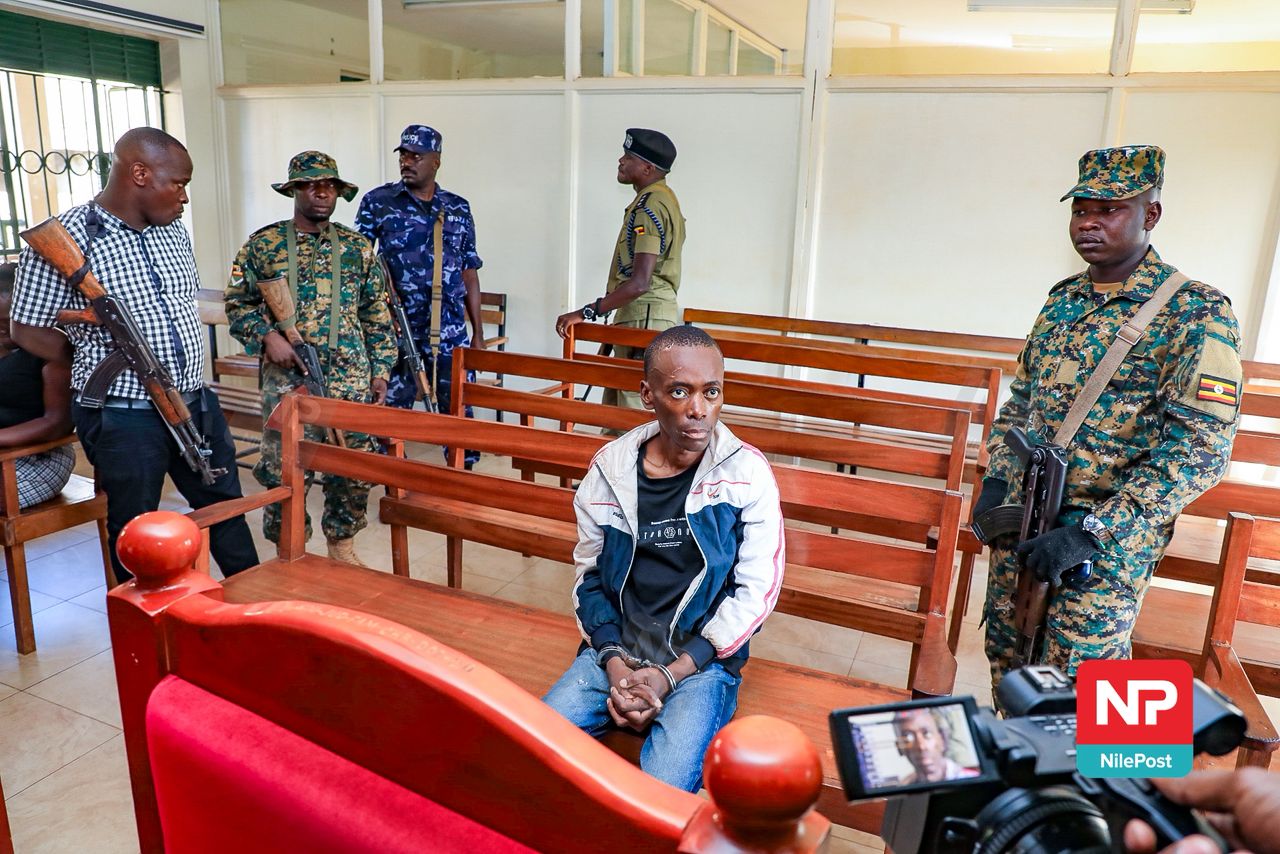
The Uganda Law Society (ULS) has rejected the Judiciary’s plan to conduct its first “Mobile High Court Session” at Ggaba Community Church grounds on April 13, 2026, for the trial of Christopher Okello Onyum, who is charged with the murder of four toddlers at a daycare centre earlier this month.
In a strongly worded statement issued on April 12, the ULS described the proposed trial as “the most cynical form of executive interference in the affairs of the Judiciary witnessed in Uganda” since the landmark Constitutional Petition No. 2 of 2002.
“This is not justice. It is a judicial lynching rally, stage-managed at the scene of the crime, with the direct command responsibility of the Executive and the active complicity of the Judiciary,” the statement reads.
According to the ULS, the initiative—framed as a move to enhance access to justice and ensure a speedy trial under the Constitution (Operation of Mobile Courts) (Practice) Directions, 2026—actually undermines core constitutional principles, particularly the right to a fair and impartial hearing.
The Society pointed to remarks attributed to Jane Frances Abodo, who reportedly indicated that President Yoweri Museveni had directed that the case be handled expeditiously and used to test the mobile court framework at the crime scene.
Further criticism was directed at Balaam Barugahara, the Minister of State for Youth and Children Affairs, who publicly called for harsh punishment, including execution, and referred to the suspect as a “terrorist” before formal trial proceedings.
The ULS argued that such statements risk prejudicing the case and undermining the presumption of innocence.
ULS President Isaac Ssemakadde, speaking via Zoom, described the arrangement as “institutional mob justice,” citing concerns over the venue, the emotional state of the community, and the lack of a completed psychiatric evaluation of the accused.
Holding proceedings at the crime scene, the Society argued, exposes the trial to undue public pressure, particularly given the “fresh open wounds” of grieving families, some of whom only recently buried their children.
“This is not public participation; it is the weaponisation of public grief to pre-determine guilt,” the statement said.
The ULS further warned that the presumption of innocence—enshrined under Article 28 of Uganda’s Constitution and reinforced by international instruments such as the African Charter on Human and Peoples’ Rights and the International Covenant on Civil and Political Rights—had effectively been compromised by public pronouncements and the nature of the planned proceedings.
Drawing parallels with its successful challenge against field court martials in 2002, the Society argued that a trial conducted under such circumstances “cannot possibly be independent or impartial,” especially when influenced by executive direction and amplified through live broadcasts.
The Judiciary has since confirmed plans to stream the proceedings live and implement a structured attendance system prioritising victims’ families, religious leaders, local officials, and the media—moves the ULS says further risk turning the trial into a public spectacle.
The Society has called on the Chief Justice to halt the mobile court arrangement and instead conduct the trial at a conventional High Court venue, warning that failure to do so could set a dangerous precedent where constitutional safeguards are eroded under public pressure.
“The victims’ families deserve justice. The rule of law demands it be delivered fairly, impartially, and without theatrical flourish. Anything less is not justice; it is vengeance dressed in judicial robes,” the statement concludes.
The ULS Council said it will closely monitor the case and pursue all necessary legal measures to defend constitutional order.
