

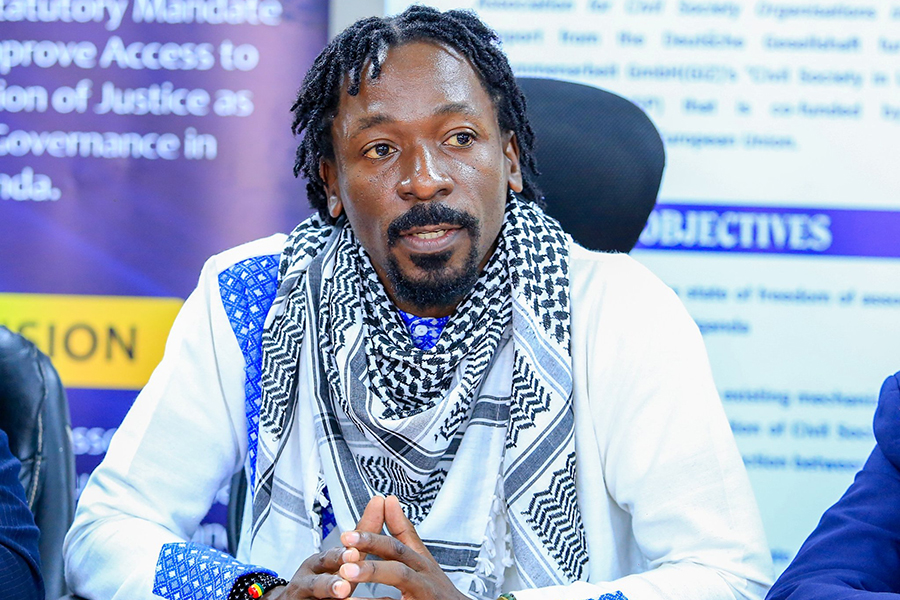
The Uganda Law Society (ULS) has formally severed what it described as “begging relations” with President Museveni, signaling a major shift toward financial independence and principled engagement with the state.
In a statement dated March 19, 2026, signed by ULS President Isaac Ssemakadde and Treasurer Arthur Isiko, the Society announced it would no longer pursue or acknowledge the Shs5 billion pledge made by Museveni in 2018 toward the construction of the ULS House in Kololo.
“All forms of supplication, solicitation, or dependency on financial pledges or donations from the President are hereby terminated forthwith. The Uganda Law Society shall no longer pursue, acknowledge, or rely upon the unfulfilled 2018 pledge or any similar inducements that could imperil the Bar’s independence,” the statement read.
The pledge, made in December 2018, has not been delivered nearly eight years later. ULS leadership described it as emblematic of a broader pattern of government inconsistency and fiscal mismanagement.
“This pledge is a hollow gesture. It reflects a troubling pattern where commitments to professional institutions are neglected, even as public expenditure—particularly at State House—continues to balloon without transparency or accountability,” the statement said.
Central to the Society’s decision is safeguarding the independence of the legal profession. ULS argued that reliance on government donations risks compromising its constitutional role as a watchdog and defender of the rule of law.
“The independence of the Bar is non-negotiable. We cannot credibly challenge corruption, abuse of power, or electoral irregularities while simultaneously depending on the goodwill of those in authority,” the statement added.
The Society also criticized what it termed “runaway budget corruption,” pointing to opaque donations and corporate social responsibility expenditures. It referenced the 2021 and 2026 general elections, alleging that public funds were used to undermine democratic processes.
“The misuse of public resources to entrench power—through security crackdowns, voter suppression, and electoral manipulation—must be called out,” the statement said.
Despite rejecting the presidential pledge, ULS celebrated the near completion of the ULS House, achieved mainly through member contributions.
“This stands as a testament to the power of collective effort. It is proof that we do not need to compromise our values to achieve our goals,” the Society said, crediting members for their voluntary contributions, sacrifices, and commitment to transparent leadership.
Looking ahead, the Society plans to focus on structural reforms to strengthen financial sustainability for advocates and the institution itself. Proposed measures include amendments to the Advocates Act and the Uganda Law Society Act to improve earning capacity and create legitimate revenue streams.
“The real solution to financial vulnerability lies in reform, not reliance. We must address the root causes that make institutions susceptible to external influence,” the statement said.
The executive order takes immediate effect, revoking all previous mandates for ULS envoys pursuing the presidential pledge or similar funding.
Observers say the move marks a defining moment for ULS, positioning it as a more assertive and independent actor in Uganda’s civic landscape.
By rejecting state funding and emphasizing internal accountability, the Society sets a precedent for other professional bodies navigating the balance between cooperation and autonomy.
“The Uganda Law Society shall no longer pursue or rely upon inducements that imperil the Bar’s independence,” the statement concluded, reaffirming its commitment to institutional autonomy and ethical integrity.
