

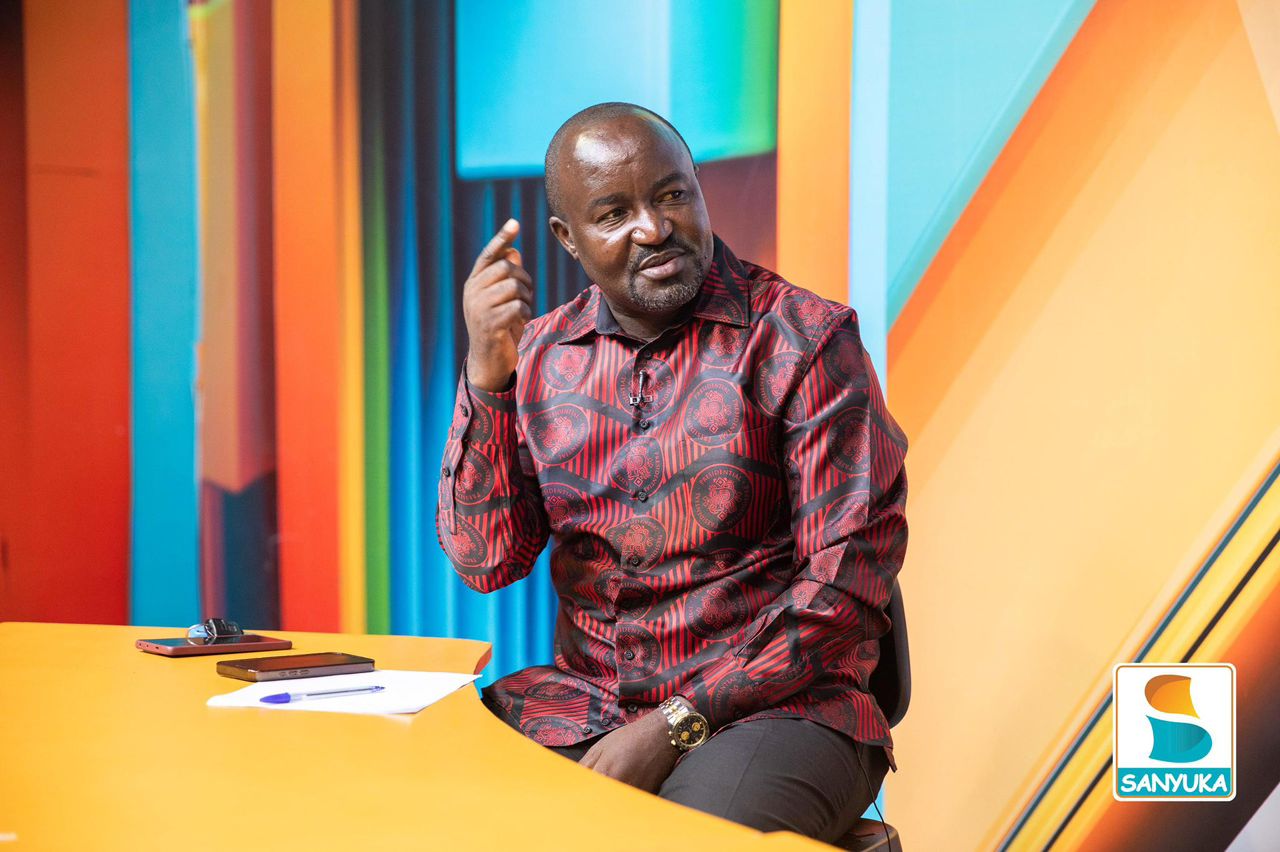
Kassanda North Member of Parliament, Patrick Nsamba , has expressed concern over the potential unintended consequences of the proposed Copyright and Neighbouring Rights (Amendment) Bill 2025, warning that while the legislation aims to protect artists, it may inadvertently disadvantage emerging talent.
Speaking during Sanyuka Morning Xpress on Thursday, Nsamba, a staunch member of the National Unity Platform (NUP), Nsamba highlighted the disparity between established and upcoming artists in the evolving media landscape.
“Some artists are already established, so when a media house uses their music, it adds clear value. But for upcoming artists, that value isn’t there yet,” he said.
Nsamba cautioned that if the existing law risks media houses becoming reluctant to promote lesser-known musicians due to cost considerations, ultimately limiting exposure for new entrants in the industry.
“If the law remains like this, new artists will struggle to gain exposure because media houses may avoid promoting them. In the end, it’s the upcoming talent that loses out,” he said.
In recent days, government introduced the Copyright and Neighbouring Rights (Amendment) Bill 2025, a proposed law expected to significantly transform the country’s creative sector.
The bill was introduced by President General of the Democratic Party and Minister for Justice and Constitutional Affairs, Norbert Mao. It seeks to modernise Uganda’s copyright framework and align it with international standards so that creators can benefit more fairly from their intellectual work.
Speaking about the proposed legislation, the Laroo-Pece MP-elect described the bill as a major breakthrough for Uganda’s creative industry, which includes musicians, filmmakers, writers and other artists.
“This bill is a game-changer for our creative industry. It will provide stronger protection for creators, streamline the sector and introduce tougher penalties for piracy and copyright infringement,” he said.
Officials say the proposed amendments are designed to address long-standing challenges faced by Uganda’s creative community, particularly the widespread unauthorised use and distribution of artistic works.
The bill introduces several reforms aimed at improving how artists earn from their content, especially in the digital era where music and other creative works are increasingly distributed through telecommunications platforms.
One of the key provisions is the introduction of a new revenue-sharing model for caller ringback tones, a popular service offered by telecom operators that allows callers to hear music instead of the standard ringing tone when making calls.
Under the proposed structure, authors and performers will receive 60 percent of the revenue generated from caller ringback tones. Telecommunications companies will take 31 percent, while aggregators will receive 8.5 percent.
The new arrangement is intended to ensure that artists receive a larger share of the earnings generated from the use of their music and other creative works.
The Uganda Registration Services Bureau (URSB), which oversees intellectual property rights administration in the country, has welcomed the proposed reforms.
URSB officials say the bill could significantly strengthen Uganda’s creative economy by providing creators with stronger legal protection and improved opportunities to monetise their work.
The agency also believes the updated copyright framework will help curb piracy, a challenge that has long undermined the earnings of artists across Uganda’s entertainment sector.
Industry observers say the bill reflects growing recognition by government of the economic potential of the creative industry, which contributes to employment, cultural expression and innovation.
If enacted into law, the Copyright and Neighbouring Rights (Amendment) Bill 2025 is expected to create a more structured and transparent system for managing intellectual property rights while encouraging investment in Uganda’s cultural and creative sectors.
Artists and other stakeholders have long called for stronger legal protections to ensure they receive fair compensation for their work, particularly as digital platforms continue to reshape how creative content is produced, distributed and consumed.
