

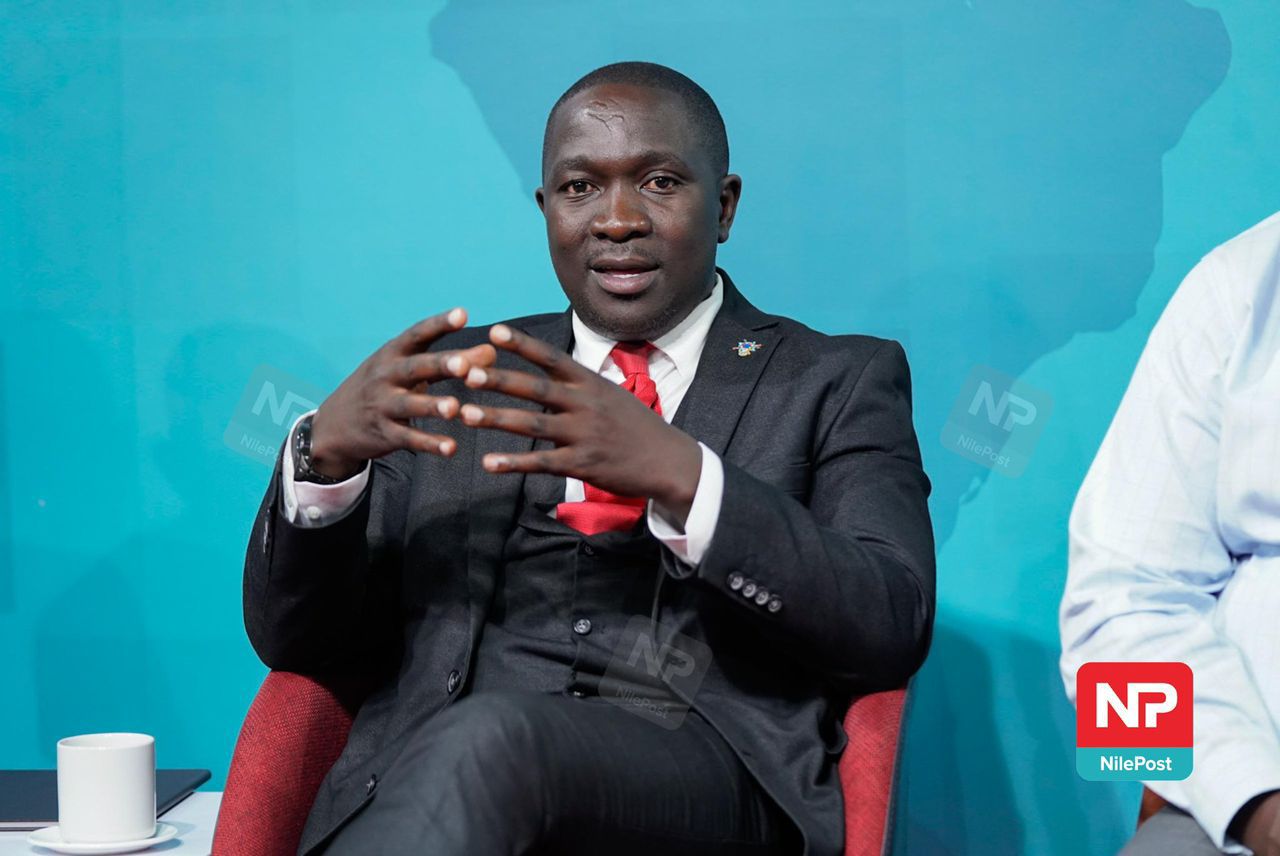
National Unity Platform (NUP) lawyer and Kira Municipality Member of Parliament–elect, George Musisi, has criticized the Computer Misuse (Amendment) Act, 2022, highlighting irregularities in its passage and underscoring the importance of protecting fundamental constitutional rights.
Speaking during NBS Barometer on Tuesday, Musisi said the law, championed by outgoing Kampala Central MP Muhammad Nsereko, was passed under questionable circumstances, with provisions that were constitutionally problematic—issues that ultimately led to its dismissal by the Constitutional Court.
“Hon. Muhammad Nsereko pushed for the Computer Misuse (Amendment) Act, 2022, and it was passed. However, it was passed with irregularities; it had some punishments we contested, and there was no quorum, which is why it was later nullified,” he said.
Musisi’s remarks follow a landmark ruling by the Constitutional Court, which declared several provisions of the Act unconstitutional.
The court held that key sections violated fundamental rights guaranteed under the Constitution, including freedom of expression and access to information.
A five-justice panel delivered a unanimous verdict, finding several provisions vague, overly broad, and prone to abuse, effectively criminalizing legitimate speech.
Justice Irene Mulyagonja, delivering the lead judgment, ruled that Sections 23, 26, 27, and 29 of the Computer Misuse Act, along with Section 162 of the Penal Code Act, were “null and void” for failing the constitutional test of legality.
The court specifically noted that provisions criminalizing the sharing of information deemed to “ridicule,” “demean,” or “promote hostility,” as well as targeting anonymous communication and unsolicited content, lacked clear definitions, creating uncertainty and enabling arbitrary enforcement.
Petitioners—including Unwanted Witness Uganda, the African Centre for Media Excellence, and the Editors’ Guild—argued that these provisions violated Articles 29 and 41 of the Constitution.
The Attorney General defended the law, citing the need to regulate harmful online conduct such as hate speech and malicious information, but the court concluded that the restrictions exceeded constitutional limits.
The court also identified a procedural flaw: Parliament passed the amendments without verifying the required quorum, contravening Rule 24(3) of Parliament’s Rules of Procedure and Articles 88 and 89 of the Constitution.
The struck-down provisions included Section 11, criminalizing unauthorized access, interception of data, or voice/video recording; Section 23, criminalizing unauthorized sharing of information about a child; Sections 26 and 27, restricting the sharing of information likely to ridicule, demean, or promote hostility; Section 28, targeting “malicious information”; Section 29, prohibiting social media misuse under a false identity; and Sections 162–163 of the Penal Code Act, whose criminal libel provisions were declared unconstitutional for vagueness and inconsistency with constitutional and international human rights protections.
Justice Mulyagonja emphasized that the law’s enactment without compliance with parliamentary rules rendered it invalid and issued a permanent injunction restraining government agencies from enforcing the provisions.
The state was also ordered to pay 30% of the petitioners’ legal costs.
Concuring with the lead judgment, Justice Ketra Kitariisibwa Katunguka noted that Section 162 contravened Uganda’s National Objectives and Directive Principles of State Policy and conflicted with international obligations. Other justices—Esther Nambayo, Jesse Rugyema Byaruhanga, and John Mike Musisi—delivered a unanimous verdict.
The now-nullified provisions had previously been used to arrest and prosecute young people, journalists, and activists on charges such as “offensive communication” and “malicious information.”
The ruling is expected to have far-reaching implications, potentially invalidating convictions under the struck-down law and serving as a warning to lawmakers to uphold constitutional safeguards when drafting legislation.
