

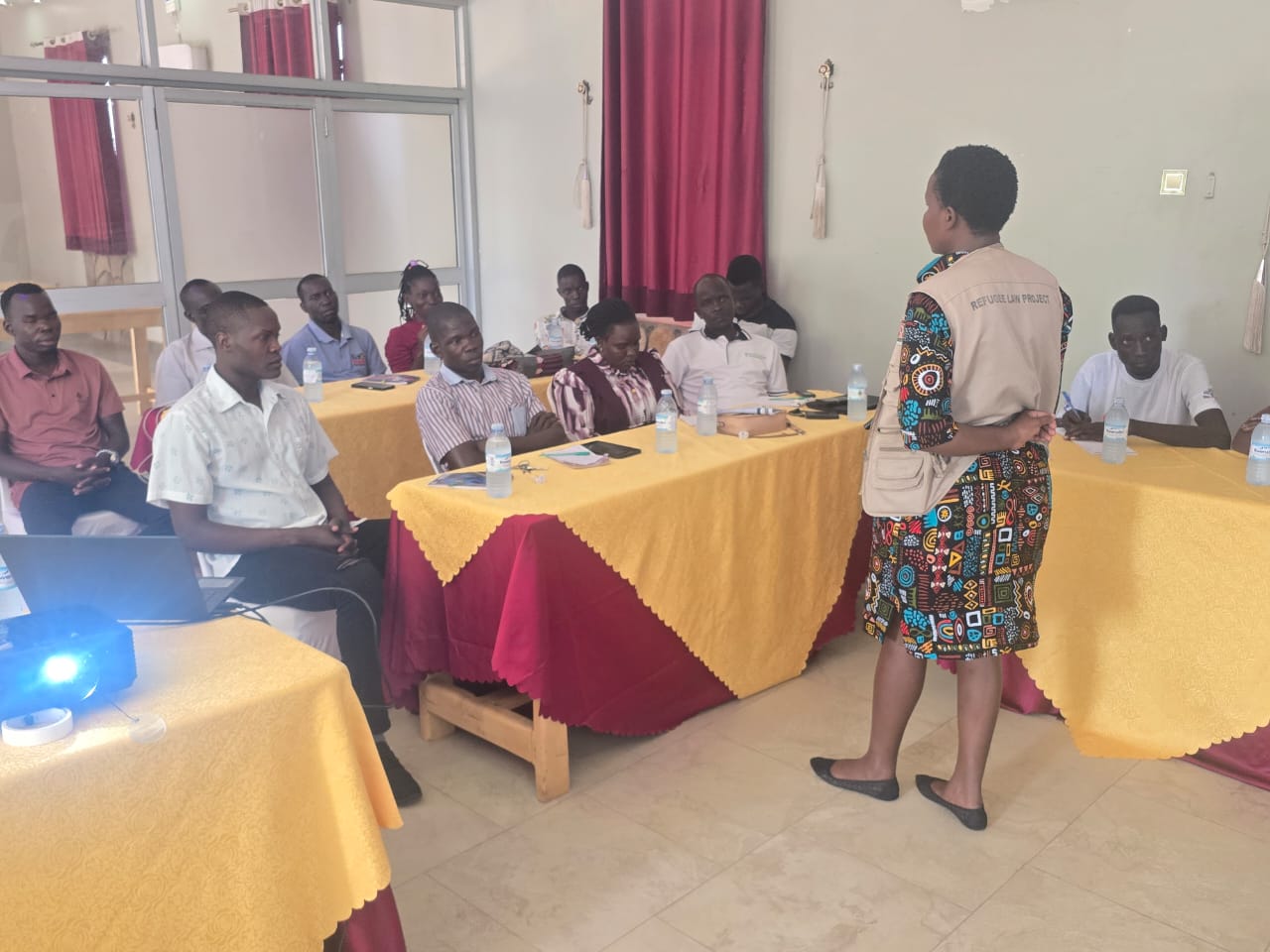
At least 20 journalists in Adjumani District have been equipped with knowledge and skills to strengthen their reporting on refugee-related issues, with a focus on objective coverage of key refugee concerns and rights.
According to the organizers, equipping journalists in refugee-hosting districts such as Adjumani to report objectively is part of broader interventions aimed at strengthening relations between refugees and host communities.
Doreen Bazio, the communications officer for Adjumani District, said such trainings are important since many journalists rarely get opportunities for refresher courses.
“Only a few journalists have access to refresher trainings like this, yet they are important in reminding journalists about their roles and responsibilities in disseminating accurate and ethically acceptable information to the public,” Bazio said.
Uganda remains the largest refugee-hosting country in Africa, with districts such as Adjumani District playing a central role in hosting and supporting thousands of refugees.
Martha Akello, Programme Manager for Media for Social Change at the Refugee Law Project, said journalists play a critical role in shaping public understanding of refugee matters.
“Journalists play a pivotal role in shaping public understanding on refugee issues. This initiative is intended to help media practitioners better understand refugee contexts and report on refugee matters accurately and responsibly,” Akello said.
She also emphasized the need for journalists to understand sensitive topics related to refugee protection.
“It is also important to remind journalists about issues such as conflict-related sexual violence so that reporting on such matters is handled professionally and ethically,” she added.
The training, organized by the Refugee Law Project under its Media for Social Change programme, targeted media practitioners from refugee-hosting communities to improve responsible and ethical reporting.
One of the facilitators, Gladys Hope Amony, a mental health assistant working with the Refugee Law Project, highlighted the importance of understanding mental health challenges among displaced populations.
“There is a need for journalists and everyone to understand mental health in the context of forced migration. Your mental health is as important as your physical health,” Amony said.
Another facilitator, Kizito Otika, a Gender and Sexual and Reproductive Health and Rights (SRHR) officer, urged journalists to maintain ethical standards when reporting on forced migration.
“Journalists should be equipped with better knowledge on forced migration and uphold ethical and responsible journalism while reporting on these issues,” Otika noted.
Participants also welcomed the initiative, saying it had improved their understanding of refugee-related reporting.
Benson Anyima Urri, a journalist working with Radio Amani 89.1 FM in Adjumani, said the training had enhanced their knowledge of laws governing refugees.
“I think this two-day training has helped the trainees understand the laws that govern refugees and how to deal with refugee-related reporting,” he said.
Meanwhile, Ramadan Abdul, a settlement commandant attached to the Adjumani refugee desk office under the Office of the Prime Minister, applauded the Refugee Law Project for organizing the training.
“Equipping journalists in refugee-hosting districts is important. Building their capacity will enable them to work more diligently and report responsibly,” Abdul said.
The two-day training brought together journalists from various media houses across Adjumani District and focused on refugee protection, ethical reporting, mental health in forced migration, gender issues, and responsible media coverage.
