

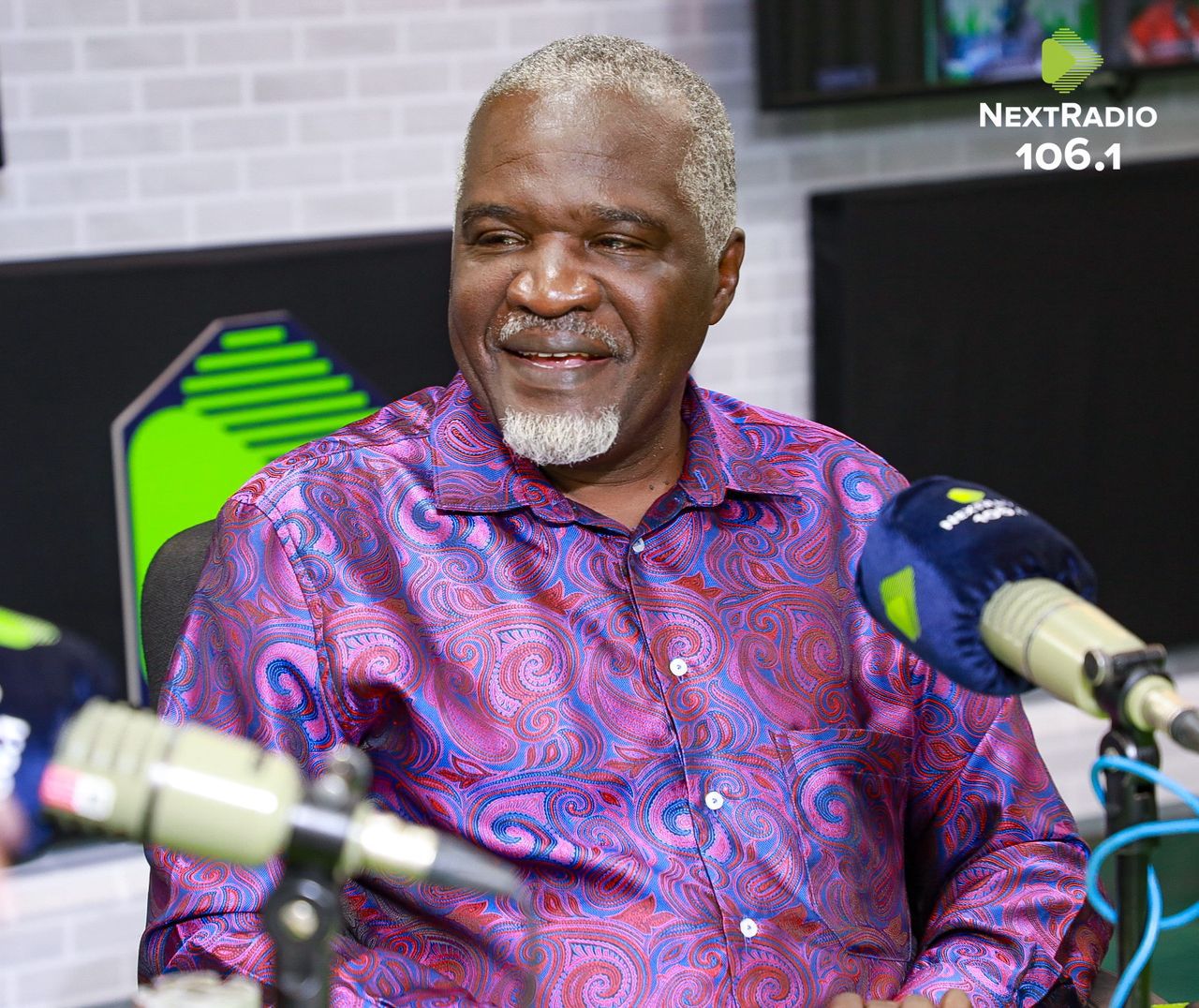
Bufumbira County East Member of Parliament Eddie Kwizera has called for greater transparency, ethical leadership and stronger institutional independence within Uganda’s governance structures.
Speaking to Canary Mugume during Next Big Talk hosted by Next Radio on Saturday, Kwizera emphasised the need for leaders to prioritise honesty and accountability in public service.
“As leaders, we should be truthful, transparent and purposeful. The best organisations are learning organisations, people learning from one another and systems,” he said.
Kwizera also warned that conflict of interest within leadership structures remains a serious integrity challenge, describing nepotism as one of the most pervasive forms of corruption globally.
“Conflict of interest is also a form of corruption, and the biggest form of corruption worldwide is nepotism,” he said.
He further expressed concern about leaders occupying multiple powerful positions simultaneously, arguing that the practice undermines accountability and worsens unemployment.
“Even if the President asked me to be a minister, I would decline. I don't believe in one person holding two full-time jobs. Why have two full-time jobs when unemployment in Uganda is so critical?” he said.
Kwizera also underscored the central role of parliamentary committees in ensuring the effectiveness of the legislature, arguing that the strength of Parliament depends largely on how effectively its committees operate.
“A parliament can only function well when it has strong committees. They are the ones that process everything,” he said.
Reflecting on the evolution of the legislature, Kwizera argued that parliamentary performance has declined over time.
“Looking at the trend from the sixth Parliament to the current 11th, the trajectory is negative,” he said.
He also raised concerns about the structural independence of the Office of the Auditor General, arguing that the current arrangement weakens accountability.
“The idea that the Office of the Auditor General is a staff of Parliament is at the genesis of corruption. The Constitution clearly states that it shall be independent in both its establishment and function,” he said.
Kwizera added that in other jurisdictions the office is supervised by an independent audit board to guarantee professional standards and competence.
“In other jurisdictions, the office is overseen by a national audit board that ensures the Auditor General meets professional standards and competence,” he said.
Kwizera’s remarks come as Parliament of Uganda races against time to conclude key business before the scheduled dissolution of the 11th Parliament on April 24, 2026.
Currently, Parliament is focusing on two major priorities: scrutiny of the Auditor General’s report and the national budget process.
Under the parliamentary budget cycle, the National Budget Framework Paper is typically submitted in December and reviewed by parliamentary committees in January and February before approval in February.
The process continues in March with the presentation of ministerial policy statements and draft budget estimates to Parliament. Committees then scrutinise the policy statements and budget estimates in April, followed by parliamentary debates and approval of annual budget estimates in May.
The budget process culminates in June when the Minister of Finance delivers the national budget speech and Parliament passes the Appropriation Act and remaining revenue laws by June 30.
However, with Parliament set to dissolve on April 24, questions remain about whether all these stages, including debates and final approvals, can realistically be completed within the available time.
In addition to the budget and oversight of the Auditor General’s report, Parliament still has several pending legislative proposals awaiting consideration.
Among them are the National Legal Aid Bill 2022 introduced by Kumi Municipality MP Silas Agon, the Contracts Farming Bill 2023 introduced by Kimanya-Kabonera MP Abed Bwanika, and the Magistrates Court Amendment Bill 2026, a government-sponsored bill.
Other pending legislation includes the Constitutional Amendment Bill 2024, the Human Resource Management Professional Bill 2025 introduced by Workers’ MP Margaret Rwabushaija, the Copyright and Neighboring Rights Amendment Bill 2025, the Forensic and Scientific Analytical Services Bill 2025, the National Drug and Health Products Authority Bill 2025, and the Khadhi Court’s Bill 2024 introduced by Bugiri Municipality MP Asuman Basalirwa.
As the legislative calendar narrows ahead of dissolution, the key question is whether the 11th Parliament will complete its work before the deadline or leave unfinished business for the incoming 12th Parliament.
