

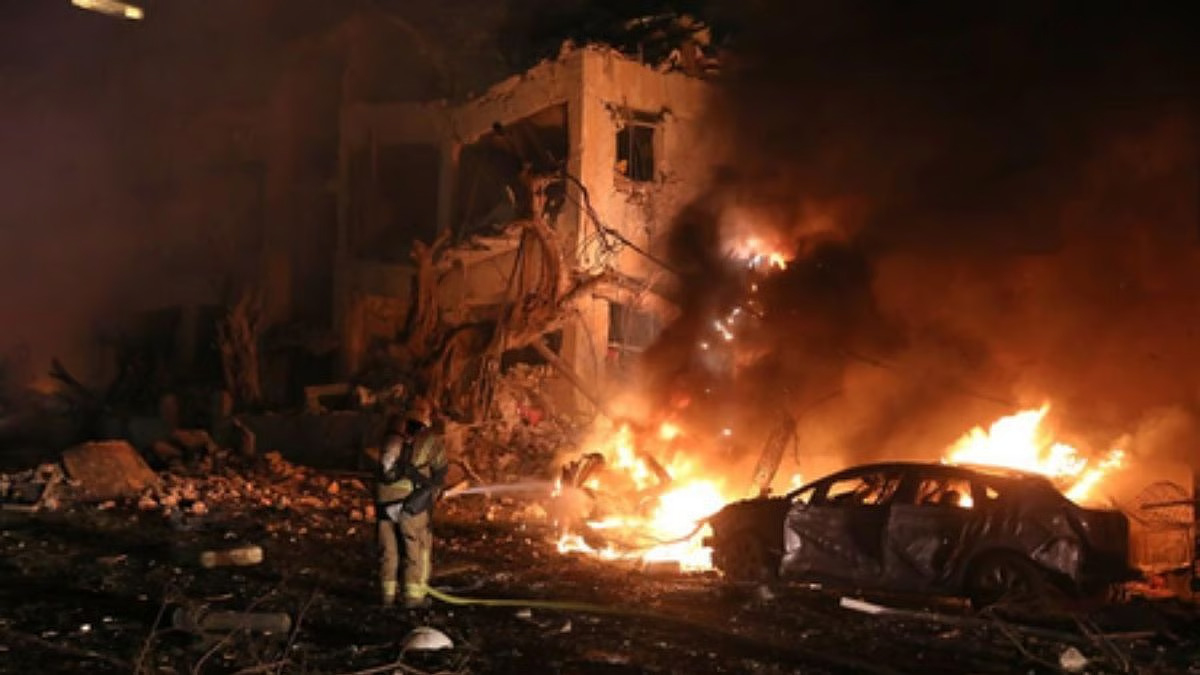
Uganda has called for peaceful dialogue in the ongoing conflict involving Israel and Palestine, saying the prolonged violence is unnecessary and must be resolved through negotiation and mutual understanding.
Speaking in Kampala, the Minister of ICT and National Guidance, Dr Chris Baryomunsi, said Uganda believes lasting peace can only be achieved through diplomacy and a political settlement that recognises the rights and security of both sides.
“They are brothers and there is no reason to fight,” Baryomunsi said, stressing that the human cost of the conflict should push leaders toward peaceful solutions.
Uganda supports a two-state solution to the Israel–Palestine conflict, a framework widely backed by the international community that proposes an independent Palestinian state existing alongside Israel.
The minister’s remarks come at a time when tensions across the Middle East have intensified following the broader confrontation involving Iran and Israel, which has drawn in global attention and raised fears of wider regional instability.
The crisis escalated after military strikes and retaliatory actions between Israel and Iran, further complicating an already volatile geopolitical environment in the region. Analysts say such confrontations risk spilling over into other conflicts, including the long-running Israeli-Palestinian dispute.
Uganda has traditionally advocated diplomatic engagement and restraint in international conflicts.
President Museveni recently urged global powers involved in the Middle East crisis to prioritise dialogue rather than military confrontation. Museveni has repeatedly argued that sustainable peace in the region requires addressing historical grievances and respecting the sovereignty of states.
Uganda’s call for restraint also reflects its long-standing diplomatic ties with Iran, a country with which Kampala has maintained cordial relations for decades.
Relations between Uganda and Iran date back to the early years of President Museveni’s government and have been strengthened through several high-level visits and bilateral agreements covering trade, agriculture, energy and technical cooperation.
One of the earliest major engagements occurred in 1996 when Iranian President Akbar Hashemi Rafsanjani visited Uganda during a tour aimed at strengthening Iran’s ties with African nations.
The visit focused on expanding cooperation in agriculture, industrial development and education.
Later, in 2010, Mahmoud Ahmadinejad travelled to Kampala while attending an international summit hosted in Uganda. His presence underscored Tehran’s interest in deepening relations with East African countries and exploring opportunities for economic cooperation.
More recently on July 12, 2023, President Ebrahim Raisi visited Uganda during an official African tour aimed at boosting trade, energy partnerships and investment links between Iran and the continent.
During Raisi’s visit, Uganda and Iran signed several cooperation agreements focusing on sectors such as oil and gas development, agriculture, pharmaceuticals, and technology transfer.
The agreements were intended to expand economic collaboration and strengthen political relations between the two countries.
Uganda has also engaged Iran in discussions on industrial development and value addition in agriculture, with both governments expressing interest in knowledge exchange and joint investment projects.
While maintaining diplomatic ties with Iran, Uganda also enjoys relations with Israel, reflecting Kampala’s broader foreign policy approach of engaging multiple partners across different regions.
Officials say this balanced approach allows Uganda to advocate peace while maintaining constructive diplomatic relations with countries on all sides of international disputes.
The government maintains that the escalating violence in the Middle East highlights the need for renewed global efforts to revive peace negotiations and prevent further humanitarian suffering.
Baryomunsi said Uganda will continue supporting international initiatives that promote dialogue and coexistence.
“Our position is clear,” he said. “Peaceful dialogue is the only sustainable path to resolving conflicts such as the Israel-Palestine dispute.”
