

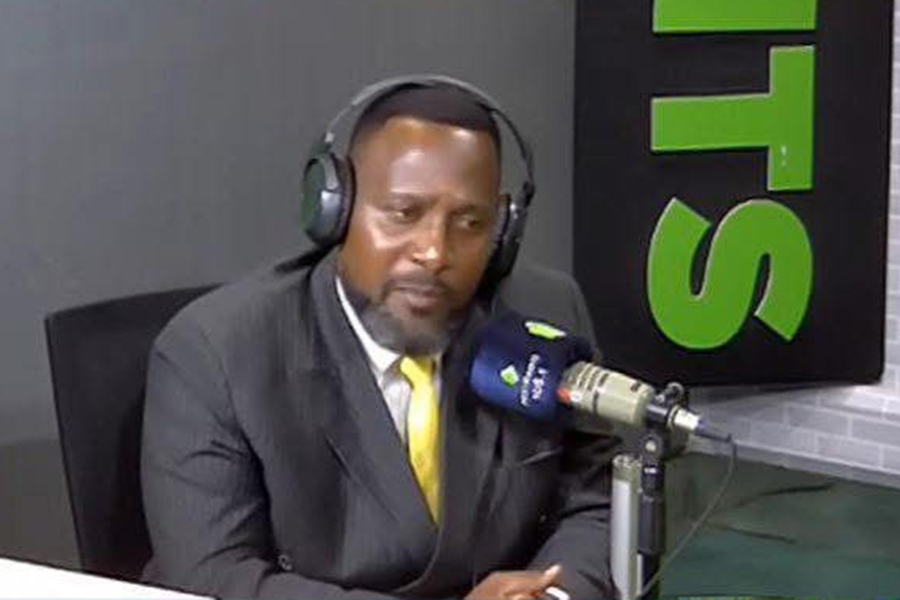
East African Legislative Assembly (EALA) Member of Parliament Dennis Namara has raised concern over the financial and political challenges confronting the East African Community (EAC), warning that the regional bloc risks serious strain if partner states fail to demonstrate stronger political will and financial commitment.
Speaking to Canary Mugume during Next Big Talk hosted by Next Radio on Monday, Namara said the resolutions adopted during the 25th Ordinary Summit of Heads of State of the East African Community came at a critical moment for a regional body he described as already struggling financially.
“I appreciate the resolutions that the 25th Ordinary Summit of Heads of State has adopted because the EAC was already on drip,” Namara said.
According to Namara, the EAC operates on an annual budget of about USD 110 million, but several partner states have not been meeting their financial obligations to the bloc.
He said that out of the eight partner states, only Uganda, Kenya, and Tanzania have fully paid their contributions, while Rwanda has made partial payments.
Namara explained that each partner state is expected to contribute roughly USD 7 million annually to support the operations of the regional organization. However, delayed remittances from several countries have reportedly left some institutions of the community struggling to operate.
“As we speak, EALA is broke. They have not paid our salaries since October 2025,” he said.
The East African Legislative Assembly currently consists of 72 members of parliament, each earning about USD 6,500 per month, meaning delays in remittances directly affect the institution’s ability to function.
Namara argued that the issue is not the financial capacity of the member states but rather the level of political commitment to regional integration.
“The problem is not the capacity of the EAC partner states to pay their fees; the problem is the political goodwill of the partner states,” he said.
He also warned that several persistent disputes within the region could only be resolved through deeper political integration among member states.
“Unless we have political federation, we will continue facing issues of non-tariff barriers, as they go hand in hand,” Namara said.
His remarks come amid growing concern among regional analysts and former legislators that the EAC could face structural pressures similar to those that led to its collapse in 1977.
The original East African Community, established in 1967 by Kenya, Uganda, and Tanzania, collapsed a decade later following political disagreements, trade imbalances, and disputes over national sovereignty.
The bloc was revived in 1999 with a renewed mandate to pursue regional integration through a customs union, a common market, and eventually a political federation.
However, more than two decades after its revival, analysts say implementation of key integration protocols remains uneven.
Former EALA members, including Lydia Wanyoto and Bernard Kasangavu Mulengani, have previously warned that the rapid expansion of the community—now comprising eight partner states—has outpaced the consolidation of its institutions.
James Nsaba Buturo, Chairperson of Parliament’s Committee on East African Community Affairs, has also pointed to limited political will among some partner states as a major obstacle to deeper integration.
According to Buturo, delayed implementation of agreed policies, weak unity among member states, and shifting political priorities among new leadership in some countries continue to slow the pace of regional cooperation.
The community has also experienced periodic diplomatic and trade tensions, including past border closures between Uganda and Rwanda, trade disputes between Kenya and Tanzania, and security-related accusations involving Rwanda and the Democratic Republic of the Congo.
Observers say such disputes undermine confidence in regional institutions and complicate efforts toward deeper integration.
Meanwhile, President Yoweri Museveni recently assumed the chairmanship of the East African Community, succeeding Kenyan President William Ruto during the 25th Ordinary Summit of EAC Heads of State held in Arusha, Tanzania on Saturday.
Uganda will now lead the eight-member bloc during the 2026–2027 term, with expectations that the new leadership will focus on strengthening economic cooperation, addressing regional security concerns, and tackling the financial constraints affecting the community.
Leaders attending the summit emphasized the need for renewed commitment to the EAC’s long-term vision of economic and political unity across East Africa.
Analysts say the coming year could prove decisive in determining whether the regional bloc can overcome its financial and political challenges and move closer to its ultimate goal of political federation.
