

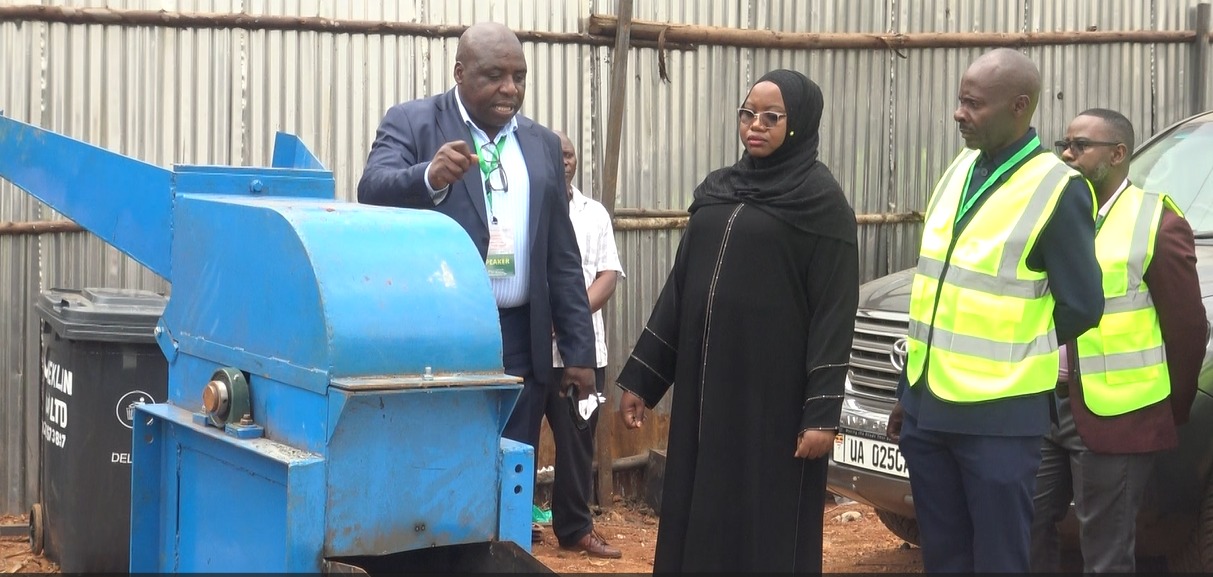
City authorities and private investors have launched an integrated waste-to-energy facility that will convert Kampala’s organic garbage into biogas and liquid biofertiliser, a move aimed at cutting landfill pressure, reducing methane emissions, lowering energy costs, and creating green jobs in Uganda’s fast-growing capital.
Kampala generates an estimated 730,000 tonnes of waste annually, a growing challenge for a fast-expanding capital.
But city leaders and private sector players say a new waste-to-energy initiative could mark a turning point in how Uganda manages garbage.
The Integrated Waste-to-Energy Biogas Production, Cylinder Packaging and Liquid Biofertilizer Facility, officially launched this week, is designed to convert organic waste into clean biogas and agricultural inputs.
The project aims to reduce pressure on landfills while contributing to energy security and climate resilience.
Speaking at the launch, Sharifah Buzeki, executive director of the Kampala Capital City Authority, described the initiative as a game changer for urban waste management.
“Biogas production is one of the value-addition methods that will help us turn waste into value,” she said. “It will significantly divert organic waste from landfills.”
Currently, large volumes of Kampala’s waste are transported to disposal sites such as the Buyala facility. Under the new model, much of the organic waste will instead be processed at the biogas plant, where it will be transformed into energy.
According to Buzeki, this diversion will not only reduce landfill congestion but also cut methane emissions associated with decomposing waste.
“The volumes that would have gone to landfill will now be converted into energy,” she explained. “This is how we create value from waste.”
The biogas produced at the facility can be used for cooking, lighting, and even as fuel for certain vehicles. Officials say this diversification of energy sources will help ease pressure on traditional electricity supply while lowering household energy costs over time.
“When we have more players in the energy sector, prices tend to go down,” Buzeki noted. “Biogas can subsidize government expenditure on energy and provide an alternative source for homes and businesses.”
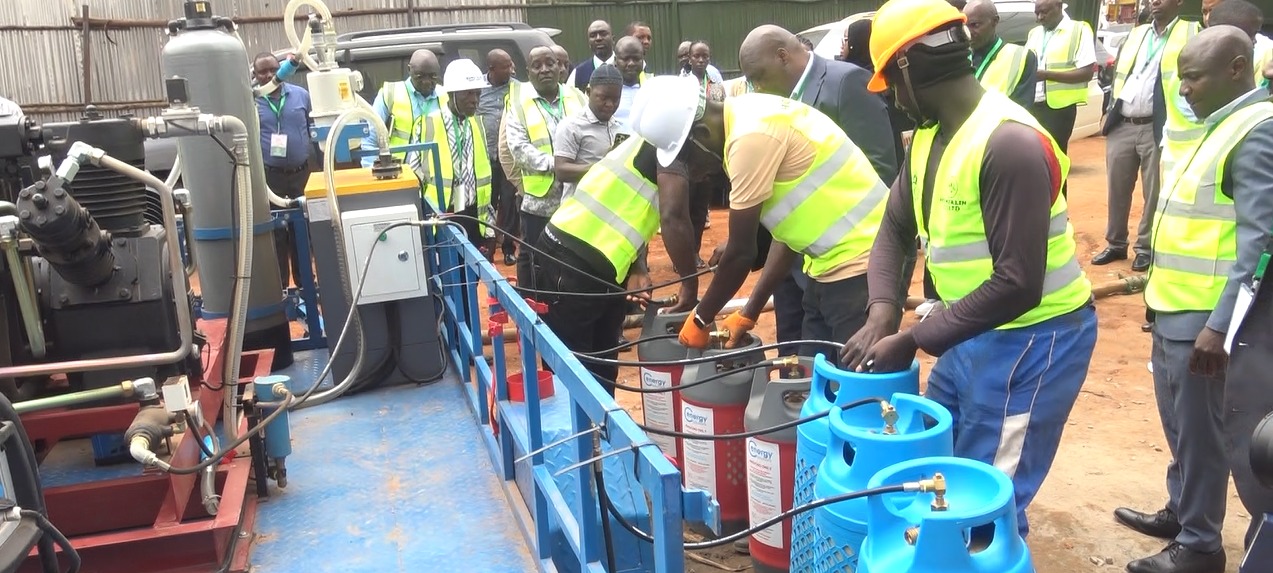
Beyond energy, the plant will also produce liquid biofertilizer, creating an additional revenue stream while supporting Uganda’s agricultural sector with organic inputs.
The facility is being operated by Homeklin Ltd, whose Managing Director Isaac Katureebe emphasized the importance of household participation in making the project successful.
Katureebe announced a citywide sorted waste campaign aimed at encouraging residents to separate organic and non-organic waste at source.
“If you sort your garbage properly, we will not charge you for collection,” he said. “Bring your sorted waste to our facility free of charge.”
He urged Kampala residents to shift their mindset about waste management, noting that proper sorting is the foundation of sustainable recycling and energy recovery.
Urban waste is not only a sanitation issue but also an environmental one. Poorly managed dumpsites contribute to greenhouse gas emissions, groundwater contamination, and public health risks.
By converting organic waste into biogas, the facility reduces methane emissions while generating renewable energy — aligning with Uganda’s broader climate resilience and green growth objectives.
City authorities believe this integrated approach — combining waste diversion, renewable energy production, and fertilizer generation — offers a sustainable long-term solution.
Officials say the project demonstrates how public-private partnerships can tackle urban challenges through innovation. With Kampala’s waste volumes expected to grow alongside population expansion, scalable solutions will be critical.
Buzeki encouraged other investors and waste management players to follow Homeklin’s example.
“Homeklin has seized the opportunity,” she said. “Let others come on board so that together we can transform waste management in this city.”
If successfully implemented and widely adopted, the waste-to-energy model could significantly reduce landfill dependency, improve urban sanitation, generate affordable energy, and create green jobs — turning Kampala’s garbage problem into a sustainable economic opportunity.
