

The Chairperson of the African Union Commission, Mahmoud Ali Youssouf, has expressed deep concern and strongly condemned the drone attack carried out against Kisangani Airport in eastern Democratic Republic of the Congo, an operation claimed by the Congo River Alliance/March 23 Movement (AFC/M23).
In a statement issued on Thursday, Youssouf said the attack targeted airport infrastructure located in a major urban centre and “gravely endanger[ed] civilian populations,” warning that it constituted “a serious violation of international humanitarian law, in particular the principles of distinction, proportionality and precaution.”
He stressed that, in the absence of objective evidence proving a strictly military purpose, airport infrastructure retains its civilian status under international law.
“Such infrastructure retains its presumption of civilian character and, as such, benefits from full protection under international law,” Youssouf said.
Citing African Union legal instruments, including the 1999 OAU Convention on the Prevention and Combating of Terrorism and its 2004 Protocol, the AU Commission Chairperson said the attack “may amount to an act of terrorism,” adding that non-state armed groups cannot justify actions that endanger civilians or civilian infrastructure on political or security grounds.
“Such acts may also entail the individual criminal responsibility of their perpetrators and sponsors, in accordance with applicable international law,” he warned.
Youssouf further cautioned against the expansion of hostilities into cities far from active front lines, describing such developments as “a major factor of escalation” that pose unacceptable risks to national and regional stability, as well as to the already dire humanitarian situation in eastern Democratic Republic of the Congo.
He called on AFC/M23 to immediately halt hostilities, renounce indiscriminate means and methods of warfare, and comply strictly with commitments under ongoing peace initiatives.
He also urged all parties to proceed “without delay and in good faith” with the full implementation of the Doha Agreement, which he described as essential to achieving an effective ceasefire, lasting de-escalation, and a return to political dialogue.
The AU reaffirmed its “unwavering commitment to the sovereignty, unity and territorial integrity of the Democratic Republic of the Congo,” and pledged continued support, in coordination with regional and international partners, for all credible initiatives aimed at restoring peace and stability in the country’s east.
The M23, however, has defended the operation, saying it deliberately targeted a military installation rather than civilian infrastructure.
In an official statement dated February 3, 2026, the group said it had destroyed “the military drone command center installed at Kisangani Airport” between January 31 and February 1.
According to the statement signed by the group's spokesperson Lawrence Kanyuka, the facility was “the main mechanism for the planning, coordination, and execution of deadly operations targeting civilian populations as well as AFC/M23 positions in the liberated areas,” including Masisi, Walikale, Rutshuru, Lubero, Kalehe, Mwenga, and Minembwe.
The group said the strike followed “numerous repeated and documented denunciations of massacres of civilians perpetrated in the liberated areas by the Kinshasa regime,” which it claimed were ignored by the international community.
“The AFC/M23 solemnly recalls that it will never stand idly by while innocent civilians are systematically targeted,” the statement said, warning that it would continue to “neutralise these threats at their source” if such actions persist.
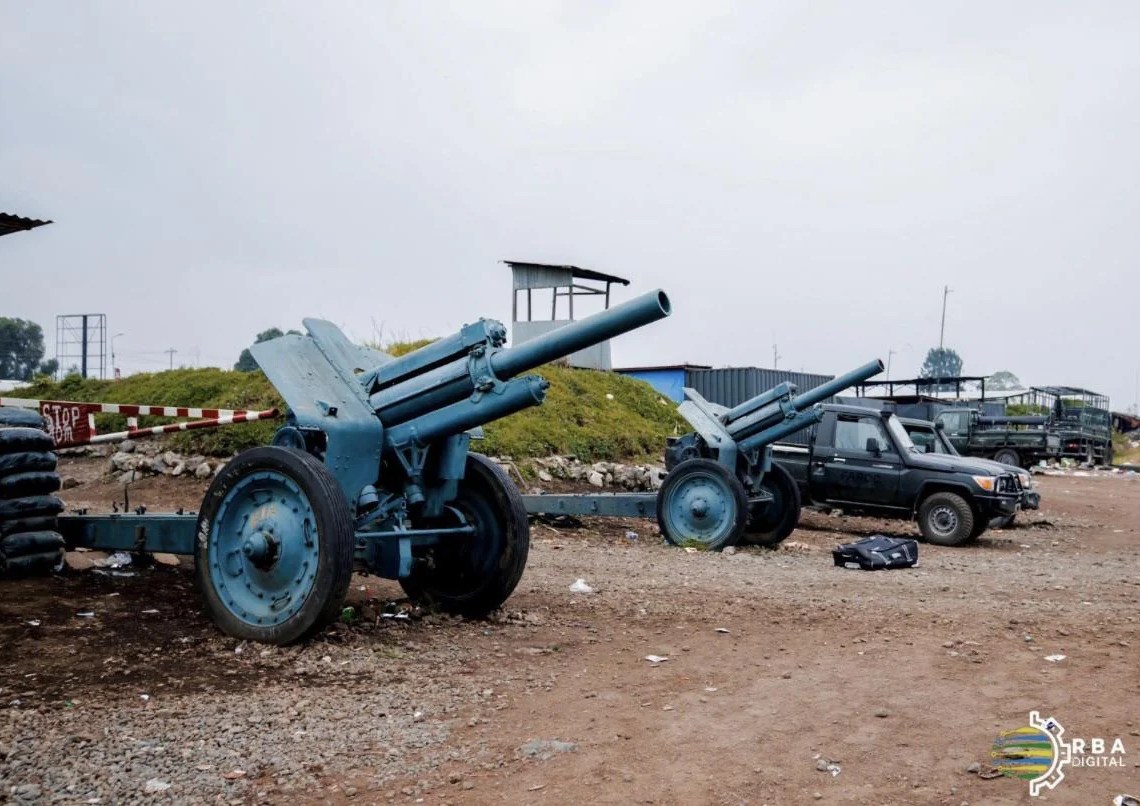
M23 also rejected suggestions that responsibility lay elsewhere, insisting the Kisangani operation was conducted by its own forces and accusing the government of abandoning military equipment at the airports of Goma and Kavumu.
It added that “the use of drones and mercenaries is neither exclusive to nor reserved for Kinshasa.”
Despite the escalation, the group reiterated that it remains committed to a negotiated settlement.
“Finally, the AFC/M23 reaffirms its unwavering and sincere commitment to a peaceful resolution of the ongoing conflict,” the statement said.
