

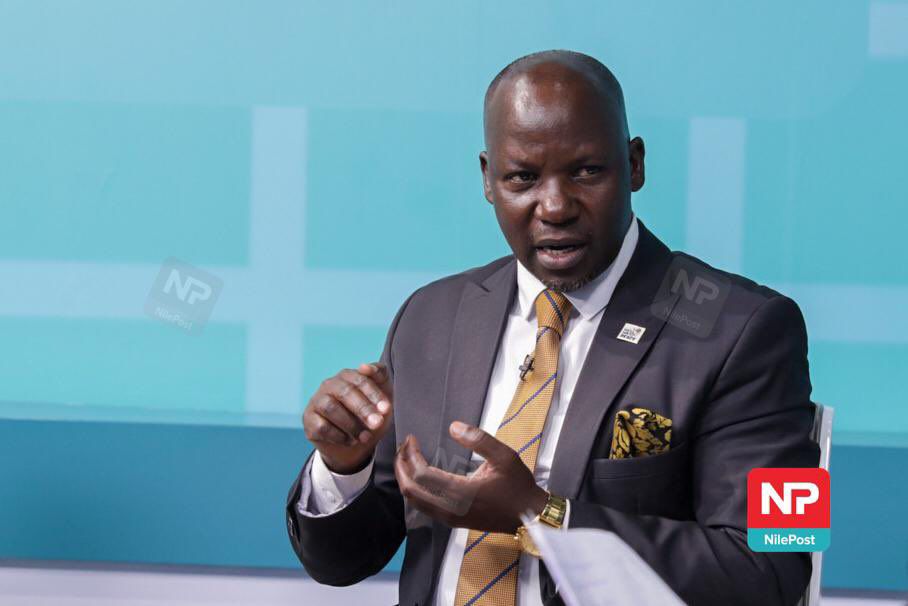
The Chairperson of the National Consultative Forum (NCF) and former NRM Vice Chairperson for the Buganda region, Godfrey Kiwanda Ssuubi, has defended the use of Biometric Voter Verification Kits (BVVKs) in Uganda’s recently concluded elections, citing past electoral irregularities as justification.
Speaking during NBS Barometer on Tuesday, Kiwanda congratulated Ugandans for participating in the polls and expressed gratitude to voters for supporting the ruling National Resistance Movement (NRM).
He emphasized that BVVK machines were a crucial tool for ensuring the integrity of the vote, particularly given historical disputes over election outcomes.
In the 2021 elections, President Museveni alleged that the opposition National Unity Platform (NUPg had stole 2.7 million votes, further underlining the ruling party’s insistence on biometric verification in subsequent elections.
"President Museveni strongly advocated for the use of BVVK machines because his vote had previously been rigged. These machines are intended to protect the will of the people and ensure that every legitimate vote counts,” he said.
The NRM has consistently viewed biometric verification as a safeguard of its electoral strength, especially in urban opposition strongholds where past results have raised questions about voter fraud and ballot manipulation.
The 15 January 2026 presidential and parliamentary elections, however, were marred by widespread technical failures of the BVVKs in multiple polling stations across the country.
In several locations, the kits failed to start or function correctly, forcing the Electoral Commission (EC) to instruct returning officers to continue voting using the manual voters’ register, in accordance with electoral guidelines.
While the EC maintained that this decision was necessary to avoid disenfranchising voters, critics have argued that reverting to manual voting undermined the transparency and integrity that the BVVKs were meant to guarantee.
During the final announcement at the EC headquarters on Saturday, EC Chairperson Justice Simon Mugenyi Byabakama declared President Museveni the winner of the 2026 presidential election, securing 7,946,772 votes – 71.65 percent of the total valid votes cast.
The victory marks Museveni’s seventh term in office and the first time in 30 years that he has surpassed the 70 percent threshold, a feat last achieved in 1996 with 74.3 percent of the vote.
Museveni’s closest challenger, Robert Kyagulanyi Ssentamu, popularly known as Bobi Wine, of the National Unity Platform (NUP), received 2,741,238 votes, representing 24.72 percent.
Nathan Nandala Mafabi of the Forum for Democratic Change (FDC) finished third with 209,039 votes (1.88 percent), while the remaining five candidates each garnered less than one percent of the vote.
