

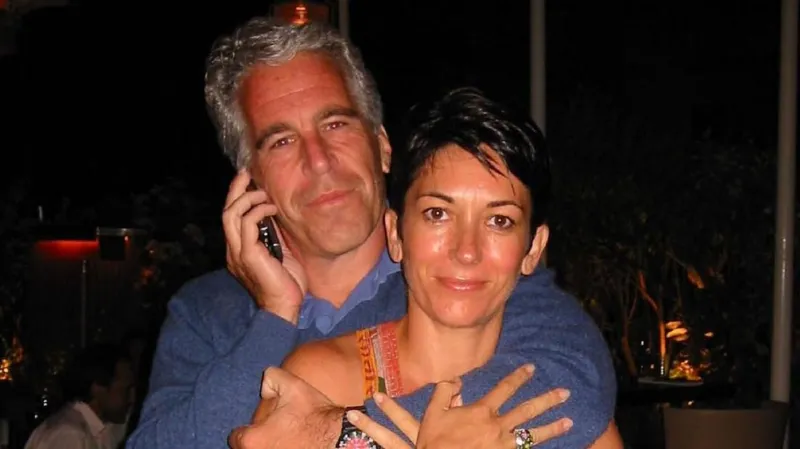
The US Department of Justice has released a portion of the long-awaited “Epstein files”, a collection of documents related to investigations into the late financier and convicted sex offender Jeffrey Epstein.
However, the release has drawn sharp criticism from lawmakers over extensive redactions and what they describe as an incomplete disclosure.
According to the BBC’s US media partner, CBS News, a total of 3,965 files amounting to roughly three gigabytes of data were released. Many of the documents are partially or fully redacted, with some pages withheld entirely.
The justice department faced a legal deadline to release the files by Friday following months of pressure on President Donald Trump from both within and outside his party.
The disclosure was mandated by legislation requiring full transparency around the Epstein investigation.
The documents include photographs and references to a number of high-profile figures, among them former US President Bill Clinton, Andrew Mountbatten-Windsor, and musicians Mick Jagger and Michael Jackson.
Being named or pictured in the files does not indicate wrongdoing, and many individuals previously linked to Epstein have denied any involvement in his crimes.
The justice department said it redacted the faces of women in photographs, even when they were not confirmed victims, citing privacy concerns.
In a letter to judges overseeing the Epstein and Ghislaine Maxwell cases, Jay Clayton, the US attorney for the Southern District of New York, said the department acted cautiously to avoid identifying victims.
“Victim privacy interests counsel in favour of redacting the faces of women in photographs with Epstein even where not all the women are known to be victims,” Clayton wrote, adding that while some may view the approach as over-redaction, the department chose to err on the side of caution.
Other redactions were made where disclosure could jeopardise active criminal investigations or involve images of abuse, according to the department.
Despite this explanation, lawmakers from both parties have accused the justice department of failing to comply with the law.
Republican Congressman Thomas Massie, a co-author of the legislation ordering the release, said the department had “grossly failed to comply with both the spirit and the letter of the law”.
Democratic Senate Minority Leader Chuck Schumer said the release undermined transparency. “Simply releasing a mountain of blacked-out pages violates the spirit of transparency and the letter of the law,” he said.
Democratic Representative Ro Khanna, who also co-authored the bill, said the disclosure “does not comply” with the legislation, describing it as “an incomplete release with too many redactions”.
House Oversight Committee Democrat Robert Garcia echoed the criticism, saying, “What we are seeing is not transparency. This is not what the law passed.”
Democratic Senator Adam Schiff called the withholding of information “completely unlawful” and said the attorney general should be summoned before the Senate Judiciary Committee to explain the department’s actions. California Representative Ted Lieu accused the justice department of “wilfully violating federal law” and called for immediate oversight hearings.
The documents released so far appear to shed limited new light on Epstein’s network or the institutional failures that allowed his abuse to continue for decades.
However, they have intensified political scrutiny of the Trump administration, with critics arguing the handling of the release risks shielding powerful figures.
One court document alleges that Epstein introduced a 14-year-old girl to Trump at Mar-a-Lago in the 1990s.
The filing states that Epstein made a remark about the girl, to which Trump allegedly smiled and nodded.
The lawsuit, filed in 2020 against Epstein’s estate and Ghislaine Maxwell, makes no accusations against Trump, and Epstein’s victims have not alleged wrongdoing by him.
Trump has previously acknowledged being friends with Epstein but said they fell out around 2004, years before Epstein’s first arrest. He has consistently denied any wrongdoing.
Among the newly released images are photographs of former President Bill Clinton in a swimming pool and a hot tub.
The images are undated, and Clinton has never been accused of wrongdoing by Epstein’s victims. A spokesperson reiterated that Clinton “knows nothing about the terrible crimes” Epstein committed.
Reacting to the release, Epstein accuser Maria Farmer said the inclusion of her 1996 FBI complaint in the files was deeply meaningful.
“Thank you for believing me. I feel redeemed,” Farmer said, describing the moment as both joyful and painful, given what she called the FBI’s failure to protect other victims.
White House officials defended the administration, with spokesperson Abigail Jackson stating that the Trump administration is “the most transparent in history”.
However, the controversy surrounding the redactions shows little sign of easing, as pressure mounts for the full, unredacted release of the Epstein files.
