

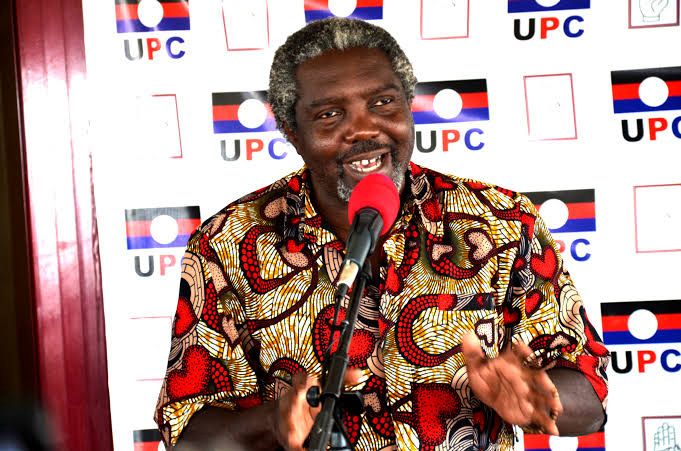
Uganda People’s Congress (UPC) president Jimmy Akena has accused the Electoral Commission (EC) of deliberately blocking his presidential bid, warning that the party risks being left without a candidate on the 2026 ballot.
Akena argued that the EC’s decision was taken before UPC’s September 21 meeting with commissioners, pointing to a letter dated September 20 as proof that the outcome was predetermined.
“UPC finds itself in an election where we prepared, we organised ourselves, we fielded candidates who were accepted by this very Electoral Commission. We collected the signatures, cleared the hurdles, and then at the last hour we get this pronouncement on the eve of nominations,” Akena said.
He claimed his candidature had been targeted through delays, missing names on the register, and unverified signatures.
“Clearly throughout this process, my candidature has been fought. Those who fear me will do everything to stop me, but I will not abandon the people of Uganda,” he added.
With nominations opening, Akena admitted the party was racing against time as it weighed legal and political options.
He accused “the state” of orchestrating the hurdles, saying only those in power could influence both the EC and the courts. Still, he urged UPC members to remain calm and focused.
The EC on Monday barred UPC from fielding a presidential candidate in 2026, citing constitutional breaches and binding court orders that have deepened the party’s leadership crisis.
The decision followed a tense meeting with Akena, Denis Enap Adim, Joseph Ochieno, and Peter Walubiri, all of whom had claimed the party’s flag.
EC chairperson Justice Simon Byabakama ruled that Akena’s extended presidency was illegal, referencing a High Court decision that barred him from serving beyond two terms.
Adim’s nomination also failed to meet constitutional requirements, while Walubiri had not undergone the nomination process.
The ruling means UPC could sit out a presidential election for the first time in its history.
Founded in 1960, the party led Uganda to independence and twice held the presidency under Milton Obote but has since struggled with factionalism and waning influence.
If upheld, the EC’s decision would mark an unprecedented low point for one of Uganda’s oldest political movements.
