

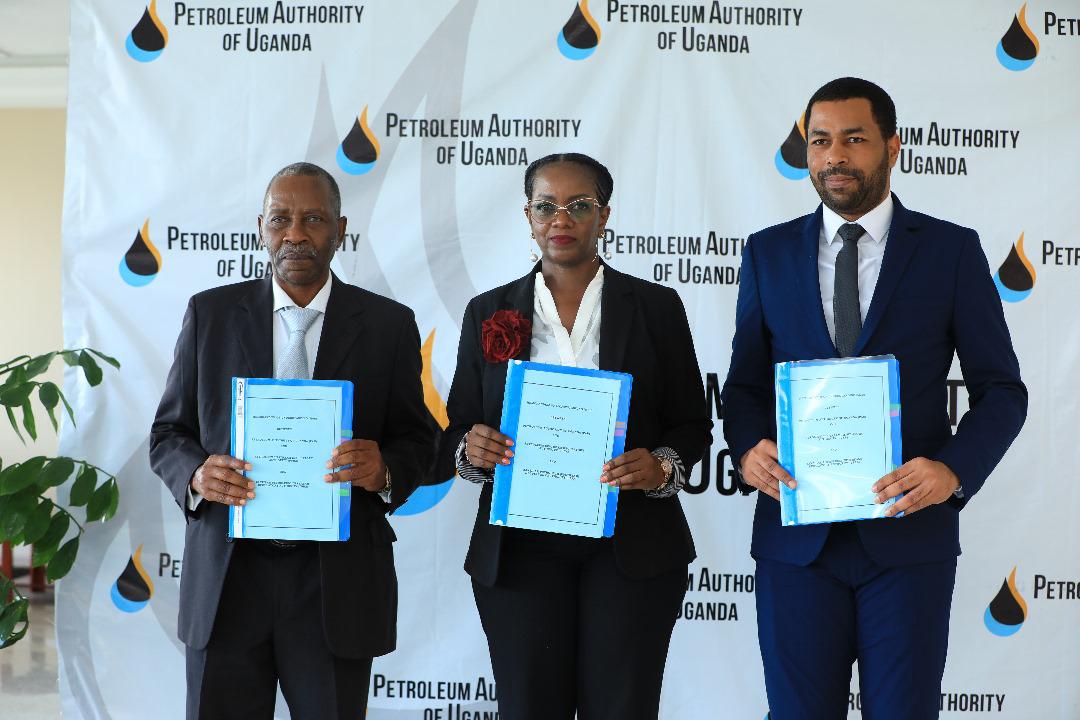
In a major step toward enhancing regional collaboration in the oil and gas sector, Uganda has signed a tripartite Memorandum of Understanding (MoU) with Tanzania and Zanzibar to formalise cooperation in petroleum resource management, cost monitoring, environmental protection, and local content development.
The agreement was signed today in Entebbe by the Petroleum Authority of Uganda (PAU), the Zanzibar Petroleum Regulatory Authority (ZPRA), and Tanzania’s Petroleum Upstream Regulatory Authority (PURA), marking what officials described as a new era of structured, cross-border regulatory cooperation in East Africa.
Speaking at the signing ceremony, PAU Board Chairperson Ms Lynda Biribonwa underscored the significance of the MoU, stating that the East African region is “one of the most prolific frontier areas for oil and gas exploration and development.” She stressed that collaboration among regulators is “paramount to leverage on the existing expertise and resources,” given the sector's complexity and capital-intensive nature.
The MoU will facilitate exchange of best practices, build institutional capacity, and enable joint efforts in tackling shared challenges in the fast-evolving energy landscape.
Mr Halfani R. Halfani, Board Chair of Tanzania’s PURA, noted that while informal partnerships have long existed between Uganda and Tanzania, “this MoU formalises those ties and ensures their sustainability.” He emphasised the agreement’s potential to help the region attract greater investment by building a stronger regulatory foundation.
ZPRA Managing Director Mr Muhammed S. Said echoed the sentiment, saying, “By putting all of our resources together, we can all learn from each other and see how we take the industry forward for the benefit of all.”
Mr Charles J. Sangweni, Director General of PURA, revealed that discussions for the MoU had been ongoing for over a year, and the resulting agreement would facilitate data sharing, training exchanges, and technical cooperation.
He expressed hope that other regional countries, such as Kenya, would join future cooperative frameworks.
The MoU comes at a critical time for Uganda, whose oil and gas ambitions have been long in the making. Despite major discoveries in the Albertine Graben over a decade ago, the commercialisation of the country's estimated 6.5 billion barrels of oil reserves—of which about 1.4 billion are considered recoverable—has seen repeated delays.
The long-awaited "First Oil" is now expected in 2026, after slipping more than five times due to infrastructure bottlenecks, financing delays, and complex regulatory processes.
During last week’s national budget reading, Finance Minister Matia Kasaija reaffirmed the government’s commitment to energy and mineral development, allocating Shs 875.8 billion for the next financial year toward oil, gas, and mineral industrialisation.
The funds will support mineral resource quantification (including iron ore, gold, and copper), as well as enhance tracking systems across the extractive sector.
Once production begins, Uganda expects to earn between $1.5 billion and $2 billion annually in oil revenues at peak production, based on current global prices and the 60,000 barrels per day anticipated for domestic refining and 130,000 barrels per day earmarked for export via the East African Crude Oil Pipeline (EACOP).
According to the Bank of Uganda and Ministry of Finance projections, full-scale oil production could boost Uganda’s GDP by up to 2 percentage points annually, with total GDP growth expected to cross 7% by 2027, driven by oil revenues, infrastructure development, and related services.
As part of the new MoU’s implementation, visiting delegations from Tanzania and Zanzibar will tour Uganda’s oil and gas operational areas in the Albertine Graben to gain firsthand insight into infrastructure readiness and regulatory frameworks.
In her closing remarks, Biribonwa expressed optimism about the road ahead: “Together, let us chart a transformative path forward for the petroleum industry in East Africa.”
With major regional infrastructure projects such as the SGR underway and oil expected to become a key economic pillar, today's agreement positions Uganda and its neighbours to grow together.
