

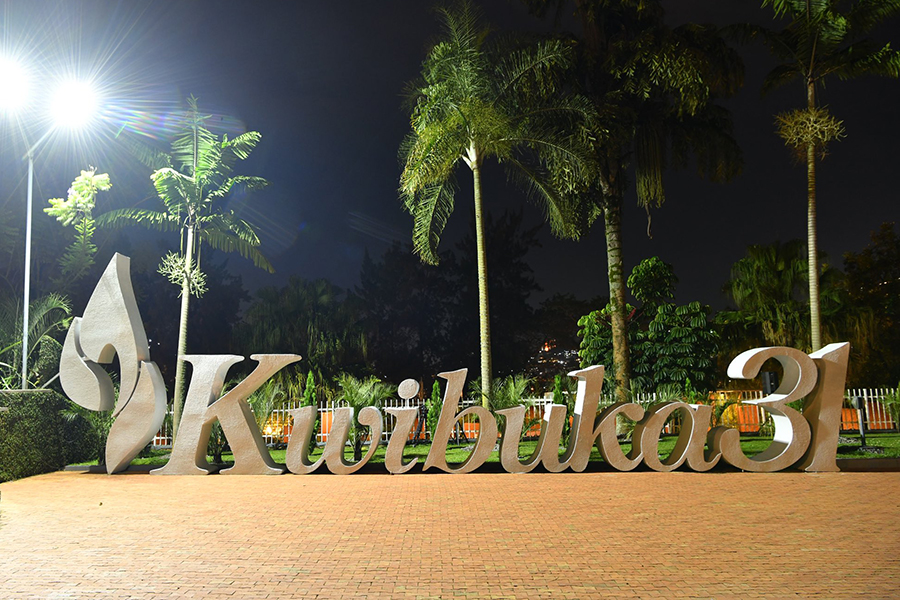
Rwandan President Paul Kagame has made a heartfelt appeal to the international community to "truly understand" the tragedy and show compassion on this day of remembrance of the 1994 Genocide against the Tutsi.
“On the day of commemoration, the 7th of April, can you be kind enough to commemorate with us and stop there... then you can have the rest of 364 days blaming us every day for everything you don't like,” Kagame said.
From April 7 to July 4, 1994, more than one million people—primarily Tutsi, along with moderate Hutu and others who opposed the genocidal regime—were systematically murdered.
The anniversary is observed under the theme “Remember – Unite – Renew,” a call to honour the victims, reflect on the past, and strengthen national unity.
The official commemoration ceremony is being held today at the Kigali Genocide Memorial Centre, where President Kagame and other dignitaries are expected to light the Flame of Remembrance, symbolising the country's resilience and collective memory.
Rwanda will observe seven days of national mourning, during which public events such as parties, concerts, and sports will be suspended.
The wider commemoration period will continue for three months, ending on July 7. The genocide was brought to an end on July 4, 1994, by the Rwandan Patriotic Army (RPA-Inkotanyi), led by Kagame.
This year’s commemoration comes at a time of heightened regional tensions, particularly between Rwanda and the Democratic Republic of Congo (DR Congo).
Kigali has accused the Congolese government of committing acts of genocide against ethnic Tutsi Congolese communities in eastern DR Congo, where the M23 rebel group—composed largely of Congolese Tutsi—has been fighting what they describe as a struggle for survival and rights.
Rwanda has repeatedly denied accusations that it backs the group militarily, instead asserting that the root of the conflict lies in the systemic discrimination and persecution of the Tutsi population in Congo.
The deepening crisis has drawn international attention and added a layer of tension to Kagame’s plea for understanding.
Rwandan officials argue that while Rwanda continues to be scrutinized globally, little attention is being paid to what they describe as the unfolding threat of ethnic violence across the border—violence with chilling echoes of 1994.
In a related development, authorities in the City of Paris last week blocked a Congolese group from organizing an event on April 7, citing the clash with Rwanda’s Genocide Commemoration Day.
The decision has been viewed by many in Kigali as a rare gesture of international sensitivity to the significance of the date and the ongoing trauma tied to it.
In his message for 2025, UN Secretary-General António Guterres underscored the intentional and premeditated nature of the genocide and warned of growing global trends of hate, division, and the weaponization of digital platforms to spread disinformation.
“This appalling chapter in human history was not a spontaneous frenzy of horrendous violence. It was intentional, premeditated, and planned — including through hate speech that inflamed division, spread lies, and dehumanized others,” Guterres said.
He urged world leaders to uphold human rights, promote unity, and deliver on commitments to prevent genocide in all its forms.
As part of broader remembrance efforts, the “Kwibuka Flame of Hope” — a statue gifted by Rwanda — was installed at United Nations Headquarters in New York in September 2024.
It stands as a symbol of the resilience of the Rwandan people and a solemn reminder of the consequences of hatred, misinformation, and unchecked division.
On this day of remembrance, Rwanda calls on the world not only to honour the victims of 1994 but also to recognize the warning signs of violence wherever they appear—and to act with empathy, vigilance, and justice.
