

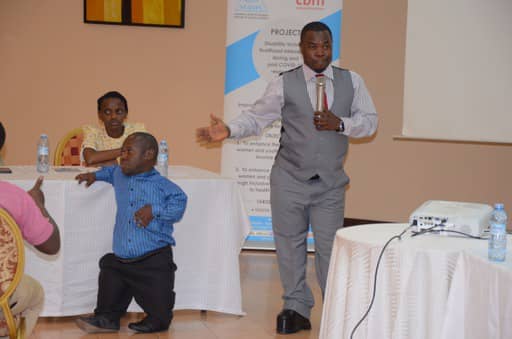
Persons with disabilities (PWDs) have urged the government to prioritize their inclusion in national development programs, particularly in healthcare, social services, and economic initiatives.
This appeal was made during a workshop held at Imperial Royale Hotel in Kampala, organized by the National Union of Disabled Persons of Uganda (NUDIP).
The workshop provided a platform for participants to highlight the challenges they face and propose solutions.
Participants, who included individuals with physical, visual, hearing, and other impairments, expressed frustration over the persistent discrimination they encounter when seeking medical care.
They pointed out that hospitals lack disability-friendly facilities and healthcare providers often fail to offer the attention they deserve.
Joel Musana, a person living with dwarfism, shared his ordeal, noting that he is often treated as a lesser priority when seeking medical assistance. “Sometimes I am mocked or dismissed, which makes it hard to access the care I need,” Musana said.
The high cost of medication for specific conditions, such as albinism, was another critical concern raised. Participants noted that these drugs are either overpriced or entirely unavailable in most health facilities.
David Nangosi, a representative of NUDIP, explained that the workshop was aimed at addressing the systemic challenges faced by persons with disabilities in Uganda.
He emphasized the need for the government to enhance its budgetary allocation for healthcare to cater to the unique needs of PWDs.
“The government must increase funding to improve access to healthcare for persons with disabilities. This includes training healthcare providers to treat us with dignity and ensuring that medical facilities are equipped with appropriate tools like specialized beds and wheelchairs,” Nangosi said.
Participants also demanded a review of healthcare policies to ensure inclusivity, with a focus on reducing societal stigma and discrimination.
They called for subsidized or free medication for conditions affecting PWDs, increased funding for disability-specific health programs, and training programs to sensitize healthcare workers on the rights and needs of PWDs.
As the discussions concluded, participants expressed hope that their voices would spark actionable change.
“We are not asking for favors; we are demanding our rights as equal citizens of this country,” Musana emphasized.
