

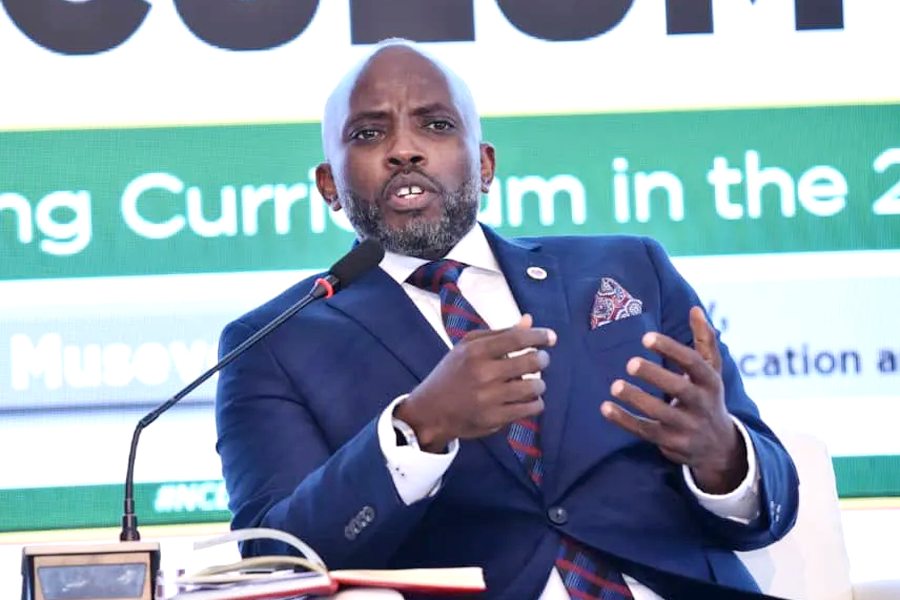
The Vice-Chancellor of Victoria University, Lawrence Muganga, has expressed deep concern over the denial of national IDs and passports to the Banyarwanda community in Uganda, describing it as "a profound deprivation of their basic rights".
On Friday, this website reported that the Banyarwanda community in Uganda had rejected a report by the parliamentary Committee on Defence and Internal Affairs that proposed that Banyarwanda unable to trace their Ugandan lineage should apply for naturalisation.
It also advised those dissatisfied with decisions from the Directorate of Citizenship and Immigration Control (DCIC) and the National Identification and Registration Authority (NIRA) to seek legal recourse
But Prof Muganga, a Ugandan Munyarwanda, said this requirement effectively renders the Banyarwanda in Uganda as non-citizens and expressed faith in Uganda’s leadership to resolve these pressing concerns.
“I trust President Museveni, Parliament under Rt. Hon. Speaker Anita Among, and the Ministry of Internal Affairs led by Gen Kahinda Otafiire to address these issues and restore the rights of Ugandan Banyarwanda,” he said.
Without these documents, members of this community face insurmountable challenges, including being unable to work, own property, marry, or even travel.
The Uganda Banyarwanda Development Cultural Association (Umubano) said the recommendations were "discriminatory" with their leader Simon Kayitana, calling for its withdrawal.
“Recommending naturalisation for Ugandan Banyarwanda undermines our rights as Ugandans by birth,” Kayitana said.
Prof Muganga drew from his past experience as a Munyarwanda in Uganda and spoke of how his family narrowly avoided expulsion in Masaka for being Banyarwanda.
“The then-regime had given us two weeks to leave the country. However, President Museveni, then leading the NRA rebel group, captured Masaka and prevented our expulsion," he said.
"That decisive moment saved countless Banyarwanda families from being uprooted. It is this history that strengthens my faith that he will once again champion justice and equity for Ugandan Banyarwanda.”
Prof Muganga’s optimism is mirrored by other community leaders, even as tensions escalate over allegations of systemic discrimination and corruption within the National Identification and Registration Authority (NIRA) and the Directorate of Citizenship and Immigration Control (DCIC).
The Council for Abavandimwe, representing approximately 260,000 Banyarwanda, has accused immigration officials of demanding bribes as high as Shs15 million to process passports.
Although a parliamentary committee dismissed these claims as unsubstantiated, MPs like Aisha Kabanda emphasised the need for urgent intervention.
“I am a granddaughter of Banyarwanda. These are my people, and they are facing significant challenges. NIRA and the DCIC must address their concerns with urgency and sensitivity,” she appealed.
MPs advised stateless Banyarwanda born and raised in Uganda to seek legal recourse under Section 83 of the Registration of Persons Act and Section 10 of the Uganda Citizenship and Immigration Control Act if unsatisfied with decisions made by NIRA and the DCIC.
They noted that NIRA has an internal Citizenship Verification Committee to address such disputes.
However, Speaker Anita Among declined to adopt the committee’s report, citing ongoing executive efforts to address the grievances.
“Given the executive actions already underway, this report cannot be adopted at this time. We will await further updates from the Minister on progress made,” she ruled.
Prime Minister Robinah Nabbanja assured Parliament of the government’s commitment to resolving the issues.
“The President met with the Bavandimwe on October 25, and Cabinet was briefed shortly after. I assure you that the government is actively working on measures to resolve these issues,” she said.
Dr Abed Bwanika, the Kimanya Kabonero MP, called for a more precise understanding of the community’s identity. “Citizens of Rwanda are Rwandans.
Let us avoid conflating this with Ugandan Banyarwanda, who are a distinct group and deserve recognition in their own right,” he said.
For Prof Muganga, this debate goes beyond documentation to the core of human dignity and belonging. “This is not just about documents; it is about livelihoods, dignity, and the very essence of belonging,” he asserted, urging swift action to resolve the crisis.
The plight of Banyarwanda underscores Uganda’s critical need for coordinated action, political will, and a commitment to justice and inclusivity.
The government’s next steps will determine whether the nation emerges stronger, united, and more equitable or continues to grapple with challenges that threaten its cohesion.
