

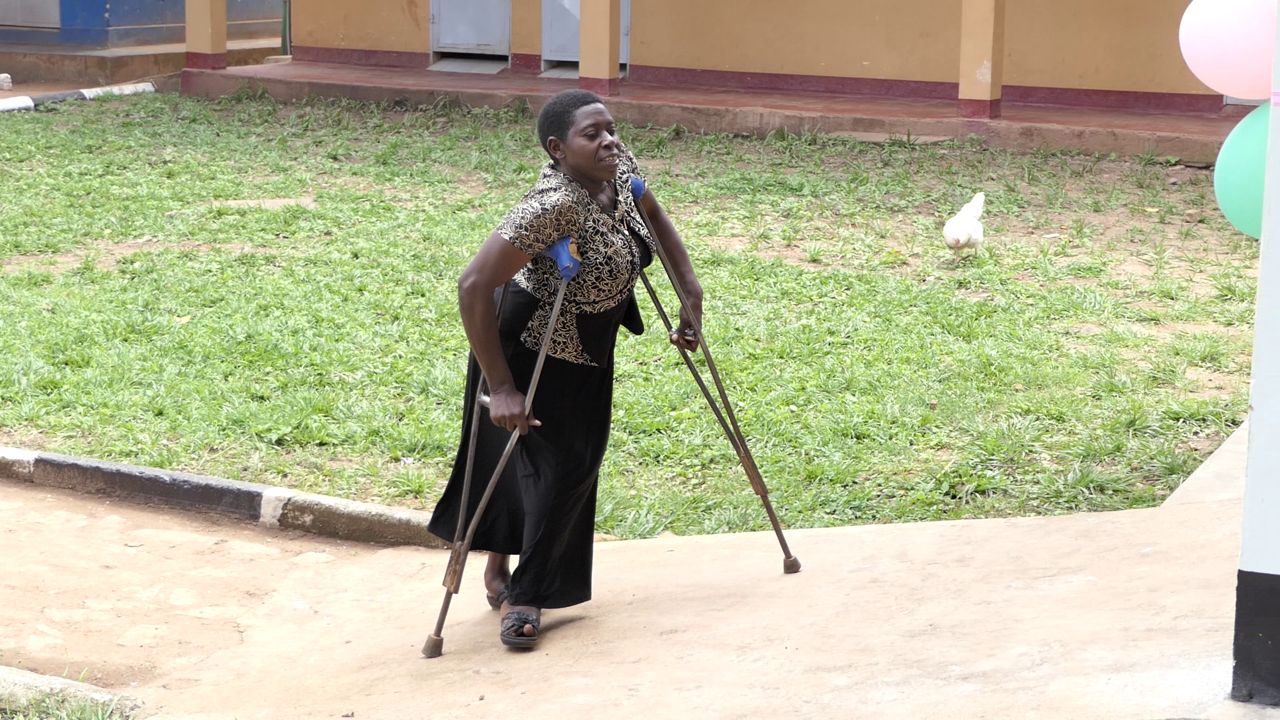
A recent assessment conducted by the Association of Persons with Disabilities Living with HIV and Tuberculosis (ADPHA) has uncovered significant accessibility challenges faced by persons with disabilities at key rural health centers in Uganda.
The study focused on Kasensero Health Center II in Kyotera District, Kinuuka Health Center III in Lyantonde District, and Ntuusi Health Center IV in Sembabule District.
The findings reveal numerous barriers that hinder access to essential health services for individuals with disabilities.
The assessment highlights physical obstacles at these facilities, such as broken ramps, cluttered access paths, and unclean latrines, which make movement difficult for those with mobility impairments.
These barriers not only restrict access to healthcare services but also deter persons with disabilities from using sanitation facilities.
According to Mr. Richard Musisi, the executive director of ADPHA Uganda, the health centers are also failing to accommodate individuals with sensory impairments.
He noted that none of the facilities offer information in alternative formats, such as Braille or large print, preventing people with visual impairments from accessing critical health information.
Additionally, the absence of sign language interpreters at all three centers exacerbates communication challenges for deaf patients, depriving them of necessary medical care.
The ADPHA report further indicates that these health centers violate key legal frameworks, including Article 25 of the United Nations Convention on the Rights of Persons with Disabilities, to which Uganda is a signatory.
They also do not comply with Uganda’s Persons with Disabilities Act No. 3 of 2020 or the Building Control Act No. 10 of 2010, both of which establish accessibility standards for public facilities.
These shortcomings demonstrate Uganda's failure to meet its commitments from the February 2022 Disability Summit, where the country pledged to promote inclusive healthcare.
As a result, persons with disabilities in these rural areas are being denied equitable access to healthcare services.
To address the identified gaps, ADPHA has issued several recommendations. Musisi emphasized the urgent need for targeted interventions, including increased funding for rural health centre, with a specific focus on improving accessibility for people with disabilities.
This should include the hiring of sign language interpreters and producing health communication materials in Braille and large print.
Musisi also called on health center managers to immediately improve the conditions at their facilities by ensuring latrines are clean, overgrown grass is trimmed, and access paths are cleared of obstacles to make movement easier for persons with disabilities.
ADPHA advocates for greater collaboration between the government and civil society organizations to strengthen peer support groups for persons with disabilities, particularly those living with HIV and tuberculosis.
These groups could play a crucial role in improving access to healthcare in hard-to-reach areas, such as landing sites.
The organization has also encouraged district health offices to replicate this accessibility assessment in other health facilities to identify and address similar issues across the country.
Implementing these recommendations would mark a significant step toward making Uganda's health services more inclusive and accessible.
By closing these accessibility gaps, Musisi noted, Uganda can ensure that no one is left behind, particularly in rural and underserved areas where equitable healthcare is most urgently needed.
