

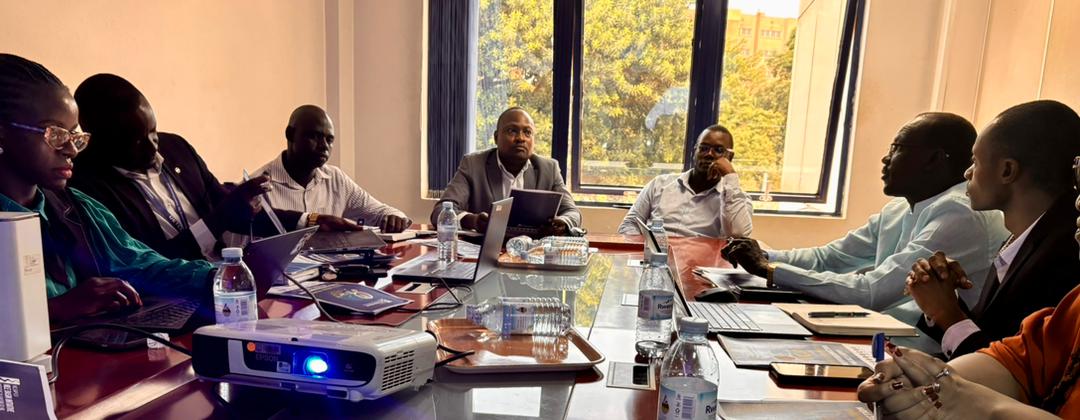
The South Sudan–Uganda Power Interconnection Project (SUPIP) has received renewed momentum following high-level technical engagements held in Kampala this week involving key regional and national energy stakeholders.
The meetings brought together representatives from the Nile Equatorial Lakes Subsidiary Action Program Coordination Unit, Uganda Electricity Transmission Company Limited and Uganda’s Ministry of Energy and Mineral Development to review progress on the ambitious 400kV regional power interconnection project.
Discussions focused on coordinating technical activities, refining implementation strategies and reviewing adjustments to the proposed transmission line alignment aimed at avoiding potential bottlenecks during execution.
Officials said the engagements reflected growing cooperation among the participating institutions as the project advances into its implementation phase.
Speaking during the meetings, Eng. Edward Baleke, representing the Ministry of Energy and Mineral Development, reaffirmed Uganda’s commitment to ensuring the project is delivered successfully and on schedule.
“The Ministry remains committed to fast-tracking this project to ensure it delivers on its intended purpose,” Eng. Baleke said.
“We understand the transformative potential of reliable energy infrastructure for both economic development and regional stability. Consequently, we shall continue to provide all the necessary support required at the Ministry level to facilitate effective implementation.”
He added that Uganda was determined to address emerging challenges quickly to avoid delays in implementation.
Eng. Jacob Manyoun Deng, speaking on behalf of the Regional Coordinator of the Nile Equatorial Lakes Subsidiary Action Program Coordination Unit and serving as Project Manager for Power at NELSAP-CU, said the institution remained committed to coordinated project delivery and regional cooperation.
“NELSAP-CU remains fully committed to working closely with the Partner States, utilities, and stakeholders to ensure the project progresses smoothly and as planned,” Eng. Deng said.
“The SUPIP is more than just a transmission line; it is a testament to what can be achieved when nations collaborate towards a common goal.”
He said the project would strengthen the energy landscape of both Uganda and South Sudan while supporting broader East African regional integration efforts.
Once completed, the interconnection project is expected to strengthen regional electricity trade by enabling power exchange between Uganda and South Sudan, improve reliability of electricity supply and expand access to energy for households and businesses.
Officials believe the project will also contribute to economic growth, job creation and deeper regional cooperation by creating a more stable and interconnected energy network across East Africa.
The Kampala engagements were described as a key step towards overcoming remaining technical and implementation hurdles as both countries move closer to realizing one of the region’s most significant cross-border energy infrastructure projects.
