

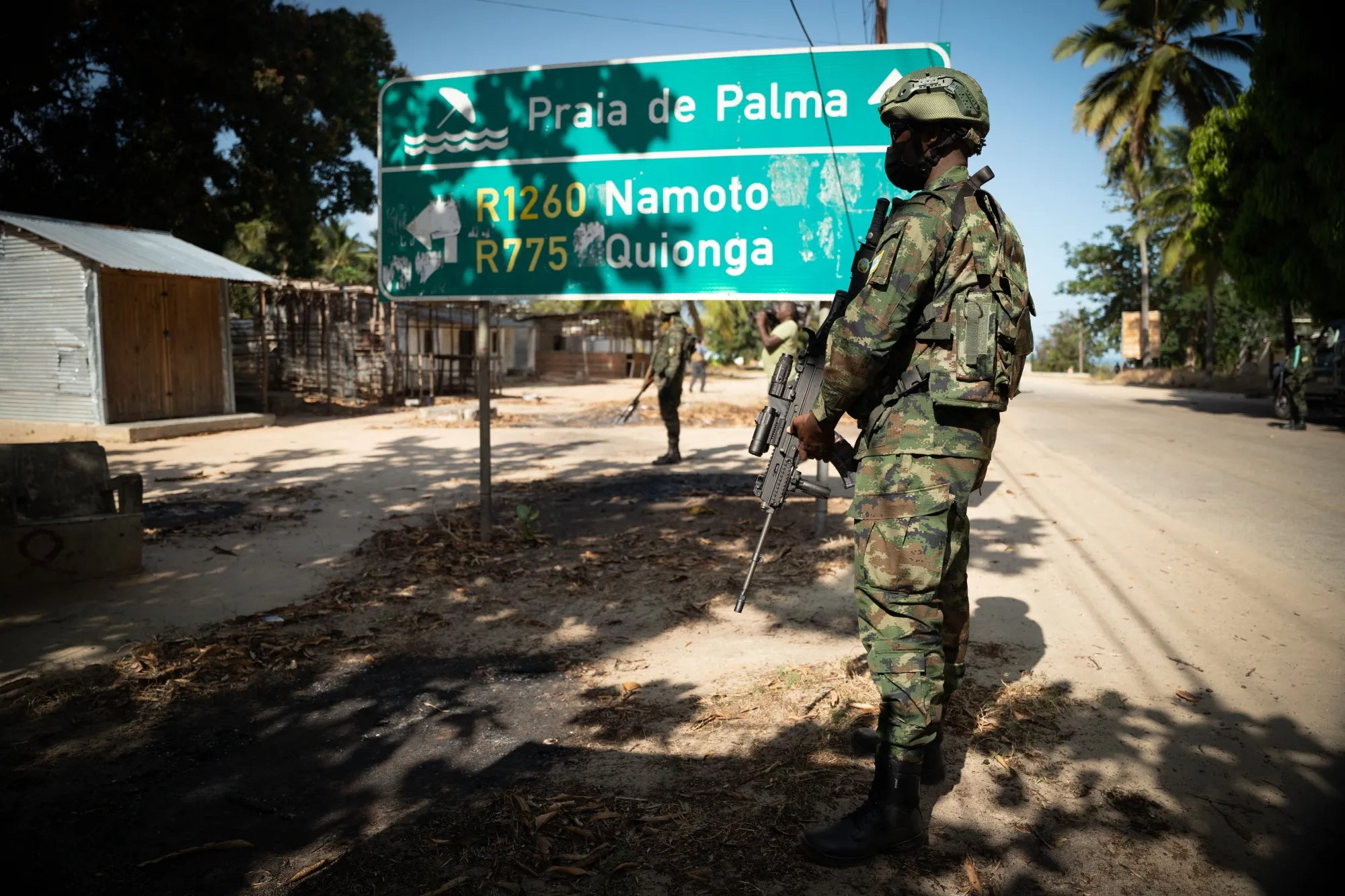
Rwanda has indicated it may pull its troops out of Mozambique’s Cabo Delgado province if sustainable funding for the counter-terrorism mission is not secured, raising concerns over the future of security operations that have been central to stabilising the region and protecting multibillion-dollar gas projects.
The warning came after international media reports highlighted uncertainty surrounding external funding for Rwanda’s military deployment, which has been widely credited with helping the Mozambican government push back an Islamic State-linked insurgency that erupted in the gas-rich northern province in 2017.
According to a report by Reuters, Rwanda signalled that it could withdraw its forces if the mission no longer receives “sufficient and predictable external funding.”
However, Rwanda’s Foreign Affairs Minister Olivier Nduhungirehe rejected the framing that Kigali was merely considering the move, saying the government’s position was firmer if funding gaps persist.
"It's not that "Rwanda could withdraw", it's that "Rwanda WILL withdraw" its troops from Mozambique, if sustainable funding is not secured for its counter-terrorism operations in Cabo Delgado," Amb Nduhungire said.
Nduhungirehe said Rwanda had already spent hundreds of millions of dollars on the deployment and lost soldiers in the process of stabilising Cabo Delgado. He said the troops had played a crucial role in enabling displaced civilians to return home, reopening businesses and allowing major liquefied natural gas investments to resume.
He said Kigali would not continue to commit its forces indefinitely if their contribution was constantly questioned, criticised or even sanctioned by the same countries that benefit from the improved security situation.
“If sustainable funding is not secured, Rwanda will withdraw,” he said, adding that the government was ready to leave Mozambique if its work and achievements were not appreciated.
Rwandan troops were first deployed to Cabo Delgado in July 2021 at the request of the Mozambican government as the insurgency escalated and threatened major energy investments.
At the height of the violence, militants linked to the Islamic State group had seized towns, displaced hundreds of thousands of civilians and forced the suspension of a $20 billion liquefied natural gas project led by French energy giant TotalEnergies.
The deployment of Rwanda Defence Force (RDF) soldiers, alongside Mozambican troops and later regional forces under the Southern African Development Community, helped drive militants out of key towns including Palma and Mocímboa da Praia.
Security improvements in the region prompted TotalEnergies to announce in January that construction on the massive LNG project would resume after being suspended for several years.
However, the long-term sustainability of Rwanda’s presence has increasingly come into question. A Bloomberg newsletter published on March 13 reported that the European Union would not extend the €20 million in funding that had been directed through the European Peace Facility to support Rwanda’s counter-insurgency mission.
The EU contribution represents only a fraction of the cost of the deployment. Rwanda says the full expense of the mission is at least ten times higher.
Responding to the report, Rwanda government spokesperson Yolande Makolo said the continuation of the bilateral deployment depended on predictable financial support.
Makolo said the European Peace Facility had so far disbursed around €20 million, but that the total cost to Rwanda was far greater, including the loss of soldiers’ lives.
"The full cost to Rwanda is at least 10 times more, in addition to the ultimate sacrifice of loss of soldiers’ lives, all to stabilize Cabo Delgado," she said.
She said Rwanda had initially responded to Mozambique’s request for assistance out of solidarity with a fellow African country facing a security crisis, rather than financial considerations.
Makolo noted that the intervention had produced tangible results, including the return of civilians to their homes, the reopening of schools and businesses, and the protection of large foreign investments in natural gas.
"The results of this deployment are evident: civilians have returned to their homes, children are back in school, businesses reopened, mega foreign investments are secured," she said.
Makolo emphasised that the stabilisation of Cabo Delgado had benefited not only Mozambicans but also international energy companies operating in the region.
However, she warned that Rwanda’s military leadership could recommend ending the deployment if the mission was no longer valued or supported.
"To be clear, the work of RDF in countering terrorism in Cabo Delgado has benefitted the Mozambican people and the companies investing in LNG, and supporting that work is not a favor being granted to Rwanda.," Makolo said.
"Should the RDF Command assess that the work being done by Rwandan Security Forces in Cabo Delgado is not appreciated, they would be right to urge the government to end this bilateral counter-terrorism arrangement and pull out."
The debate over Rwanda’s role in Mozambique comes at a time when Kigali is facing mounting international scrutiny over its involvement in the conflict in eastern Democratic Republic of Congo.
The United States in 2024 imposed sanctions on several senior Rwanda Defence Force commanders accused of supporting the M23 rebel movement operating in North Kivu province.
Those sanctioned included RDF Chief of Staff Major General Vincent Nyakarundi and Major General Eugene Nkubito, who previously commanded Rwanda’s forces deployed in Mozambique.
Washington has accused Rwanda of backing M23 rebels fighting Congolese government forces, an allegation Kigali has repeatedly denied.
Rwanda argues that its security concerns in eastern Congo stem from the presence of armed groups hostile to Kigali, including the Democratic Forces for the Liberation of Rwanda (FDLR), which it links to perpetrators of the 1994 genocide.
The sanctions have added strain to Rwanda’s relationships with some Western partners, even as the country continues to participate in peacekeeping and counter-terrorism missions across Africa.
Analysts say the situation illustrates the complex geopolitical dynamics surrounding security operations in resource-rich regions of Africa.
Rwanda’s troops have been widely credited with helping protect tens of billions of dollars in gas investments in Mozambique, many of them backed by European and American companies.
At the same time, Kigali’s alleged involvement in eastern Congo has triggered diplomatic friction with Western governments concerned about regional stability and access to critical minerals in the Democratic Republic of Congo.
For Mozambique, the potential withdrawal of Rwanda’s troops would raise difficult security questions. Although the insurgents have lost significant ground since 2021, attacks continue in parts of Cabo Delgado and analysts warn the militant network remains capable of regrouping.
Mozambique is also grappling with a deep fiscal crisis, limiting its ability to finance large-scale security operations on its own.
If international support wanes and Rwanda ultimately pulls out its forces, security analysts say the fragile gains against the insurgency could face renewed pressure.
