

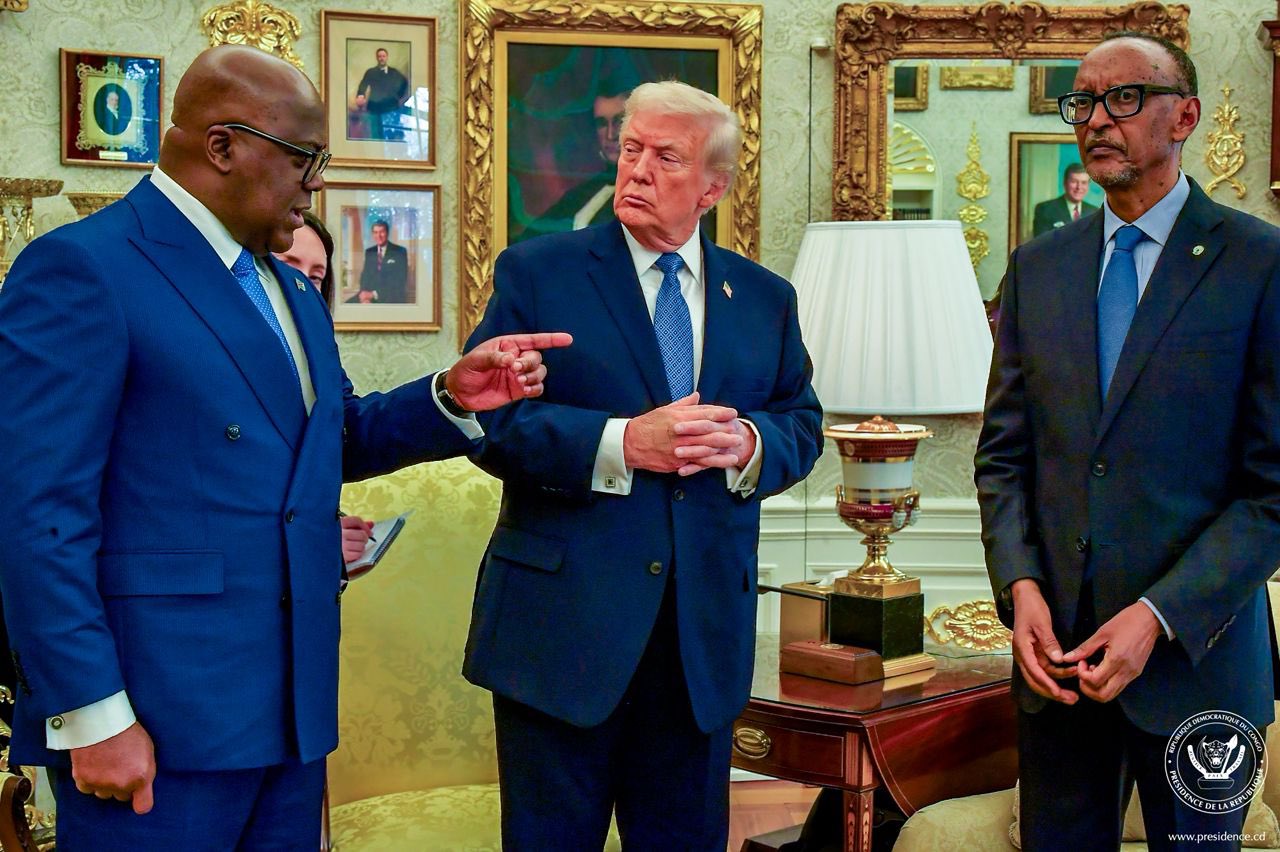
In a high-stakes diplomatic push to salvage a collapsing peace process, the governments of the United States, the Democratic Republic of the Congo, and Rwanda issued a joint statement on March 18, 2026, outlining “concrete steps” to implement the Washington Accords.
The agreement comes at a moment of heightened regional tension, following sweeping sanctions imposed by the U.S. Department of the Treasury on the Rwanda Defence Force and its top leadership over alleged violations of earlier ceasefire commitments.
Finalised after two days of intense negotiations in Washington, the roadmap commits both Kigali and Kinshasa to coordinated actions aimed at preventing further escalation in eastern Congo.
Central to the deal is a “mutual commitment to specific measures to support each other’s sovereignty and territorial integrity,” alongside a “scheduled disengagement of forces” by Rwanda in designated areas of Congolese territory.
In return, DR Congo has pledged “time-bound and intensified efforts” to dismantle the Democratic Forces for the Liberation of Rwanda, an armed group Rwanda has long cited as a key national security threat.
“The DRC and Rwanda reaffirmed their commitments under the Washington Accords to achieve lasting peace and prosperity in the region,” the joint statement said, signaling cautious optimism after months of stalled diplomacy.
Yet the agreement is overshadowed by mounting U.S. economic pressure. The Treasury’s sanctions, enforced through its Office of Foreign Assets Control, target the RDF as an institution as well as senior figures including Gen Mubarakh Muganga and Maj Gen Vincent Nyakarundi.
The measures were triggered by allegations that Rwanda has provided direct military support to the March 23 Movement insurgency, which has displaced hundreds of thousands of civilians in eastern Congo.
US officials have framed the sanctions as a decisive enforcement mechanism. Treasury Secretary Scott Bessent stated that Washington expects the immediate withdrawal of Rwandan troops, weapons, and equipment from Congolese territory, underscoring a shift from diplomatic warnings to concrete financial penalties.
The move marks a notable evolution in US policy, targeting the financial networks and international mobility of Rwanda’s military leadership rather than relying solely on political condemnation. Analysts say this approach increases the cost of non-compliance while reinforcing Washington’s role as a central broker in the crisis.
Human rights groups, including Human Rights Watch, have welcomed the tougher stance, arguing that the M23’s battlefield successes would not have been possible without external military backing.
As implementation begins, the durability of the Washington Accords will depend on whether Rwanda adheres to its disengagement commitments and whether DR Congo can effectively neutralize the FDLR within the agreed timelines.
Failure on either front risks reigniting a conflict that has already destabilized the Great Lakes region and drawn in multiple regional actors.
