

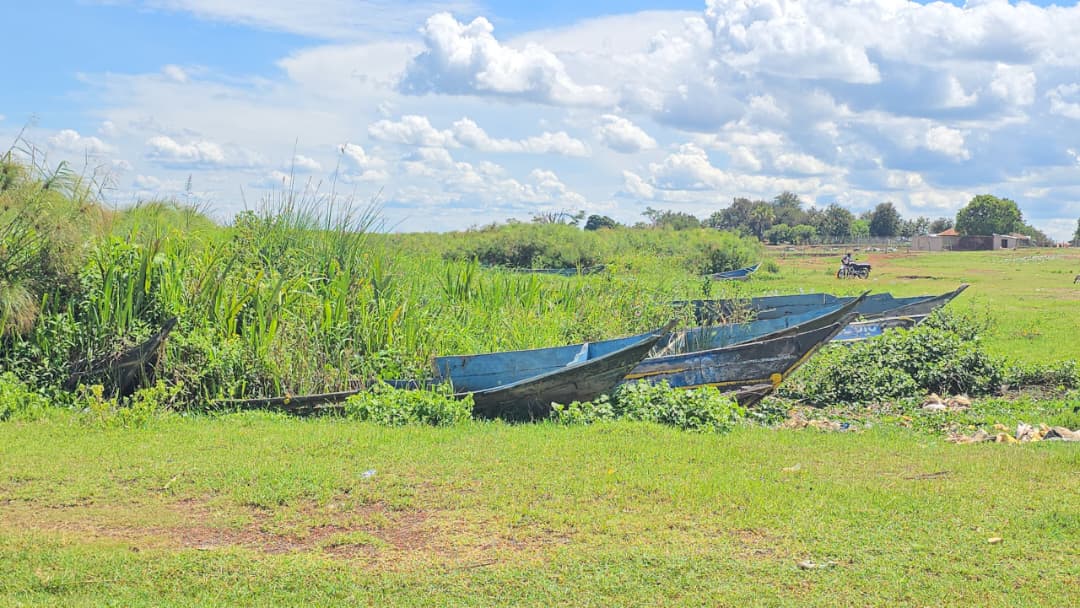
Fishing communities in Amolatar District are facing worsening economic hardship as fish stocks on Lake Kyoga continue to decline, with local leaders and fishermen blaming lapses in enforcement and policy disruptions for destabilising the sector.
At Namasale Landing Site, one of the district’s busiest fish trade hubs, fishermen report a sharp drop in daily catches, a trend they say has significantly affected incomes and disrupted supply chains to major markets including Kampala and neighbouring countries.
Daniel Amar, chairperson of the Namasale Landing Site Committee, said the decline began during the campaign period ahead of the January 2026 general elections, when government temporarily suspended operations of the Uganda People’s Defence Forces Fisheries Protection Unit (FPU).
“The time enforcement was halted, and people fished freely using illegal gear. That affected the lake,” Amar said.
He explained that before the suspension, the landing site handled more than 20 tonnes of fish destined for regional markets, but current volumes have fallen sharply, indicating what he described as a depleted fishery resource base.
District authorities have corroborated the trend, attributing it largely to increased illegal fishing during the period without enforcement.
Francis Okello Rwotlonyo, the Resident District Commissioner of Amolatar, said the absence of enforcement created room for uncontrolled exploitation of the lake.
“Many fishermen entered the lake with illegal boats and gear. As a result, fish reduced and some landing sites have closed,” Rwotlonyo said.
He added that the decline has also affected local revenue collections, which in some landing sites have dropped from about Shs2 million to as low as Shs200,000.
Beyond enforcement challenges, fishermen say rising fuel prices have further strained operations, making it increasingly expensive to access deeper fishing grounds where stocks are relatively better.
At Namasale, fishermen rely heavily on engine-powered boats, with petrol prices reportedly reaching Shs9,500 per litre.
“You cannot reach the fishing grounds without fuel, and the cost is high,” Amar said.
The reduced catch has also pushed up fish prices in local markets. A kilogram of fish now sells at about Shs11,000, compared to Shs8,000 when supply was more stable.
Meanwhile, proposed regulations to cap the number of boats per landing site at 30 have drawn strong opposition from local leaders and fishermen.
Amar said Namasale alone has about 190 boats supporting hundreds of households, warning that limiting access would increase unemployment and worsen livelihoods.
Amolatar District LC5 Chairperson Geoffrey Ocen also rejected the proposal, saying it risks excluding many residents who depend entirely on fishing.
“Limiting boats to 30 per landing site will deny many people access to the lake, yet this is their only source of livelihood,” Ocen said.
He further criticised proposals for district security committees to appoint Beach Management Unit (BMU) leaders, arguing that such arrangements could weaken local ownership and effective management.
“The management of the lake should be left to the fishermen themselves. Leaders must be elected from the landing sites upwards so that they understand the challenges on the ground,” he said.
Local authorities say plans are underway to redeploy enforcement teams on Lake Kyoga to restore order and curb illegal fishing activities.
However, fishermen caution that unless enforcement is consistent and policies are more inclusive, recovery of fish stocks—and the survival of fishing-dependent communities—remains uncertain.
