

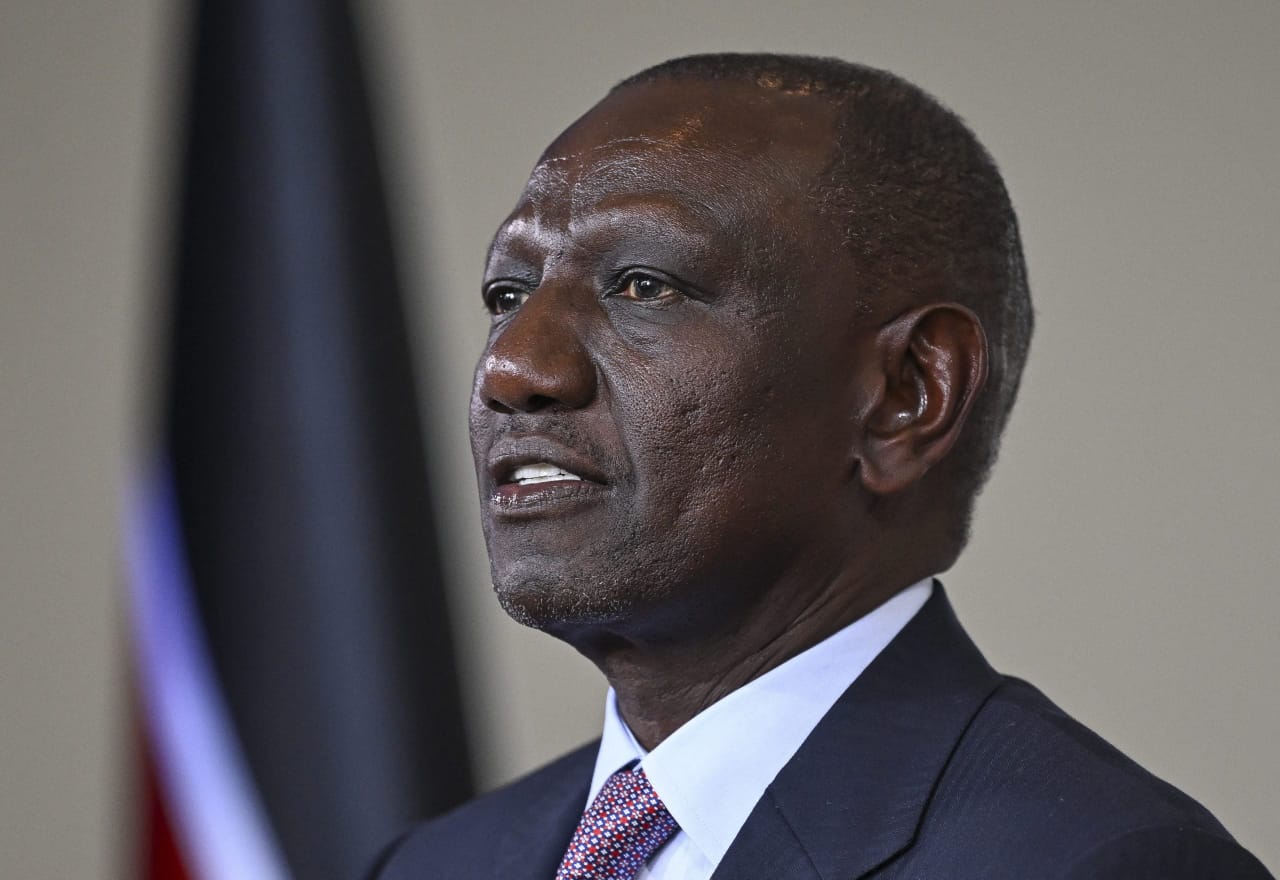
Kenyan President William Ruto has defended the country's higher fuel prices compared to its East African peers, attributing the disparity to the country’s middle-income status and the heavy cost of maintaining and expanding its extensive road network.
His remarks come amid growing public concerns in Kenya following a sharp rise in pump prices announced by the Energy and Petroleum Regulatory Authority (EPRA) last week.
Kenya continues to post higher fuel prices than all East African neighbours, including Uganda, Tanzania and Rwanda, a gap that has drawn public concern amid rising living costs.
Recent regional comparisons show Kenya still ranks among countries with relatively higher pump prices. Petrol in Kenya has been averaging about Shs5,871 per litre, with diesel at similar levels.
In Uganda, petrol averages around Shs5,244 per litre and diesel Shs5,085, although some stations in Kampala have pushed prices to about Shs5,600. Rwanda’s petrol prices stand at roughly Shs5,814 per litre, while Tanzania records averages of about Shs5,415.
The price adjustments followed earlier concerns after fuel costs surged barely weeks after government assurances, sparking debate particularly on social media over why Kenya pays more than some of its landlocked neighbours.
Speaking to a congregation at the African Gospel Church headquarters in Karen, Nairobi, the President said comparisons between Kenya and its East African neighbours are often misleading.
Ruto attributed the difference to the country’s economic status and the cost of sustaining its infrastructure, saying comparisons with neighbouring countries should be made cautiously.
“I know many people in Kenya keep asking, you know, why is it that sometimes prices of fuel are different in Kenya from our neighbors?” he said.
He explained that Kenya’s classification as a middle-income country means it operates under different economic conditions compared to its neighbours, many of which are still considered least developed.
As a result, he argued, a fair comparison would be with countries of similar income status rather than within the East African region.
The President also linked fuel pricing to road construction and maintenance, noting that Kenya has invested heavily in expanding its transport network over the years.
He said the country currently maintains about 20,000 kilometres of tarmac roads and has an additional 6,000 kilometres under construction, a scale he suggested exceeds that of several neighbouring countries combined.
“Our neighbours are least development countries. There's a big difference. If you want to compare Kenya fairly with others, compare Kenya with other middle-income countries,” he said.
“Number two, our fuel supports transport infrastructure. I just want Kenyans to know that we have 20,000 kilometers of tarmac to maintain. And we have 6,000 kilometers of tarmac under construction,” Ruto added.
The fuel price increase in Kenya has triggered anxiety among motorists, with many indicating they will pass on the costs to passengers through higher transport fares, raising fears of a broader rise in the cost of living.
Ruto, however, maintained that Kenya’s development needs and economic standing justify the pricing differences, urging citizens to consider the broader context behind the cost at the pump.
