

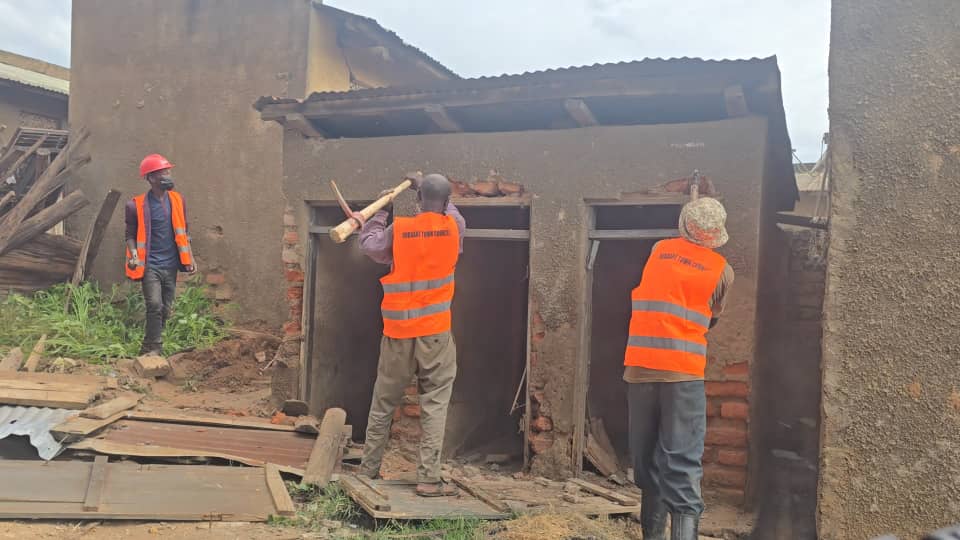
Uganda’s Small and Medium Enterprise (SME) sector has pushed back against ongoing trade order enforcement operations, calling for an immediate suspension of demolitions targeting roadside traders and vendors.
Speaking on behalf of the Federation of SMEs, Executive Director John Kakungulu Walugembe raised concern over what he described as a “disorganized and unlawful” implementation of directives issued by the Ministry of Local Government.
The operations, which began in February in Kampala under the supervision of the Kampala Capital City Authority, were initially aimed at restoring order in the city by clearing pedestrian walkways and road reserves.
Authorities argued that the move was necessary to reduce congestion, protect public safety, and streamline urban trade.
However, Walugembe said the reality on the ground has diverged sharply from the original directive.
“The letter from the Ministry emphasized cleaning marketplaces, removing posters, and enforcing existing guidelines. What we are witnessing instead are widespread demolitions,” he said.
He questioned the legality of the ongoing evictions, arguing that many affected businesses were operating under valid licenses issued by the same local authorities now enforcing the crackdown.
“You cannot license a business and later declare it illegal without due process. That contradiction undermines the rule of law,” he added.
Walugembe also pointed to the absence of clear guidelines under the Building Control Amendment Act, warning that demolitions are being carried out without proper procedures such as notices, permits, or safety considerations.
According to data from the Federation, more than 13,500 businesses across the country have been affected by the operations.
Of these, 93 percent reported being left without alternative workspaces, while 88 percent said their stalls were either destroyed or confiscated.
A further 79 percent indicated they had lost contact with customers, severely impacting their livelihoods.
The impact, he said, is particularly severe among women and youth, who form the majority of Uganda’s informal business sector.
“Uganda is largely an informal economy. You cannot formalize it through force. You must address the underlying challenges like lack of workspace and access to affordable capital,” Walugembe said.
He warned that the abrupt evictions could fuel unemployment, insecurity, and economic instability, as thousands of displaced traders struggle to survive.
The Federation also accused local authorities of failing to consult stakeholders or provide adequate public awareness before enforcing the directive.
“Businesses are being ambushed. Properties are destroyed in the early morning hours without warning. This is not enforcement — it is high-handedness,” he said.
In response, the SME body has called for a nationwide halt to the demolitions until consultations are conducted and viable alternatives for traders are established. It is also urging local governments to develop clear trade order strategies aligned with legal frameworks.
Additionally, Walugembe revealed that the Federation has set up a platform for affected traders to report violations, with plans to pursue legal action against individuals and authorities found to have acted unlawfully.
“We are not opposed to order. But you cannot use disorder to enforce order. Government must act as a facilitator of business, not its destroyer,” he said.
The ongoing enforcement has sparked broader debate about urban planning, informal trade, and the balance between regulation and economic survival in Uganda’s rapidly growing cities.
