

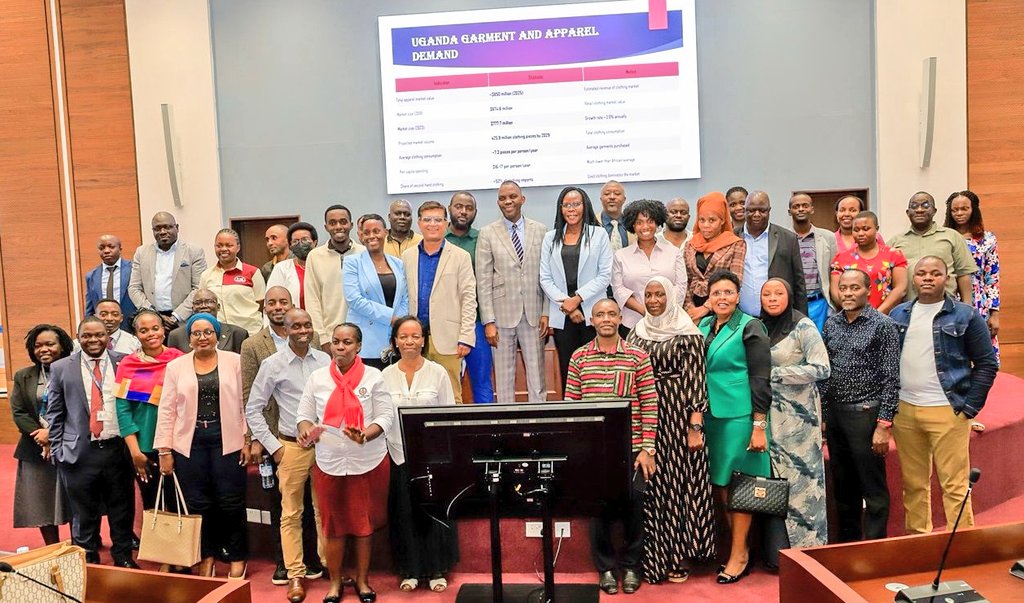
Ugandan traders and industry stakeholders have called for a comprehensive policy overhaul to unlock the full potential of the country’s garments and textile sector.
The call came during a consultative meeting chaired by Evelyn Anite at the Ministry of Finance, Planning and Economic Development (MoFPED).
The session brought together local manufacturers, industry associations, and government officials to discuss strategic interventions needed to position the industry as a driver of Uganda’s industrialization agenda.
Minister Anite emphasized the government’s commitment to supporting local businesses.
“The garments and textile industry has immense potential to create jobs, enhance value addition, and reduce dependence on imports. Our role is to ensure an enabling policy environment that allows local businesses to thrive,” she said.
Stakeholders highlighted the urgent need to review the existing textile policy, noting that a modernized framework would better align the sector with Uganda’s broader industrial strategy and regional trade opportunities.
Local manufacturers also called for targeted tax exemptions and incentives to lower production costs and boost competitiveness.
High operational costs and competition from imported second-hand clothing, commonly known as “mitumba,” were cited as major challenges.
Stakeholders argued that with government support, local producers could scale operations, enhance value addition, and offer viable alternatives to imported garments.
“The government must play a proactive role in leveling the playing field for local manufacturers. Policy reforms, coupled with tax incentives, can enable our sector to compete regionally and internationally while creating employment for Ugandans,” a participant noted.
The meeting was also attended by Moses Kaggwa and technical officers from various government agencies responsible for industrial development and trade facilitation.
Discussions focused on coordinated policy implementation, access to affordable financing, and capacity building for small and medium garment enterprises.
Industry players emphasized that strategic interventions—such as supporting local sourcing of raw materials and investing in modern manufacturing technologies—could improve productivity and quality, enabling Uganda to capture a larger share of the regional textile market.
Minister Anite assured participants that the government would take their proposals seriously, signaling continued engagement to ensure the sector receives the necessary support.
“We are committed to creating an environment where local manufacturers can thrive, generate jobs, and contribute meaningfully to Uganda’s industrial growth agenda,” she said.
With targeted policy reforms, tax incentives, and collaboration between government and private actors, Uganda’s garments and textile industry has the potential to become a cornerstone of the country’s industrialization plan, creating sustainable economic growth and employment opportunities for thousands of Ugandans.
