

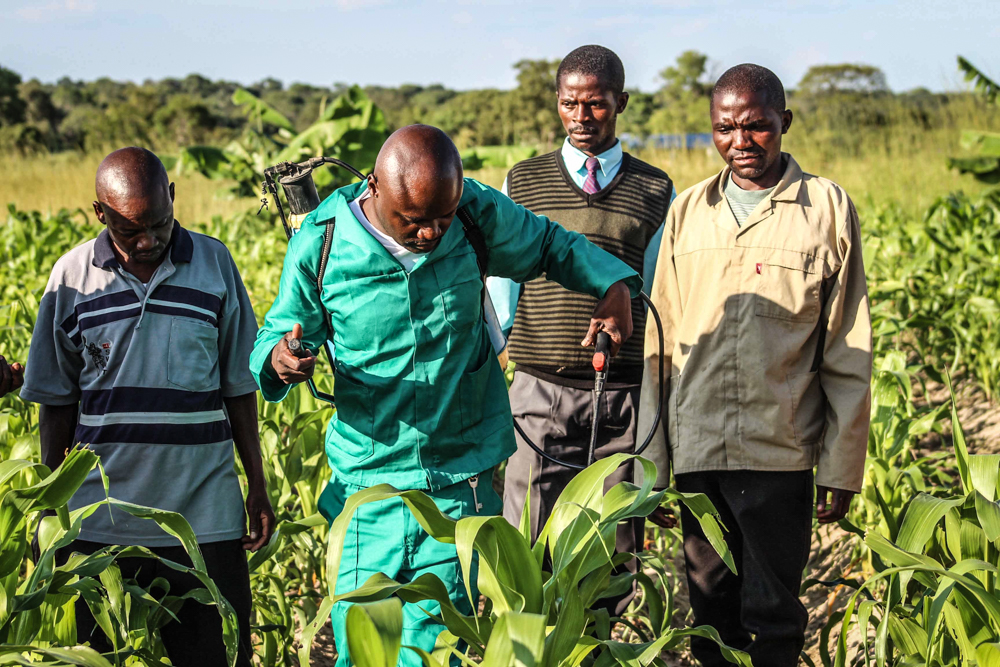
The country’s maize crop is for the second year threatened by an invasion of the destructive Fall Armyworm.
Scientists from Sub Saharan Africa are meeting in Kampala to find ways of combating this and other pests that threaten food security in the region.
Douglas Arama, a resident of Senge Village in Wakiso district, is a subsistence farmer counting losses after his maize crop was invaded by the Fall Armyworm. His efforts to spray the garden have not stopped the pest and the destruction continues each day.
Arama says, “I couldn’t spray the whole garden because I don’t have money.”
Government approved Striker 247 SC and Rockett 44EC as pesticides to fight the destructive caterpillars.
Striker costs Shs32,000 a tin while Rockett 44EC goes for about sh20,000 in most shops. Few subsistence farmers can afford this," says Douglas Arama.
The National Agricultural Research Organization (NARO) has for years tried to develop different crop varieties that are resistant to pests and diseases but the changing climatic conditions are hindering progress.
“Different varieties have been developed but we are challenged with the different virus that,“ Dr. Titus Alicia, a researcher with NARO says.
Isaac Macharia from Kenya’s plant health inspectorate services says the most dangerous diseases that affect yields in sub Saharan Africa are vector borne necessitating joint research and efforts for sustainable solutions.
“With such threats to key back bones to African economies, scientists and researchers are teaming up in Kampala to find solid solutions with funding United Kingdom,” says Macharia.
Neil Boonham, the coordinator of the connected network, says that there are plans to mobilise funding for a wide range of short term projects to facilitate the elimination of vector borne diseases.
According to World Food Program army worms or Spodoptera could cost African countries $6bn a year in lost crops if not contained.
